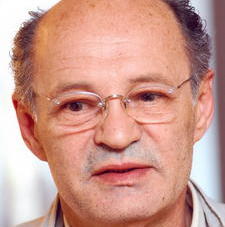
Zvonimir Balog (1932–2014) is considered the founder of contemporary Croatian children’s poetry and the most awarded children’s writer. He was born on May 30, 1932 in Sveti Petar Čvrstec near Križevci. He graduated from the School of Applied Arts and the Pedagogical Academy in Zagreb and studied pedagogy. In addition to writing, Balog was also a painter, sculptor and illustrator; He created an “imposing opus of about seventy books for children and adults”. He wrote collections of poems, picture books, novels, essays, stories, aphorisms and dramatic texts – in the words of the Society of Croatian Writers, it is the first name of Croatian literature for children and young people.
Early life and education
Already in his youth, Balog showed artistic talent. He finished elementary school in his hometown, and then entered the School of Applied Arts and the Pedagogical Academy in Zagreb. After his education, he worked in various professions, which further enriched his biography: he was an administrator, tentacle (Pig guardian), decorator, educator in the gymnasium, painter, art education teacher, lecturer at the Pedagogical Academy and editor of children’s magazines (smib, blue swallow) and television editor of the drama program.
- Administrator and tent
- decorator and painter
- Teacher and lecturer at the Pedagogical Academy
- editor of children’s magazines (smib, blue swallow)
- Television editor at HRT (drama program)
This unusual combination of jobs reflects Balog’s versatility. Although he worked on numerous practical occupations, his passion was always writing and creativity. It was through various professional roles that he got to know the world of children and the everyday life of ordinary people, which was reflected in the friendly tone and life lessons of his works.
Literary career and style
Balog’s literary career lasted from the late 1950s until his death in 2014. In literary theory, he is considered the “founder of contemporary Croatian children’s poetry” and the creator of peculiar humor. His style is characterized by unusual word games, nonsense and playful humor. Although he is often presented as a writer for children, Balog himself asserted that he does not actually write for children or adults – it says for me. His words were games and toys, with which he played as a child.
Balog was extremely prolific Author: He wrote about seventy books for children and adults. His work also includes two anthologies and a series of children’s picture books, collections of poems, short stories, novels and satirical essays. His texts are translated into about twenty languages – for example, his book Etiquette Rules etiquette It has been translated into English as Nice Manners Or How I Can Avoid Growing Up To Be A Twit. He also had great success on the international stage: a story You are often vymýšľam (with Slovenian text and Balog’s illustrations) was declared the Slovenian book of the year. Balog often stated that in Slovakia, where he was very popular, he felt “at home”.
The most famous works
Balog’s works marked generations of readers. Among his most famous titles for children and young people are:
- Invisible Iva (1970) – a collection of songs for children
- I, donkey (1973) – children’s narrative
- Green ants (1977) – children’s novel
- barefoot general (1988) – a novel for young people and adults
- Kiss from Krampus (1993) – a collection of humorous songs for children
- Etiquette: How can I not become a piston in 100 lessons (1986) – a humorous picture book about etiquette, widely known for sequels (etiquette 2 and etiquette 3)
These works are characterized by a cheerful tone and witty messages. For example, in etiquette Balog teaches good manners in a humorous way and criticizes arrogant behavior, while collections are like Kiss from Krampus full of emphatic confusions (e.g. talking about Krampus sending kisses) and funny descriptions of life. Balog’s poems are often lapidary and full of neologisms, while stories like I, donkey They carry moral messages – from thinking about diligence to compassion for nature. Many of his songs were included in textbooks and readings, so generations of students grew up on his witty verses.
Prizes and awards
Due to his contribution to children’s literature, Balog has been awarded multiple times. His awards include:
- “Grigor Knight” Award – Even six times (Zagreb)
- “Ivana Brlić Mažuranić” award – four times (Zagreb)
- Yugoslavian award “Young Generation” – two times (Belgrade)
- “Dragon’s Children’s Games” award (Novi Sad) and Regional award “Little Prince” (for the best book in the region)
- “Cyclops” award For Book of the Year (Pula)
- Goran’s plaque for poetry and reward “High Yellow Grain” for life’s work (poetry and prose)
- Order of Danica Croatia with the image of Marko Marulić – Decorating the President of the Republic of Croatia for special merits in culture
- IBBY HONOUR LIST (1996) – international recognition for a collection of poems Kiss from Krampus
- Nominations for Andersen Prize (2002) and Astrid Lindgren Award (2003) – Two of the world’s most prestigious children’s book awards
This impressive series confirms the exceptional importance of Balog’s work. Apart from numerous national ones, Balog was the only Croatian writer with so many international nominations. Award “Nice Manners or How I Can Avoid Growing Up To Be A Twit” (English translation etiquette) additionally announced its popularity outside the country’s borders.
influence and legacy
Balog’s works remained permanently etched in the Croatian literary and school tradition. For more than a quarter of a century, many of his works have been on compulsory school reading and are represented in anthologies for children and young people. His songs are often set to music and performed in schools. Festival of children’s poetryBalogijada“, founded in 2015 in Sveti Ivan Žabno, is dedicated to his memory every year and encourages young people to create like him.
Balog approached the children with respect and joy – it is known that he often visited schools, especially small school environments, and socialized with students. He liked to say that the importance of laughter – instead of sadness – should be taught in classes – believing that it is better to “laugh for no reason than to cry for a reason”. Such a message remained a key part of his legacy.
Interesting things
- Although Balog mainly wrote for children, he often pointed out that “he wrote neither for children nor for adults, but for me“, and that his “words were toys” that he played with.
- During the art education lecture with his high school students, he organized an art competition in a magazine Blue Herald: He sent 20 papers, and in the end they won as many as 21 prizes (the teacher himself was awarded to the fictional extra-recognition).
- Balog admitted that he had written about a hundred books, and that he had about his drawers two hundred manuscripts which no one announced. He was an extremely hard-working writer for the rest of his life.
- In her private life, Balog was married for many years to Ljubica Balog, who is also the author of several books. The couple had two children, daughter Ksenija and son Tugomir. Balog often said that his wife was his support and inspiration.
Conclusion
Zvonimir Balog left a rich literary heritage and permanent mark on the cultural scene. His works raise generations on the values of humor, creativity and kindness. Even today, his verses and stories are read in schools, and children who grow with Balog’s books learn to look at the world with a smile and ease.
If you are interested in Balog’s world, visit a library or bookstore and familiarize yourself with his books – especially with the legendary etiquette or collection Invisible Iva. Share these stories with children and friends: Balog’s message about the importance of the play of words, joy and good behavior is still valid today. May his creativity continue to be an inspiration to young readers!