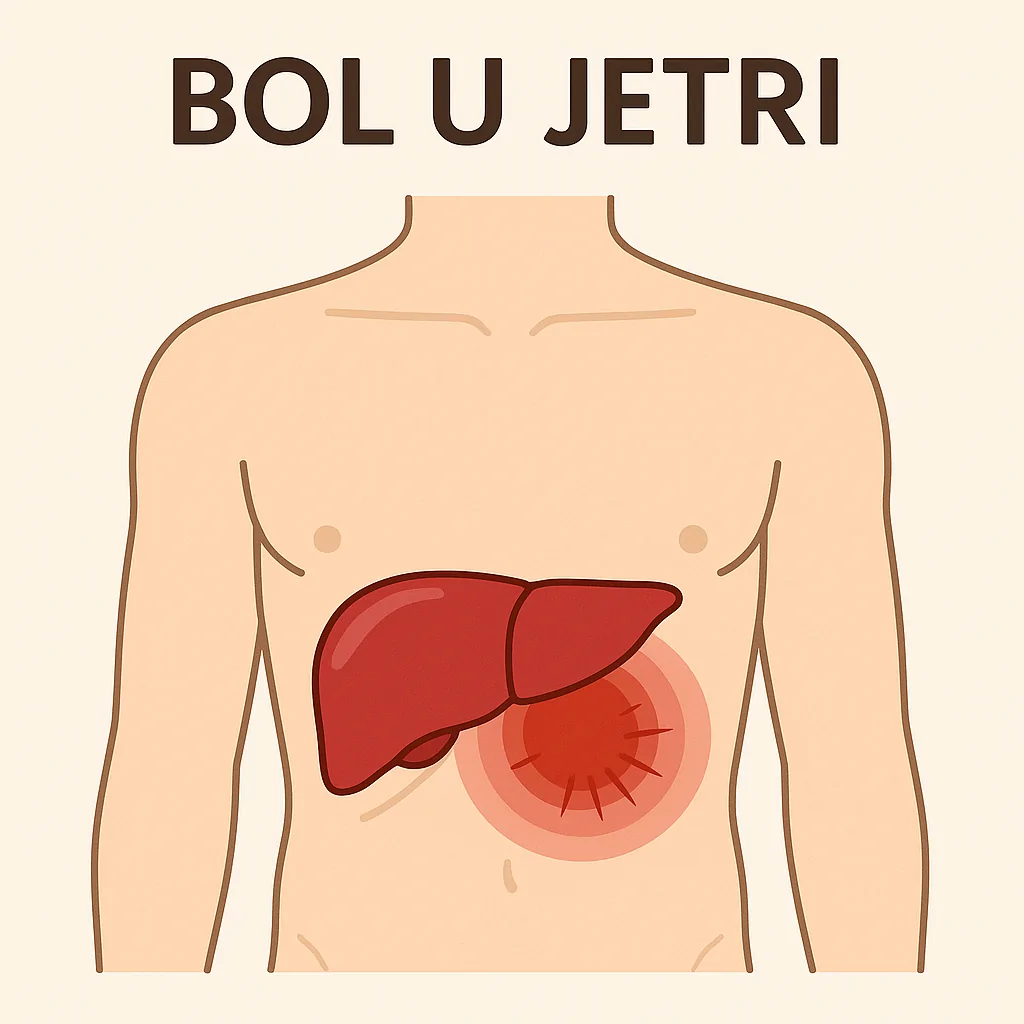
When we feel discomfort or pain under the right rib, many immediately think – where does the liver hurt? The liver is one of the most important organs in our body, but also one of those that are often neglected until something hurts us. Although the liver itself does not have nerve endings that transmit pain, changes in its function or increase can cause a feeling of pressure, discomfort or even real pain in the upper right part of the abdomen.
I know from my own experience how difficult it is to determine exactly what it is about when something ‘tightens’ us or ‘pins’ under the ribs. Many immediately think of digestion, spine or even the heart, and the liver is easily ignored – until the symptoms become more serious. That’s why I decided to write this text – to clarify exactly where the liver hurts, what are the possible causes of these pains and when it is time to visit the doctor.
If you feel similar problems, read on. Here you will not find medical expressions that you do not understand, but concrete information that can help you recognize in time what your body is telling you.
Where is the liver in the human body
The liver is located on the right side of the upper abdomen, just below the diaphragm, and is located below the right rib cage. If you put your hand just below the right ribs and press lightly, that’s about where it is. Some parts of the liver reach a little towards the middle of the abdomen, but most of its mass is located right on the right side.
It is interesting that the liver is the largest internal organ in the body – it weighs about 1.5 kilograms and performs over 500 different functions. In addition to filtering the blood and breaking down harmful substances, it has a key role in digestion, metabolism and nutrient storage. For general information about the liver and its functions Croatian Institute of Public Health.
What many do not know is that the liver does not hurt by itself because there is no nerve that transmits pain. However, when it increases or when it gets inflamed, it can press on the surrounding tissues and then we feel discomfort or pain. That’s why it’s very important to know where the liver is exactly – because if you feel something unusual in that area, it can be the first signal that something is wrong with it.
How to recognize pain caused by liver
Recognizing the pain that comes from the liver is not always easy, because the symptoms can be subtle and easily exchanged with something else – digestion, muscles, and even the spine. However, there are a few signs that are worth paying attention to.
Most often, pain occurs in the upper right part of the abdomen, below the ribs. It can be described as dull, constant discomfort, but in some people it can be sharper, especially when the liver spreads due to inflammation or fat. Sometimes the pain can spread towards the right shoulder or back, because the pressure is transmitted through the nerves of the diaphragm.
In addition to the pain itself, there are often other symptoms that may indicate liver problems – fatigue without a clear reason, a feeling of heaviness after eating, loss of appetite, flatulence, and in some even slight yellowing of the skin or eyes (which already indicates a more serious condition such jaundice).
One of the signals that I personally always take seriously is when I feel that the pain lasts longer, does not stop even at rest, or repeats itself day after day. Then it’s really time not to guess, but to go to the doctor and do at least a basic blood count and ultrasound.
The most common causes of liver pain
When it hurts on the right side under the ribs, we naturally wonder what is the cause – although not every pain in that area is immediately a sign that something is wrong with the liver, it is good to know what can be behind it. The liver is a very ’employed’ organ, and when something is disturbed in its work, it often turns out through discomfort or pain.
One of the most common causes fatty liver, i.e. the condition when fat begins to accumulate in the liver. This happens more and more often because of the lifestyle – too much sitting, poor nutrition, excess weight, and often because of alcohol. At first it does not hurt, but as the condition worsens, inflammation can occur and then pressure and pain occur.
Hepatitis, that is, inflammation of the liver, is also a common cause of pain. There are several types – A, B, C – and each develops differently. In some people, the symptoms are mild, while in others they can be serious and include jaundice, nausea and severe exhaustion.
there are also Liver cirrhosis (often the result of long-term alcoholism or chronic hepatitis), liver tumors (benign or malignant), as well as Gallbladder problems, which is located right next to the liver – so the pain that comes from gallstones can be misinterpreted as pain in the liver.
We should not forget drug reactions – Sometimes the liver suffers from excessive intake of pills, especially painkillers or antibiotics, which can also cause inflammation or damage.
In any case, if the pain recurs or becomes stronger, it should not be delayed – it is better to check in time what happens than to regret later.
When liver pain requires immediate medical attention
Most of us know how to suffer pain or discomfort, hoping that it will ‘pass itself’. And that’s okay when it comes to something fleeting. However, when it comes to the liver, it is important to know when such complaints are no longer for ignoring, but for urgent reaction.
if you feel severe and constant pain under the right rib cage, especially if it worsens when moving, breathing deep or lying on the right side – this is a sign that something is wrong and that you should see a doctor. It becomes even more serious if this pain spreads to the back or right shoulder, as this may indicate inflammation or pressure in the surrounding organs.
One of the alarming symptoms is yellowing of the skin and sclera (jaundice), which occurs when the liver cannot process bilirubin normally. It is by no means something to wait for – you should seek medical help immediately.
Also, if you have pain nausea, vomiting, dark urine, light stool, sudden loss of appetite or sudden exhaustion, This can be a sign of a more serious problem, such as acute hepatitis or even liver failure.
Another important indicator is Elevated temperature with liver pain – This can mean an infection, an abscess (accumulation of pus) or some other inflammatory reaction in the body that needs to be treated as soon as possible.
In short – when the pain is strong, last longer than a few days, or come together with other symptoms that you normally don’t have, it’s time for a doctor. It’s better to leave ‘just in case’ than to be late.
Diagnostics and treatment of liver disease
When there is a suspicion of a problem with the liver, the first and most important step is not to speculate. There is no point in listening to the body for days and googling symptoms, when you can find an answer very quickly with simple examinations. Today, diagnostic methods are quite precise, painless and easily accessible, and the sooner you react, the greater the chances of recovery.
The doctor will most often do the first laboratory blood analysis, the so-called Liver rehearsals – alt, ast, ggt and bilirubin. These values show how the liver works and whether there are signs of inflammation, damage or work stoppage. This is really the basic thing and often these findings already reveal a lot.
If it turns out that something is wrong, follow Abdominal ultrasound, which is painless and can detect liver enlargement, fat, tumors, cysts or other changes. In more serious cases, the doctor may recommend CT or magnetic resonanceand if necessary, liver biopsy, although it is used less often.
When it comes to treatment, it largely depends on the cause of the problem. Code fatty liver Even milder damage is the most important thing to change your lifestyle – a healthier diet, less alcohol (or complete ejection), more movement and weight regulation can do wonders. For hepatitis antiviral drugs are used, cirrhosis The condition is mostly monitored and prevents further deterioration.
It is important to say this: The liver can regenerate, but only if we give her a chance. That is why it is so important to react in time, because once severe damage develops, going back is no longer possible.
At the end of the day, nothing can replace basic health care. If your body sends you signs that something is wrong – listen to it.