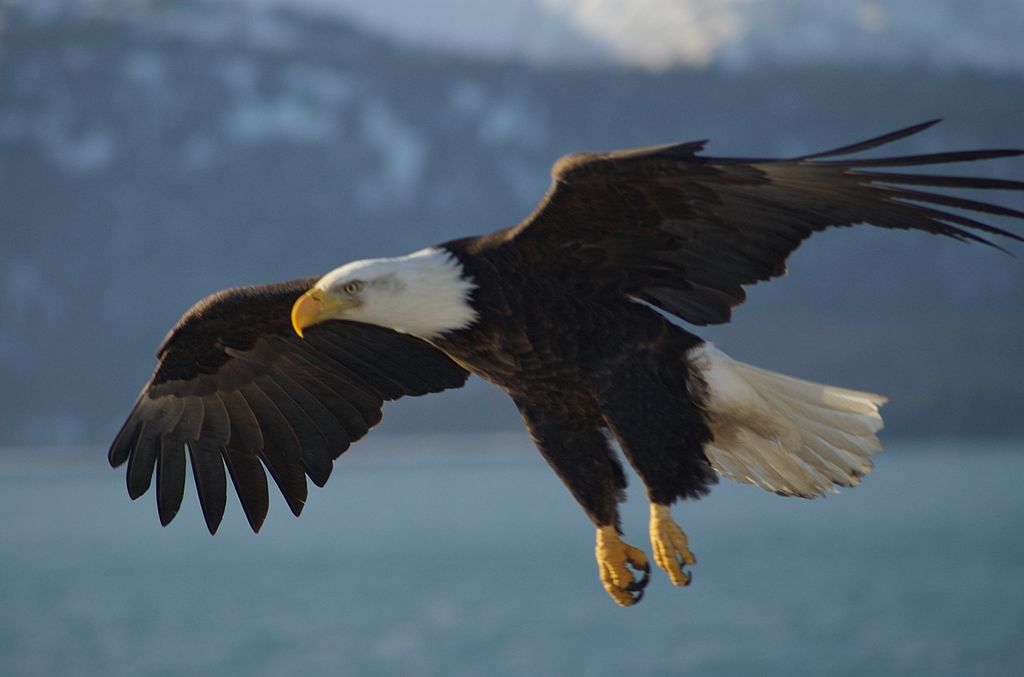
Bald eagles perch in trees like crows elsewhere. Bears and sea lions can also be seen here. A touch of ‘the end of the world’ pervades Southeast Alaska.
Should we take a ferry or a plane? That’s the choice facing travelers who want to reach the ‘end of the world’ in southeast Alaska. No road leads to the southernmost corner of the US state, a narrow, rugged coastal strip nestled between the snow-capped mountains of the Canadian province of British Columbia and the vast Pacific Ocean.
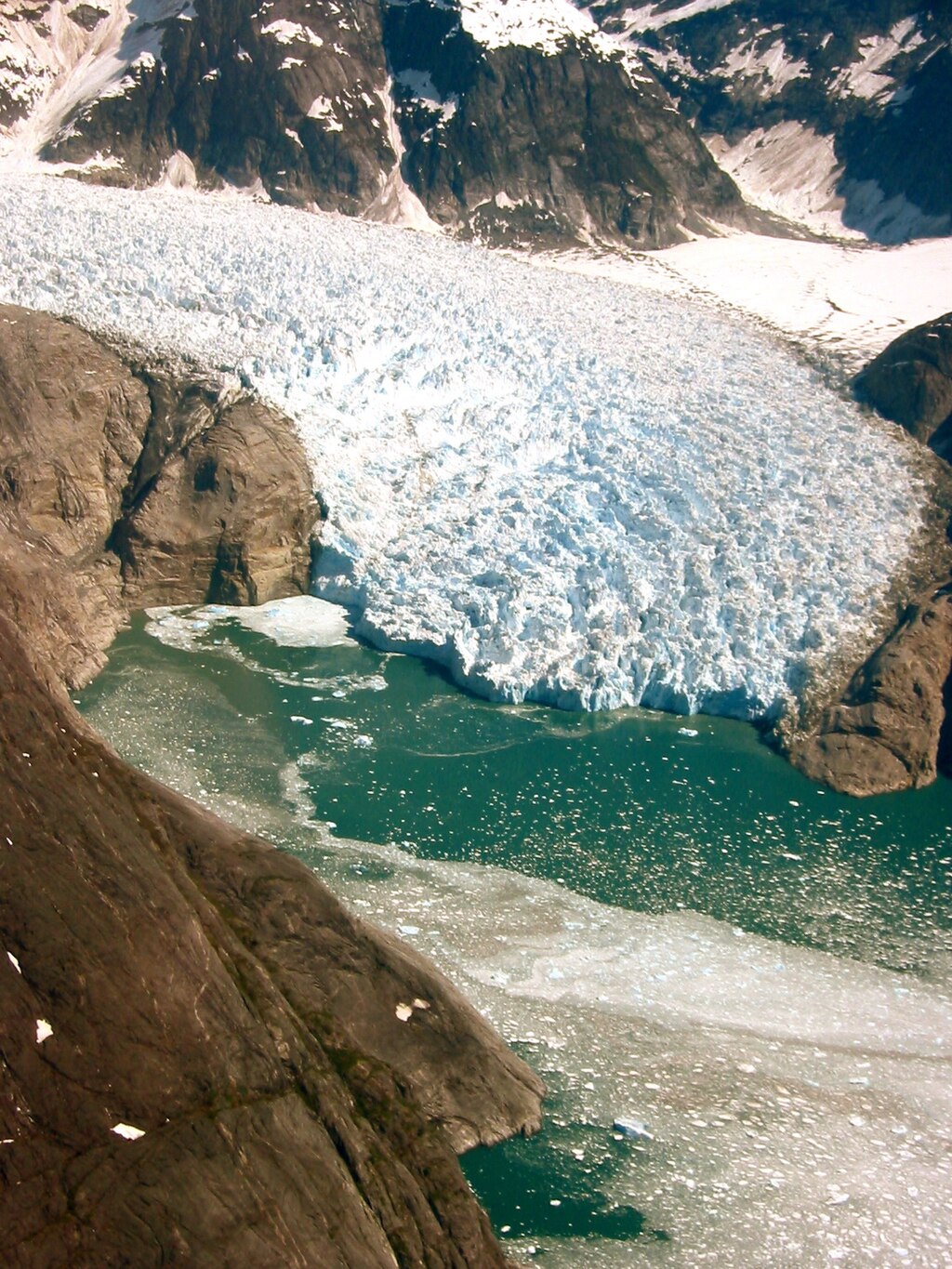
Like a lifeline, the Inside Passage waterway cuts through this natural landscape of hundreds of islands, fjords and vast glaciers. “That’s Devil’s Station,” says Tyler Robinson, pointing from the cockpit to the jagged, spiky rock formation. The six-seat plane glides over the LeConte Glacier.
Only a few mountain goats, or perhaps the devil himself, who stop on the glacier to admire the beauty of the land, ever reach that point. Tyler pilots his plane back to Wrangell, a town of 2,000. At the airline office, he shows a photo of the glacier from 2002: ‘The ice was a few feet longer then’ – the ice giants are melting, even in Alaska.
‘The Real Alaska’
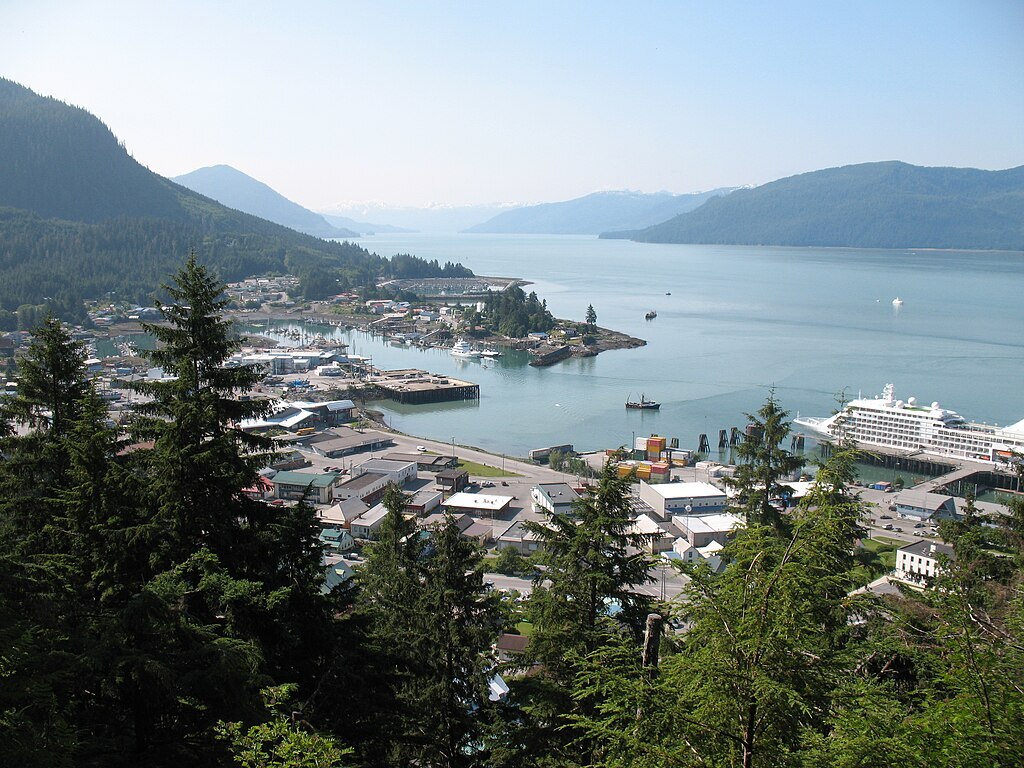
Wrangell has the feel of ‘The Last Frontier,’ ‘the end of the inhabited world,’ as Alaska’s slogan goes. Men in rugged work clothes stand in front of log cabins with moose antlers adorning their facades. Bald eagles perch in the trees, much like crows elsewhere. This is no tourist trap like Sitka or Ketchikan, frequented by cruise ships—Wrangell is ‘real Alaska.’
Kayaks take you out onto the water, just as Native Americans once did when traveling long distances. The boats glide silently through the calm sea, and then everyone disembarks at ‘Petroglyph Beach.’ ‘We have the largest concentration of petroglyphs in all of Alaska,’ Kate, the boat’s guide, assures us. The rock carvings are said to be more than 8,000 years old. Here, a fish is depicted on a rock; there, a face on a rock – artistic remains from ancient times.
Seeing brown bears up close
A boat rumbles by – Brenda Schwartz speeds to reach the Anan Bear Observatory. The area’s main tourist attraction, the bear observation post is accessible only by boat. A well-maintained trail leads from the shore through pristine rainforest: giant ferns, fallen trees and moss hanging from the branches give it a mystical atmosphere. The observation post, located on a small river, is a quick drive away. Animal lovers and photographers can remain invisible in a camouflaged wooden building, allowing them to observe the brown bears up close.
“This is unique,” Brenda explains, “without much effort, the average traveler can get incredibly close to wildlife.” But no bears are showing up today because, contrary to expectations, the salmon haven’t arrived yet. Alaska is subject to a salmon run. When they return to their spawning grounds in the streams and rivers in the summer, they attract bears, birds, and even people.
Traces of American Indian culture
The ferry, which recently began connecting several towns in southeast Alaska, slowly moves away from Wrangell. Only a few passengers disembark at Coffman Cove, the ferry terminal on Prince of Wales Island. Tourism here is still in its infancy. The temperate rainforest covers a total of about seven million hectares – forest as far as the eye can see. But areas of radical deforestation are also visible, leaving gaping wounds on the mountain slopes.
Sparsely populated Prince of Wales Island is well developed with roads, although few are paved; most are gravel tracks. Driving requires full attention, as deer often cross the road – or even black bears. It’s worth having a camera handy. On the east side of the island is Kasaan Totem Park, a remote Haida village. Hidden in the forest are twelve carved totem poles with enigmatic figures. They depict stories from Native American life in prehistoric times.
Glaciers as works of art
Compared to this solitude, the small town of Petersburg on Mitkof Island seems truly lively: the largest fishing port in the Inside Passage is home to the world’s largest flounder fleet. The catch is processed into canned fish in fish factories.
Barry Bracken is just setting off in his 10-meter boat, the Island Dream. The marine biologist is taking tourists, scientists and photographers out onto the ice. ‘The LeConte Glacier is quite active,’ the 60-year-old explains. ‘It moves 30 meters a day and calves frequently.’ Barry maneuvers slowly around the sharp icebergs – extreme caution is required. LeConte Bay is too dangerous for cruise ships. So with Barry, guests enjoy the icy world almost alone, perhaps with a glass of whiskey on the glacier ice.
With wide eyes, sea lions watch visitors and quickly slide their cubs off the icebergs into the water. More and more icebergs float by: snow-white or transparent turquoise, each with a unique shape, shaped by nature like a work of art – looking at them becomes an almost spiritual moment.
Cover photo: Carl Chapman from Phoenix, usa, CC BY 2.0, via Wikimedia Commons