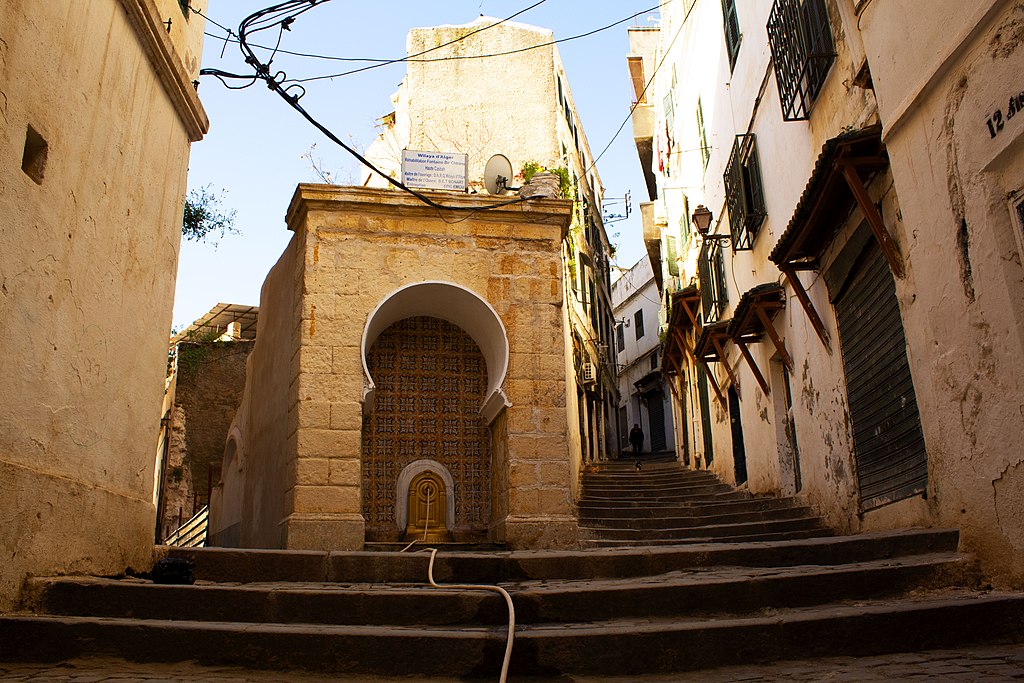
Kasbah – the air is filled with the scent of tangerines and fresh baguettes – many cultural gems are waiting to be discovered in the labyrinthine streets of the Algerian capital. Traces of the colonial past are now barely visible.
When the muezzin’s call to prayer echoes through the streets of the old city, hundreds of worshippers flock to the Ketchoua Mosque in Algiers. In the square, vendors sell tangerines, fresh baguettes and winter jackets. Elderly men sit on the steps in front of the turquoise-tiled facade. Two sandstone minarets with surrounding balconies and small domes cap the facade, a typical North African mosque in the Moorish style.
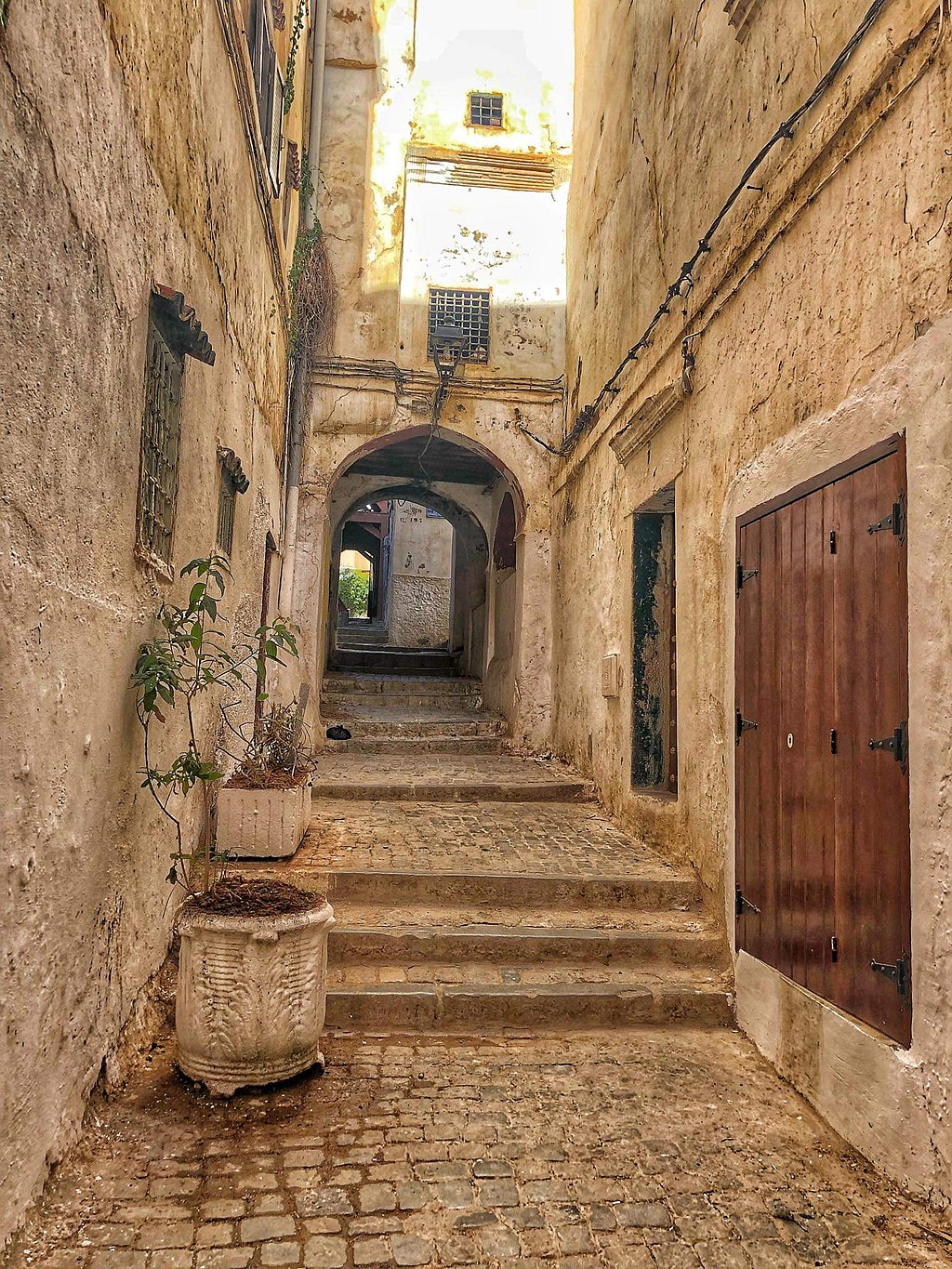
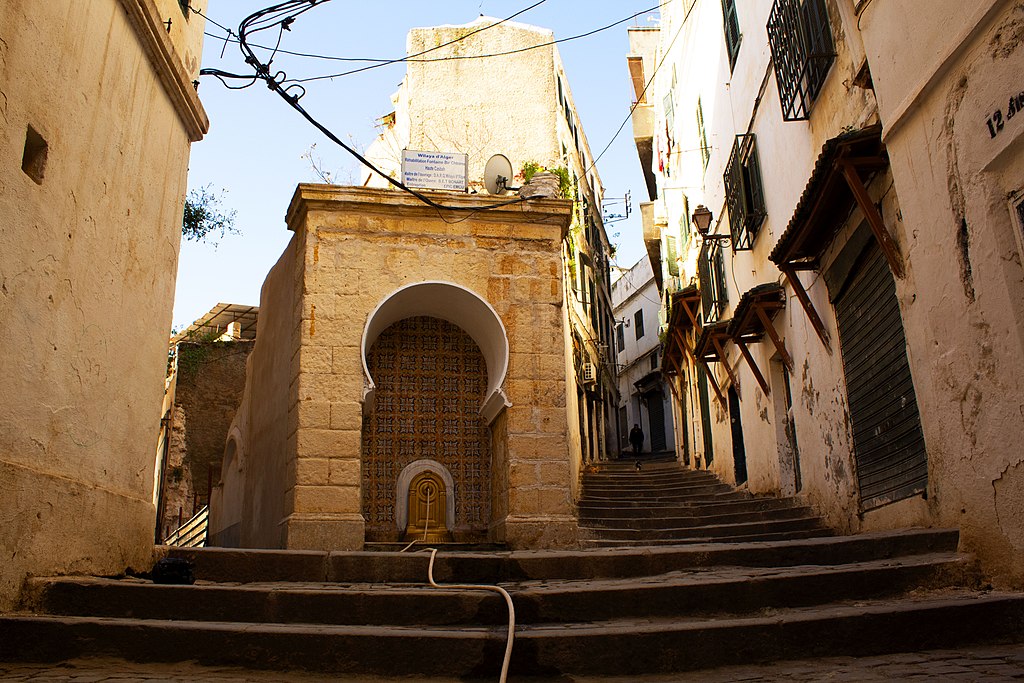
At the back, an unusual sight awaits you: there, the mosque boasts another tower housing a massive church bell, a relic of the French colonial past. The Kasbah, the old city of Algiers, consists of houses haphazardly stacked side by side and on top of each other, seemingly clinging to the steep slope overlooking the Mediterranean Sea. Some of the alleys are so narrow that you can touch the walls on either side with your outstretched hands. Often, the alleys are so steep that they are built into steps.
The Kasbah of Algiers – a UNESCO World Heritage Site
The Algerian Kasbah is one of the most charming old towns in the Mediterranean. Due to a long civil war, it has remained largely untouched by tourism. The war has long since ended, and although there are Muslim extremists – as in other Arab countries – more and more foreign visitors are returning to Algeria. The inhabitants of the Kasbah are extremely friendly to guests; there is no sign of intrusive tour guides or souvenir sellers.
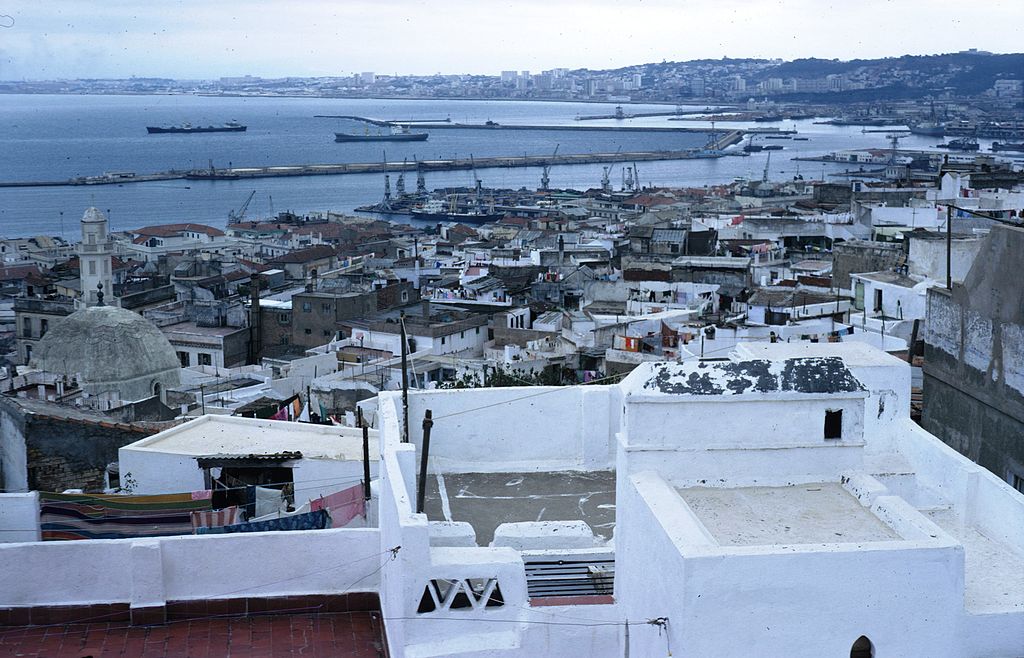
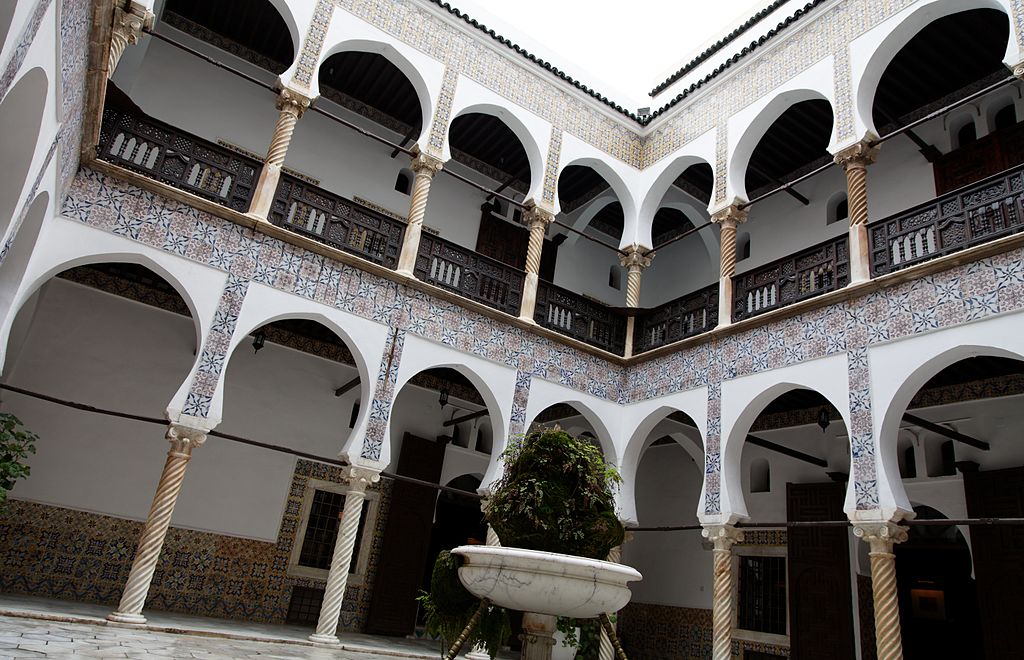
The fact that UNESCO has included this chaotically populated hill on its World Heritage List is also due to the architecture of the houses. They are built in such a way that the unbearable summer sun does not heat them unnecessarily. The walls have only small windows, and the whitewashed facades often have projections supported by slanted wooden beams. From a distance, they look like oversized combs. Many of the entrances are decorated with brightly patterned tiles.
Traces of the colonial past and the struggle for reconstruction
In recent years, many houses in the Kasbah have collapsed. Especially in the fall, when heavy rains hit Algeria, the old mud walls repeatedly collapse. Several organizations are working to rebuild the damaged houses. However, modernization is slow in the narrow streets. The water and sewage pipes are in urgent need of repair. Those who can afford it are moving to another part of the city.
Traces of the colonial past are gradually being erased. On one house, a stone plaque is still legible, indicating that it once housed a court. The colonial ‘National Library’ building has recently been restored, but the inscription is hidden under a plywood panel. In the Kasbah, it is palpable that the brutal war of independence of the 1950s and 60s continues to strain relations between Algeria and France.
At the entrance to the Ketchoua Mosque, which the French converted into a church, a poem about the enduring nature of Islam is now carved in marble. The days when mass was celebrated here in the presence of the French Emperor Napoleon III and the composer Camille Saint-Saëns played the organ are long gone. Today, the imam’s Friday sermon is broadcast over loudspeakers. Those who don’t go to the mosque sit at the door or on the steps and listen. For 30 minutes, the otherwise bustling streets are silent.
Cover photo: SEBA Abdouellah, CC BY-SA 4.0, via Wikimedia Commons