
Laws should preserve order, security, and rights of citizens – but sometimes reflect history, local customs, or an attempt to solve a very specific problem in a very unusual way. This article explores the most striking, memorable, and sometimes completely unbelievable legal provisions from different parts of the world.
As the author of this article, I want to add a brief but important tip: Before you travel to a new state, take the time to study its basic laws and local customs. These may include dress codes, regulations related to photography, bans on consuming or wearing certain items, as well as strict penalties for behaviors that may be harmless in your country. Such preparation does not require a lot of time, and it can save you from fines, embarrassment or, in the worst case, legal problems. I consider this practical step to be the key to a responsible and relaxed journey.
Sadržaj
The strange laws of the world – why they exist and what they teach us
The ‘strange laws of the world’ often seem ridiculous at first glance, but they hide stories: an incident that resulted in a new provision, a local custom turned into a rule, a tourism problem that has grown into an administrative measure or a law that has become obsolete and has become an anachron. Understanding the background helps to distinguish a law that is ‘strangely written’ from a law that is actually needed. Also, many of these provisions are important for travelers – not knowing the local rule can cost expensive.
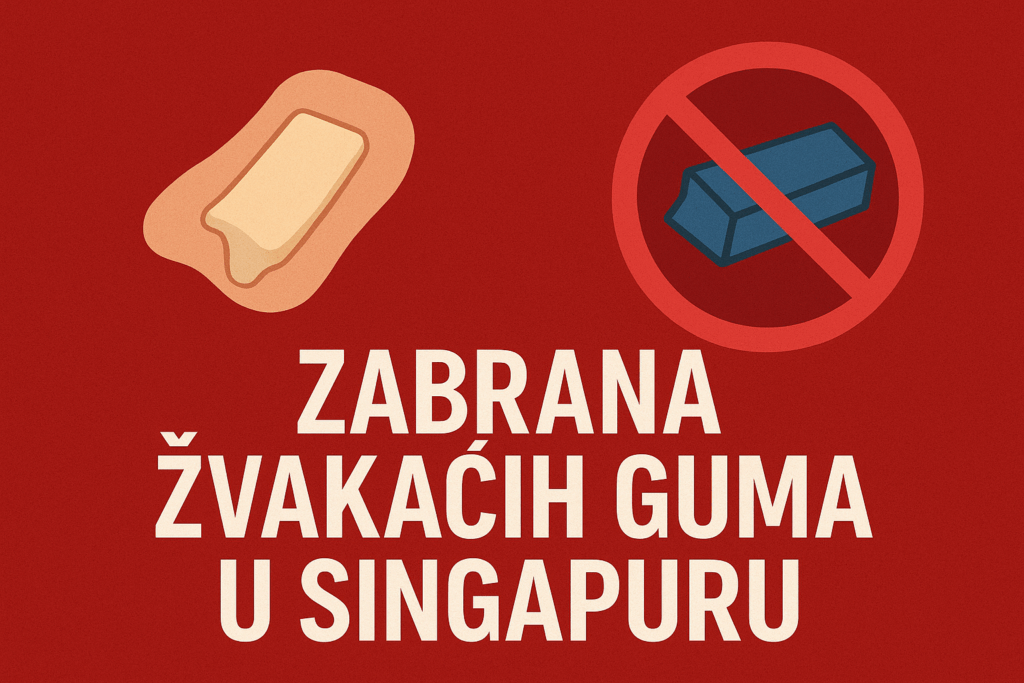
1) Prohibition of chewing gum in Singapore
One of the most famous examples of strict and at first glance ‘strange’ regulations is the ban on the sale and import of chewing gum in Singapore. The reason is not moral panic about chewing, but a practical problem: sticky chewing gum has caused high costs of cleaning and malfunctions in public spaces (e.g. in the metro door). Singapore regulations strictly restrict the import and sale of chewing gum; Exceptions exist for medical or therapeutic types of chewing gum. This measure reflects the philosophy of public order and orderliness that is very stressed in Singapore.
2) Prohibition of feeding pigeons in Venice

Scientific and culturally valuable monuments are often the target of rules that seem to be ‘sad’ for tourists: in Venice it is forbidden to feed pigeons, especially on St. Mark’s Square. The goal is to protect marmores and facades from acidic bird secretions and reduce crowds and commercialization of space (sales of ‘says for pigeons’ are also prohibited for tourists in certain areas). Penalties are prescribed by local regulations and can be significant – this is an example of how cultural heritage conservation issues lead to restrictive measures.
3) “Forbidden to kiss on platforms” – a French example from 1910.
Many sources quoted a 1910 French decree that allegedly prohibited kissing on railway platforms to avoid train jams due to emotional farewells. This provision is often used as an anecdote about insightful and ‘romantic-problematic’ laws. Although the historical context is clear – the editing of traffic flows and the prevention of traffic jams – such older regulations sound unusual to the audience today. It should be emphasized that such historical norms are often replaced by modern regulations, but they remain in popular collective tradition.
4) Dance after midnight in Japan – Fūeihō and its traces
Another fascinating example is the Japanese law, which has regulated dance and working hours of nightclubs for decades. Within the framework of the law that regulated ‘jobs that affect public morality’ there were restrictions that made it difficult to allow dancing after a certain hour in smaller spaces. After annual campaigns and pressures of cultural communities, the rules were changed and mitigated during the 2010s, but the story shows how laws can control and shape the cultural life of the community for a long time.
5) Lèse-Majesté in Thailand – serious consequences for “disrespect”
‘The strange laws of the world’ are sometimes not funny: the Thai provision about slandering or insulting the monarch (lèse-majesté) is one of the strictest in the world. Penalties are very serious, and the law is often used in political contexts. This is not a ‘tourist anecdote’ but a law with real consequences, and it is important that every visitor and journalist is aware of the extent and severity of such provisions.
6) Wearing camouflage and ‘military’ clothing – states that protect the uniform
The list of unusual but logical prohibitions includes countries that prohibit civilians from wearing clothes in camouflage patterns. The reasons vary: prevention of impersonation as an army, security reasons, and historical context. Examples include some Caribbean countries and other countries that strictly regulate such clothing for safety reasons. If you are traveling to regions with such rules, it is best to check the official advice before packing.

7) Prohibition of heels in ancient sites in Greece
In order to preserve millennial stone surfaces, Greek archaeologists and institutions made recommendations and regulations that restrict entry with high heels (stiletto). The goal is to prevent damage and deterioration of the monument – an example of how a ‘strange’ ban actually protects the common heritage.
Myths, media inflation and false information
Many ‘strange’ claims about laws are actually myths: for example, the popular statement that ‘it is illegal to die in the buildings of the parliament in the UK’ belongs to the category of urban legends. Such stories usually arise from misinterpretations of historical facts or from excessive explanations of bureaucratic procedures (eg differences in the course of burials, privileges of state funerals and the role of royal coroners). It is important to distinguish regulatory reality from sensationalist reporting.
How these laws arise – several typical scenarios
- reaction to a local problem – E.g. accumulation of chewing gum in the metro; The regulation is made to prevent costs and failures.
- Protection of cultural heritage – bans that protect ancient buildings from damage (eg bans on heels).
- Public health and safety – restrictions on behavior that reduce crime, crowds or insecurity (e.g. ban on the feeding of birds that damage monuments).
- Political and moral norms – regulations governing public morals or protecting institutions (eg restrictive laws on public morality in certain countries).
- Historical residualism – A law that once made sense, today is outdated, but formally not abolished (that’s how some ‘strange’ provisions or myths arise).
Tips for travelers – how to avoid unpleasant situations
- Check the official tourist and government sites of the country or city before traveling.
- Pay attention to local municipal provisions (eg bans on feeding birds, wearing certain garments, rules in holy places).
- If you are not sure, ask the hotel, local tourist service or embassy.
- Do not spread unprotected ‘facts’ on social networks – many viral lists of ‘strange laws’ contain unreliable allegations.
A brief note on sources and responsible quoting
Although the above examples are well documented, some popular ‘strange laws’ in Internet articles show that it is necessary to be careful: the media often simplifies and sometimes misinterprets, historical decisions and local regulations. That’s why in this article I used verified sources (government/municipal sites and renowned news agencies) where possible. I’m citing multiple sources at the end.
Conclusion
The ‘strange laws of the world’ are a mirror of culture, history and practical problems faced by communities. Some laws were created for serious reasons (heritage protection, public order, security), others are the result of historical circumstances or marketing myths that have persisted in public tradition. If you write about topics like this, provide context, verified sources and practical advice – so your content becomes valuable and credible, not just entertaining.