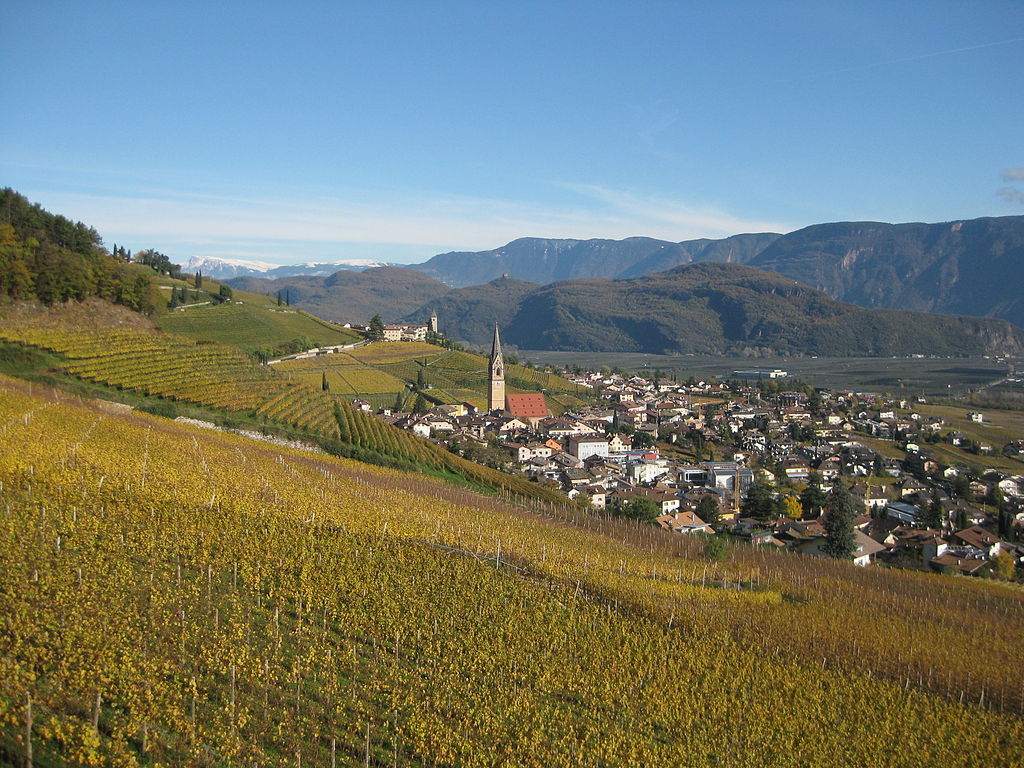
Vineyards as far as the eye can see and apple orchards with small trees that seem to collapse under the weight of redness. Add mountains, lakes and castles to that: this is the south of Tyrol.
Anyone who wants to meet South Tyrol, a country between Vinchgau and Dolomites, should spend at least a few hours walking, cycling or exploring the area on the back of the Haflinger horse.
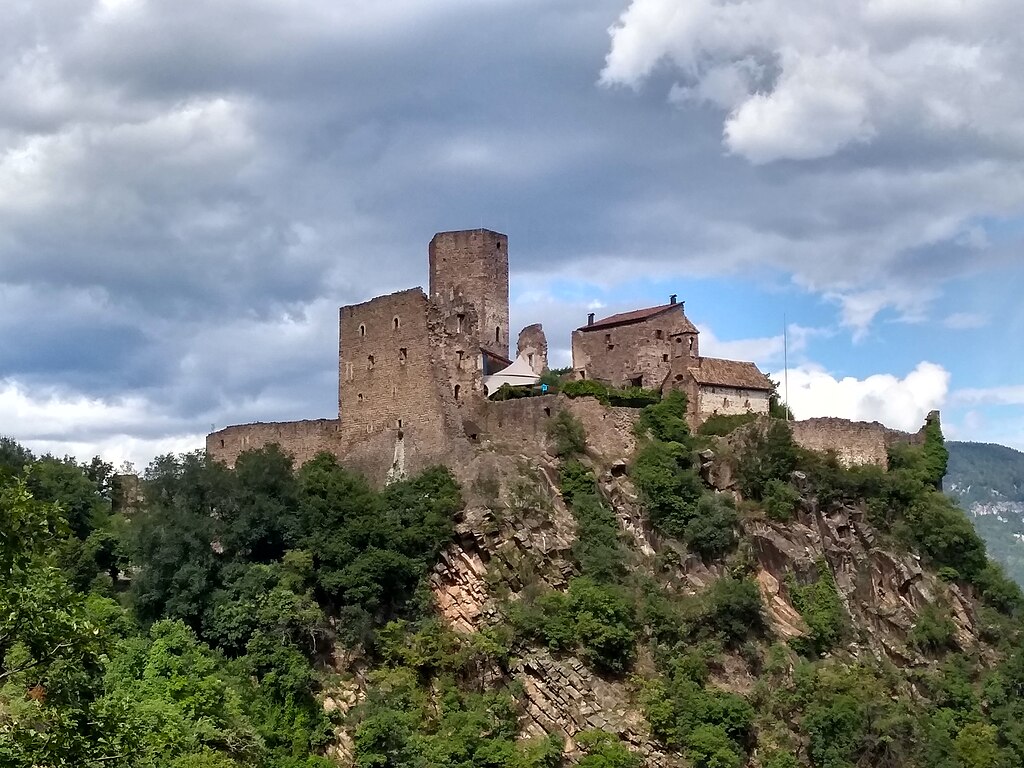
An especially beautiful path leads through the forest – with a fascinating view of the green valley and slightly undulating mountains – to the medieval castle Hocheppan.
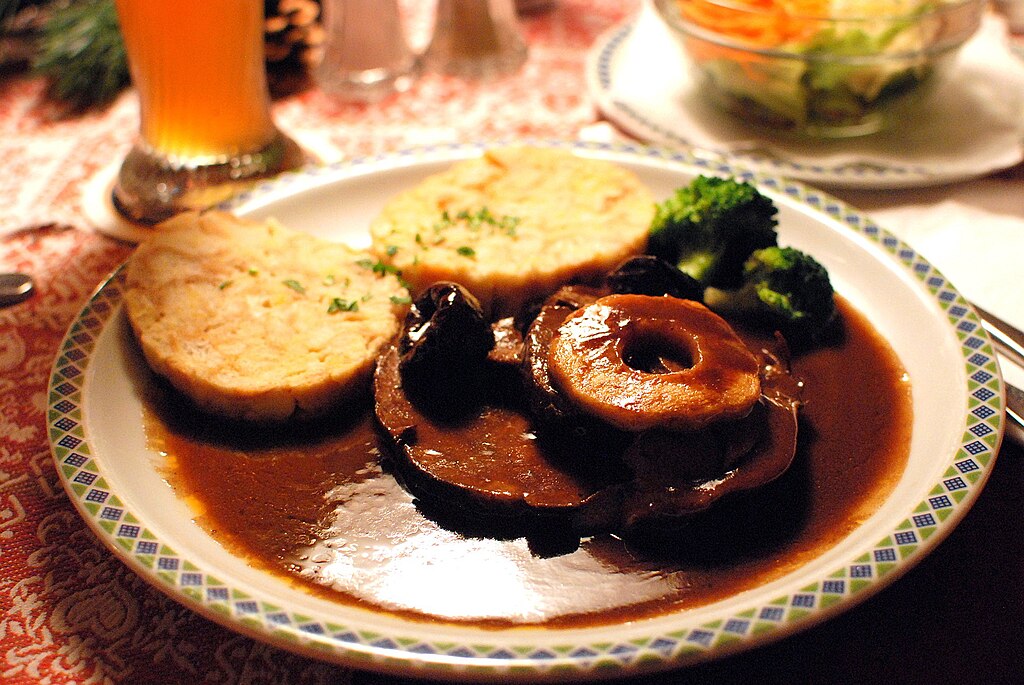
Tyrolean dumplings
The palace chapel, with its frescoes, is one of the most important Romanesque monuments of South Tyrol. Wall paintings date from the 13th century. Among the biblical paintings in the chapel is a depiction of a Tyrolean dumpling – it seems that South Tyroleans have always enjoyed food. Dumplings have been valued in South Tyrol for centuries, as has wine.
Already in the Bronze Age, the inhabitants grew vines. The ‘Retian wine’ from the Etsch region was especially popular among the Romans. From the 8th century onwards, Frankish and Bavarian monasteries acquired vineyards in the region. South Tyrolean viticulture has also been promoted under Austrian rule for centuries. Three grape varieties come from South Tyrol: Vernatsch, a typical, fruity and fresh South Tyrolean red wine from which Lake Kaltern is produced; popular, dry Gewürztraminer, which originates from the wine-growing village of Tramin; and full body lagrein.
In the second half of the 19th century, international grape varieties increasingly found their way to the vineyards of South Tyrol. Today, winemakers grow more than 20 grape varieties at altitudes between 300 and 700 meters – and all on only 5,000 hectares. Less than one percent of Italian wines come from South Tyrol. However, in terms of quality, they can compete with wines from Tuscany or Piedmont.
More than 100 years
In the south of South Tyrol there are several small wineries – not only along the famous wine road – like Ignaz Niedrist in Girlan/Eppan. This family business, which covers only seven acres, has been producing wine for more than 100 years. About 30,000 bottles are filled annually. ‘We are small, so we can’t advertise much,’ says the winemaker, who still sells to the USA, the Netherlands and Japan.
‘There are many small and several large wineries in that area, but each one has its place,’ says the winemaker in a blue and white apron and olive green rubber boots. One of these great wineries is Manincor on Lake Kaltern, owned by Count Michael Goëss-Enzenberg. The historical winery became the property of the count only in 1977 and developed from one of the largest suppliers of grapes in South Tyrol into an independent winery with 48 hectares of vineyards.
The count, who grew up in Austria, invested seven million euros in the renovation of his business and had the vineyard completely submerged. All processing now takes place about ten meters underground. In the vineyard itself, the count also accepts new approaches, although this is met with the ridicule of many long-standing winegrowers: after harvesting, for example, chamomile tea is sprayed. ‘It is our message to the vine so that it can hibernate.’ His Manincor wines are served in the Tavern of Hocheppan Castle – with copious bacon, homemade cheese, dumplings, cabbage, thick kaltern barley soup and regionally recognizable Schüttelbrot (sweet bread).
Bacon, dumplings and donuts
Gone are the days when South Tyrol offered only bacon, dumplings and donuts. Visitors can now also find gourmet restaurants like ‘Vinothek Pillhof’. The menu is concise, but it contains delicacies such as game carpaccio with chestnut puree and pasta with ragu from ox cheeks. The restaurant ‘Zur Rose’ in Kurtatsch is equally delicious. The regional kitchen with an Italian undertone is served in the late Gothic staircase. Many restaurants serve not only delicious wines with dishes, but also sparkling wines from the region.
The highest European cellar of sparkling wines is located in Mölten. At a full 1,200 meters above sea level, the Reiterer family produces sparkling wines from Brutus to Extra Brutus. The chef personally leads tastings with guests: ‘Why don’t you try the menu with only sparkling wine?’, he says. ‘But at the latest after the fourth meal, you should drink a glass of wine. Otherwise, the bubbles in your stomach will be too much.’
Anyone who wants to take home some regional specialties should stop in medieval Bolzano on their way home. Elegant cafes and restaurants line up along the famous Bolzan fruit market in the so-called arcades in the city center. Sellers here have been offering fresh regional products since the late Middle Ages. However, out of 23 permanent stands at the market, only six are allowed to sell fresh bread, jams, juices and pickled vegetables with fruits and vegetables. Shops in the area offer spicy mountain cheese, hearty bacon, wines and brandy, and are interspersed with boutiques with the latest creations of international designers.
Cover photo: Plentn, CC0, Via Wikimedia Commons