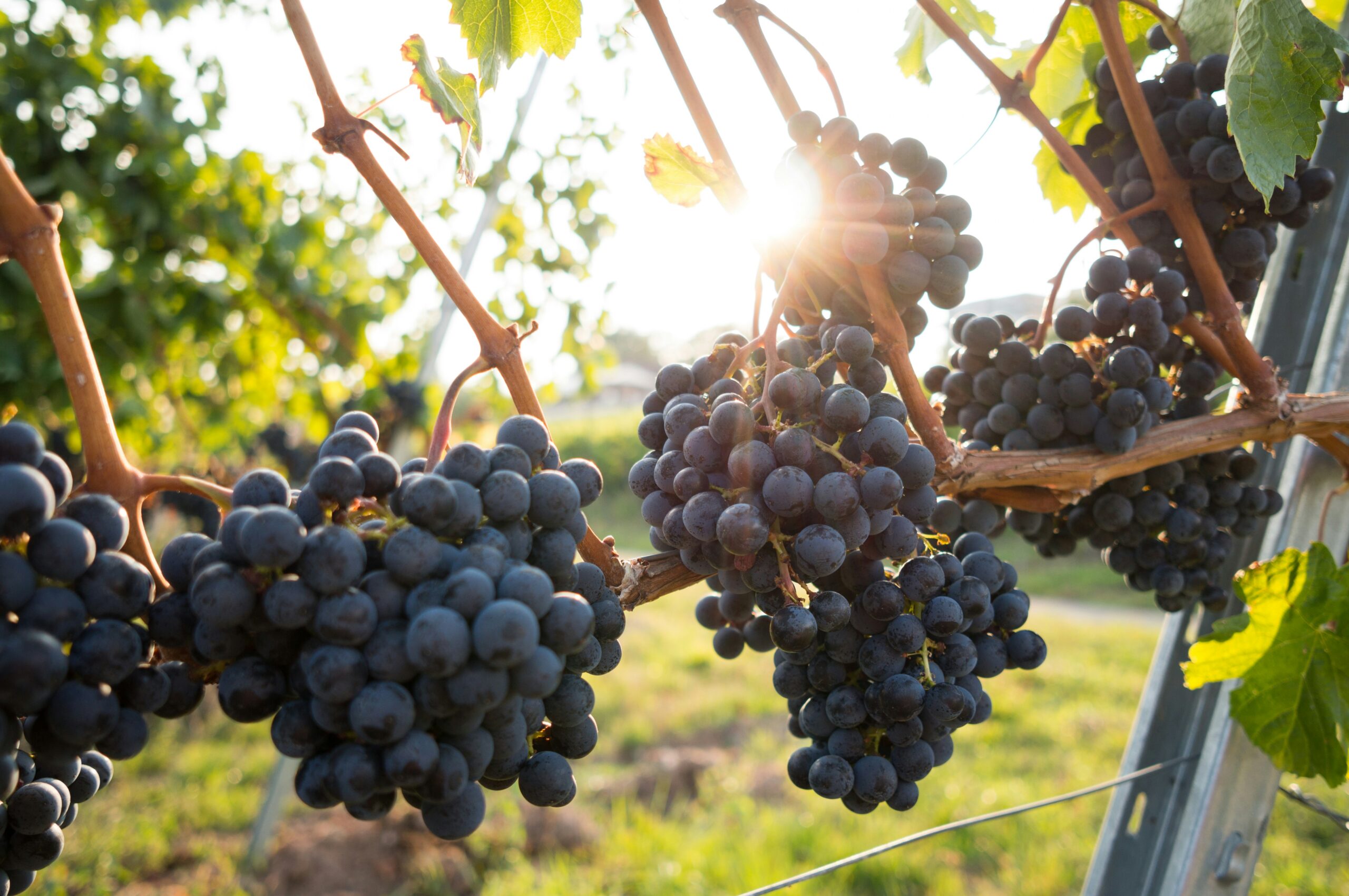
The Saale-Unstrut region prides itself on a wine history over 1000 years long. Numerous wineries along the 60-kilometer long wine road invite you to taste their wines. But the region has even more to offer.
Art Nouveau artist Max Klinger called the area around his sanctuary in Großjena ‘Tuscany of the North’. With a panoramic view of the cathedral city of Naumburg, here he relaxed in his vineyard cottage after 1903. More than a century later, visitors confirm the artist’s assessment of the Saale-Unstrut wine-growing region. Old steep slopes and terraced vineyards meander gracefully above river meadows.
‘Edelacker’, ‘seat of the gods’, ‘paradise’ – the northern lights of German vineyards bear evocative names, some of which have been like that for a long time. Located in Saxony-Anhalt, Thuringia and Brandenburg, this region prides itself on a wine history of more than 1,000 years. During its peak at the beginning of the 16th century, the vineyards along the Saale and Unstrut rivers covered up to 10,000 hectares. Wars, failed crops, political unrest and phylloxera in 1887 ended this wine happiness.
A beautiful network of hiking trails
Although viticulture was subsidized from 1960 onwards, only privatization brought significant changes. The area of the vineyard now covers approximately 680 acres. ‘The goal is 780,’ says Siegfried Boy, president of the region’s winemaking. Along the approximately 60-kilometer long Saale-Unstrut wine road, more than 50 private winemakers, Freyburg winemakers’ association, Kloster Pforta state winery and Rotkäppchen-Mumm winery’s cellar They invite you to taste their wines.
The center of the region’s wine tradition lies in the triangle formed by Freyburg, protected by Neuenburg Castle, the cathedral city of Naumburg and Bad Kösen. Mountaineers will find a rich network of trails. Culture lovers should visit Naumburg, which was first mentioned in 1012. The city owes its glory to the late Romanesque-Early Gothic cathedral of St. Peter and Paul. Every year, about 150,000 visitors walk in the footsteps of the ‘Numburg Master’, who created his masterpiece here in the 13th century. This includes the Western partition on the Cross Council with a living relief of the Passion and the donor figures.
Monastery estates and baroque vineyards
The 14-kilometer path leads from Naumburg past the idyllic ‘Blütengrund’ (flower soil), where the Saale and Unstrut rivers meet, to Freyburg. Along the way, in the naturally grown terraced wall of the Steinauer vineyard, there is an impressive stone picture book: a sandstone relief from the 18th century, which shows twelve biblical scenes of vineyards and hunting in natural dimensions. The Art Nouveau artist found his final resting place in the Klinger vineyard in Großjena.
In the charming town of Freyburg, surrounded by vineyards, the Ducal vineyard offers an insight into the work of winegrowers on steep slopes. Today it is used as an exhibition vineyard, and was originally built in 1774 as a baroque vineyard with a vineyard house, typical of the region, as a central part.
Anyone who hikes upstream along the Unstrut River of Freyburg next to the Schweigenberge mountains will discover the story of the success of the Middle German winemaker in the village of Zscheiplitz. With the renovation of the former monastery estate, Bernard and Kerstin Pawis created a unique environment for their wines. Since 2001, their wines have been competing in the highest league of the association of German wineries Prädikat.
Cover photo: Photo by David Köhler he unsplash