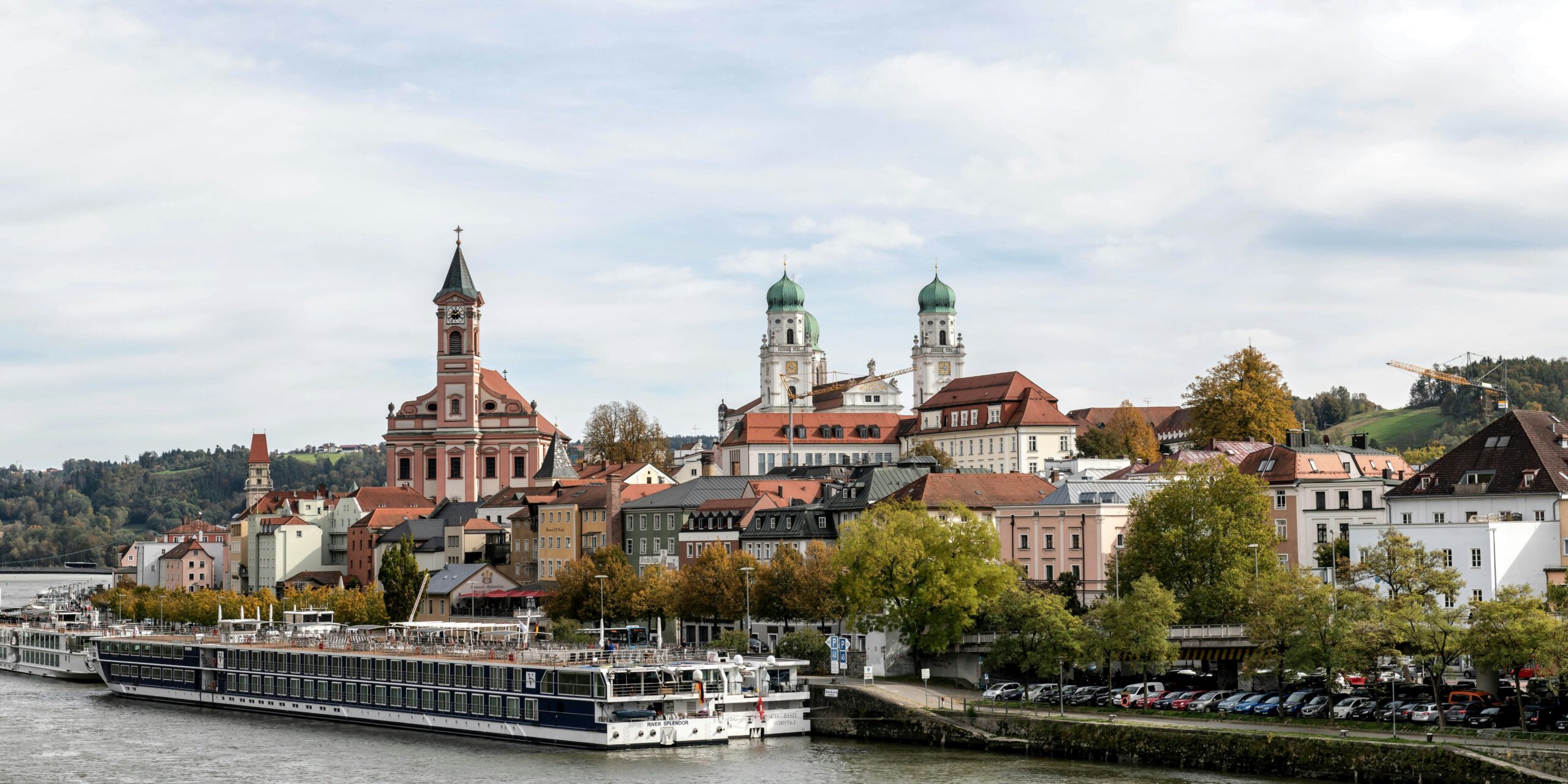
‘More passengers register here than in many German ports on the open sea,’ says the mayor of Passau. But the town is popular with Danube travelers not only because of its port.
The ships moored to the coast of the Passausian Danube promenade bear names like ‘Bellissima’ and ‘Primadonna’. They sail to Vienna, Budapest, and even to the Danube delta on the Black Sea. Some agree to Koblenz and Düsseldorf. The authorities counted about 214,000 passengers last year. ‘Passau is a famous name all over the world,’ says Mayor Jürgen Dupper, not without pride. ‘More passengers register here than in many German ports on the open sea.’
With the fall of the Iron Curtain, the Danube once again became attractive as the main European waterway. Passau, in southeastern Bavaria on the border with Austria, benefited from it. ‘In 1992, cruise ships landed 181 times; last year they agreed 1,751 times,’ says city spokeswoman Susanne Gabriel. ‘More than 1,900 dockings have been reported for this year.’
Despite the influx of tourists, the atmosphere of the old town has been preserved. Travelers praise his Mediterranean flair. It is obvious that Italian architects worked here. Cathedral of St. Stjepan, with domes in the shape of an arch, rises at the highest point in the center.
It was built between 1668 and 1693. At that time, Passau was an important independent principality-diocese – until secularization in 1803 dispossessed the clergy and the city became part of Bavaria.
On average only one night
Passau requires a specific time for visitors. Many miss the opportunity for a more detailed tour. ‘These are the guests who, after arriving, go directly to the ship, and then leave immediately,’ says Gabriel. ‘On average, a guest from a cruise ship stays one night in Passau.’
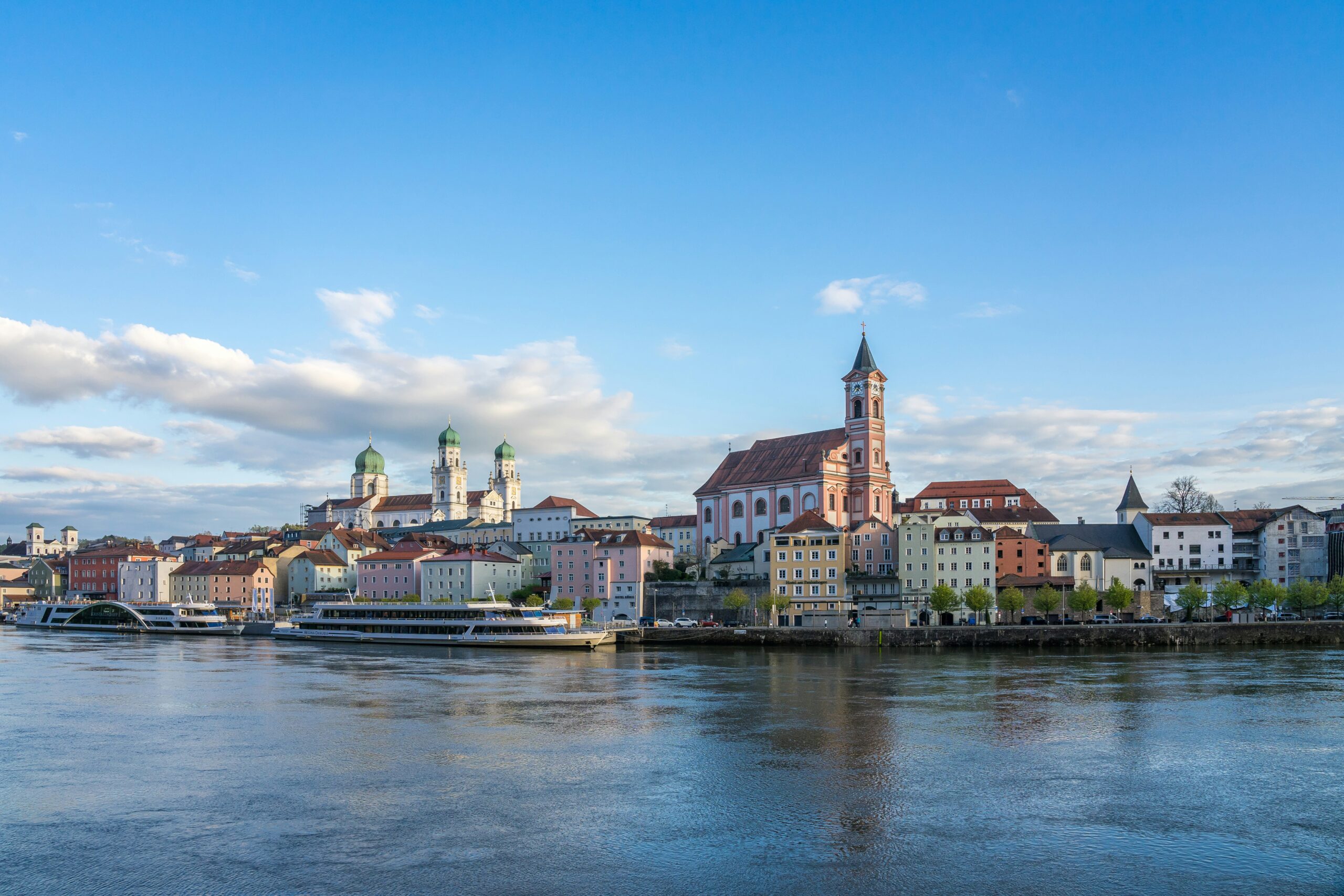
Belgian couple Louise and Bernard Mercier, however, plan to stay three days before the ship sets sail on a two-week journey to the Danube Delta. The man is particularly impressed by the cathedral: ‘The organ has 17,774 pipes and 233 rappers; these are the largest organs of the Catholic Church,’ he says enthusiastically. The largest pipe is more than eleven meters high, and the smallest measures only six millimeters. It can be heard from May 2 to October 31 on weekdays at noon and Thursdays at 7:30 p.m.
Cruise ships arrive in Passau already in March and continue their tours until the end of December. ‘But the peak of the tourist season is from May to September,’ explains Gabriel.
floods over and over
Like the bow of a ship, Passau stretches to the mouth of the Danube, Ilz and Inn rivers. You will find few walkers in the narrow, sometimes steep, medieval-looking streets, as well as on the shores of the Inna.
Beautiful weather makes a person forget the dangers that floods pose for the city of three rivers. On the wall of the medieval town hall, the maximum heights that the river has reached so far are marked. The last major flood in 2002 flooded large parts of the old town.
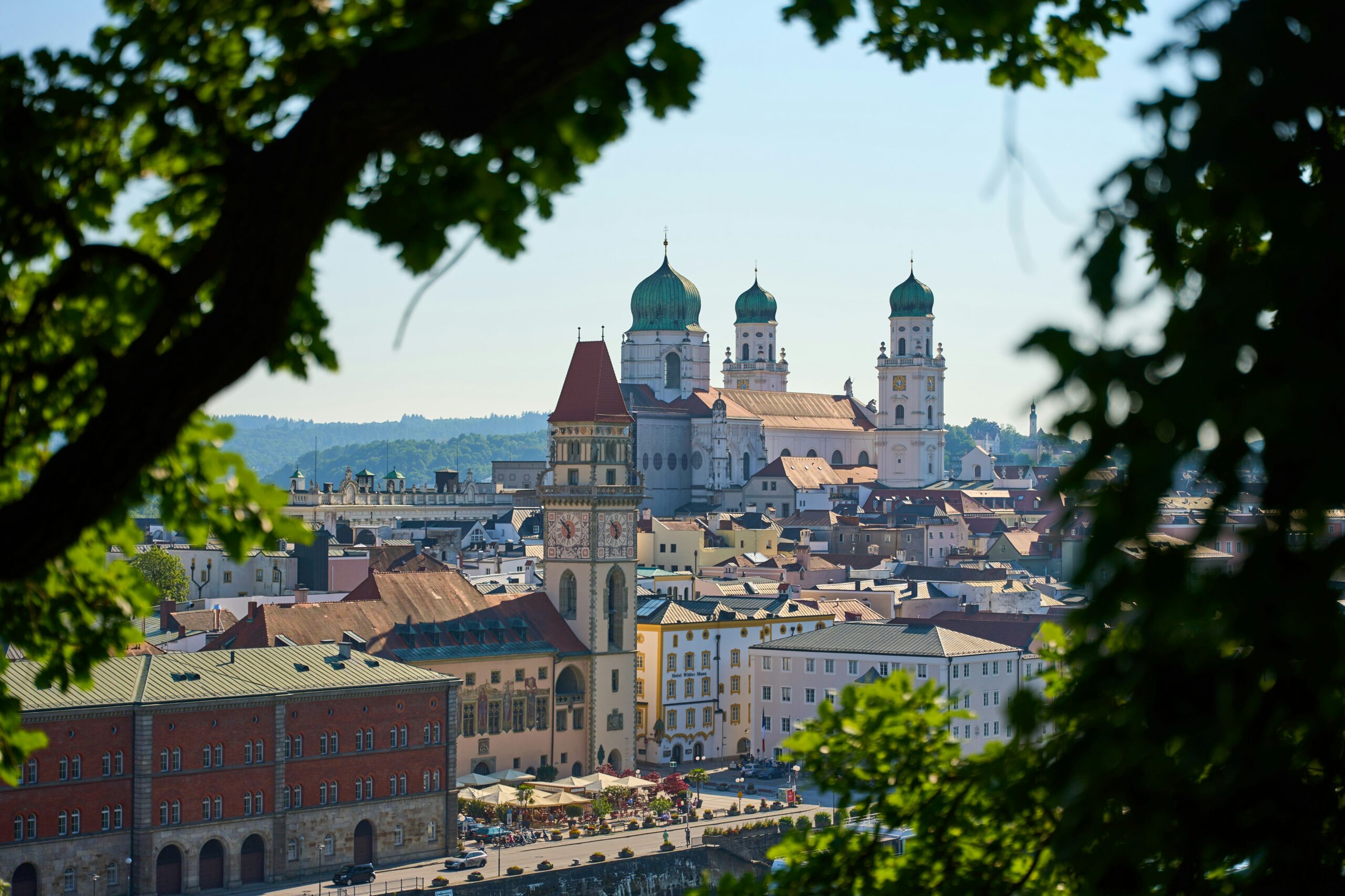
Passau, with a current population of approximately 50,000, boasts a long history. Celtic Harbor on the Danube, Roman Fort until 476, Bavarian Castle of Bavaria, Diocese of 730 and the starting point of missionary work in Austria, and city rights granted in 1225 – these are The most important sights. In addition to the magnificent cathedral, the bishops-bishops had a palace and an opera house built in an early neoclassical style, which today serves as a city theater.
The beginning of the career of many famous cabaret artists
The most beautiful view of Passau is from Vesta Oberhaus, the former seat of the prince-bishop, high above the left bank of the Danube. Those with little fitness can climb the staircase, but it is more comfortable with ‘Wolfi’, a city tour with numerous boarding and unloading places. There is a city museum in the castle. Anyone interested in sacred art should definitely visit the cathedral treasury with its precious liturgical vestments and Gothic paintings on plates, recommends Bernard Mercier.
The careers of some famous cabaret artists started in the rather conservative city of Passau: Bruno Jonas, Ottfried Fischer and others performed at ‘Scharfrichterhaus’, a cabaret stage in a medieval building that once served as an executioner.
Hape Kerkeling received an award for young talent here in 1983. It is not only students who appreciate the artist’s verbal outbursts against politics and society.
‘Heilig-Geist-Stift-Schenke’ in the center offers an oasis for relaxation and dining. One of the attractions is a spacious garden overgrown with vines. ‘You have to try the sour Lüngerl,’ advises waitress Ludmyla from Ukraine, who helps her Bavarian counterparts serve many tourists in the most important cruise ship port on the Danube. ‘Guests are a significant economic factor,’ says Susanne Gabriel. Supply is guaranteed. Ships anchored close to each other on the shore prove this.
Cover photo: Photo by Wolfgang Weiser he unsplash