You are probably familiar with the Balearic archipelago. Every year, millions of people flock to the islands of Majorca, Menorca, Ibiza and Formentera to wander through painted cities, enjoy untouched beaches, accept a relaxed atmosphere – and some indulge in a little fun.
A little further south lies another Spanish island that encompasses much of this Mediterranean magic, and at the same time remains almost completely unknown.
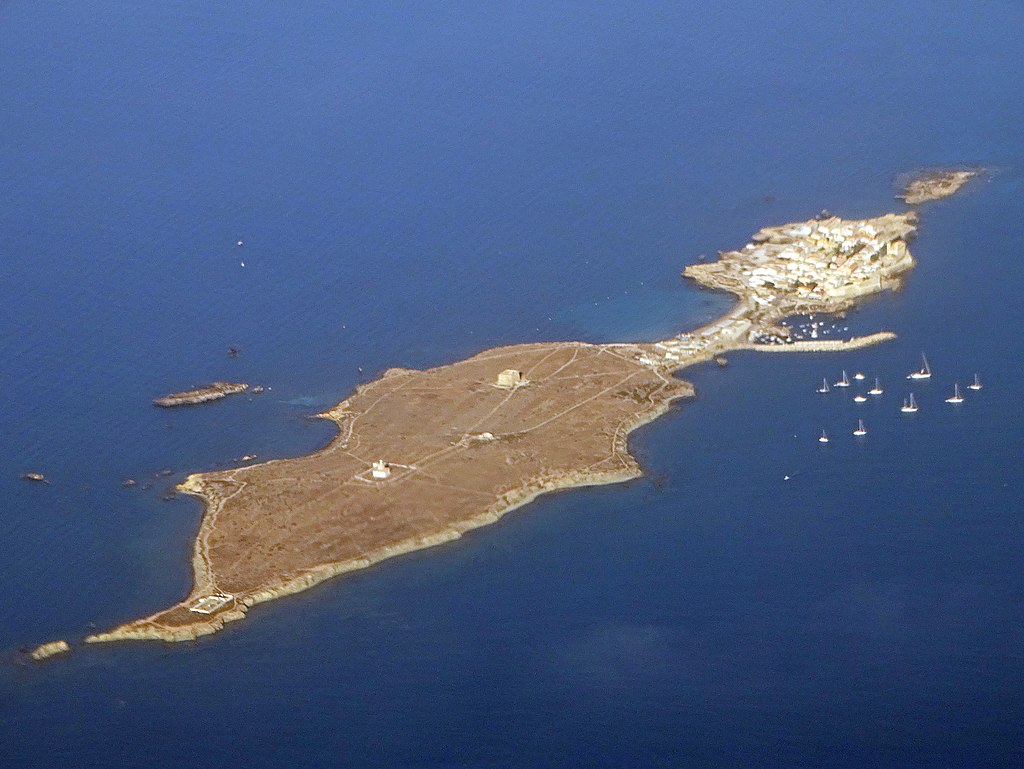
Look at the map of Spain, zoom in on its southeast corner and, if you pay attention, you will notice an elongated piece of land right next to the city of Alicante.
The flat, tiny island of Nueva Tabarca stretches 1800 meters – a little more than a mile – and stretches only 400 meters in the widest part. About 50 people live on the island year round, making it the smallest permanently populated island in Spain.
What Tabarca lacks in size, more than compensates with natural and cultural heritage. His isolation protected him from reckless over-development that damaged much of the nearby Costa Blance.
However, Tabarca is far from far away. Officially part of Alicante, it is located only a few kilometers from the coast. Several times a day, ferries with glass bottoms transport visitors over a narrow belt of water from the land fishing port of Santa Pola.
Even this minimal degree of geographical separation gave Tabarca his own personality.
Its distinctive character owes greatly to the extraordinary 18th century. The inhabitants of the island do not have their roots from the nearby coasts, but hundreds of kilometers away – in a historical saga that connects Tabarca with Italy and North Africa.
Nueva hints at the story in his name.
Between 1500 and 1800, the red coral from the then island of Tabark, on the northern coast of Tunisia, was a valued commodity.
In the 16th century, the Lomellini family of Genoese secured a concession from local rulers for extracting corals there. By the middle of the 18th century, the settlement had about 2,000 people, mostly of Genoa.
Then the Ottoman bey of Tunisia, the ruler of today’s Tunisia, had other plans.
In 1741, his forces flooded Tabarka, enslaving many inhabitants and sending shock waves throughout the Western Mediterranean. The kings of Spain and Sardinia offered refuge to those who fled and paid a ransom for the release of those still captured.
Those who arrived in Spain were offered a place to rebuild life – on a small, barren island. Then known as the Illa Plana or Flat Island, it was renamed Nueva Tabarca in memory of their previous home.

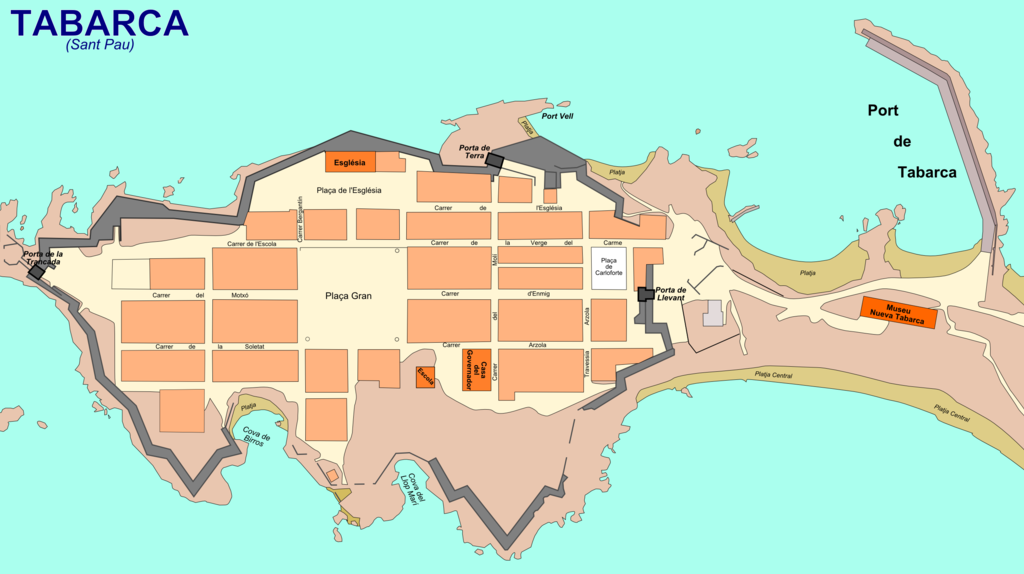
The new settlement was not improvised. In line with the Enlightenment ideas of that time, military engineers were tasked with setting up a precise urban network that is still visible today. Wide, flat streets intersect at a right angle, converging in the central square. The established perimeter protected the community from Berber pirates who regularly plundered the Spanish coast.
In the meantime, not all Tabarians reached Spain. Some found refuge in Sardinia, where King Charles Emanuele III. Savoy moved to San Pietro and Sant IslandsAntioco, founded the villages of Carloforte and Calasetta. Their descendants still speak the dialect ‘tabarchino’ and maintain a separate culture.
In recent years, efforts have been made to reconnect three Tabar communities after years of separation. In 2024, about 75 representatives gathered in Pegli, near Genoa, the home of their ancestors. There is even talk of the nomination of the Saga about Tabarčani for UNESCO’s list of intangible cultural heritage.
Although this recognition is still a distant perspective, the Spanish Tabarca enjoys another official protection. In 1986, it became the first Spanish sea reserve. Two thirds of the island are still underdeveloped and largely intact. Its surrounding waters and neighboring rocks and islets serve as a refuge for marine life.
The urbanized third of the island has adapted to tourism, with many traditional homes transformed into short-term accommodation for a growing number of tourists fleeing the hustle and bustle of Costa Blance.
Island of day trippers
The magic of Tabarca did not go unnoticed, even outside the borders of Spain.
María del Mar Valera, owner of a restaurant in Tabarca and president of APEHA, the Alicantea hospitality company, tells CNN that international visitors can make up to 80 to 90% of arrivals.
Most tourists are day trippers. About 20 small businesses serve approximately 200 to 250 people, although the business is strictly seasonal, despite the mild climate throughout the year. ‘Nobody comes here in winter,’ he adds.
And this one, during a visit to a quiet Friday in early autumn, the streets of Tabarca were almost deserted. The cats, who bathed in the afternoon sun, far outnumbered people. (The study found that in 2023 there were about twice as many cats on the island as humans). Wide and tidy streets – unusual for a Mediterranean city – reinforced a sense of tranquility.
A few weeks earlier, the picture would be different.
‘At the height of summer, we can have six or seven thousand visitors, maybe we would reach 10,000 on a peak day,’ says Valera.
Some locals complain that when tourists leave, the island disappears from sight – especially when it comes to public services.
The lack of transportation options between November and March, when the frequency of ferries drops drastically, is the main complaint, says Carmen Martí, president of the Tabarca Residents Association.
‘It’s very difficult to live a normal life when you barely make it to the land and come back on the same day,’ Martí tells CNN. Some elderly residents have even left due to difficulties in accessing regular medical care.
The association advocates that the inhabitants of the island have similar benefits to the inhabitants of other Spanish islands, such as guaranteed public transport and discounts on land trips.
Martí also supports the introduction of an electronic map system for access to the island. This, he says, would also allow local and regional authorities to get an accurate idea of how many people visit the island and plan infrastructure and public services accordingly.
Like many Mediterranean destinations, Nueva Tabarca is trying to find the right balance between conservation and tourism. In May 2025, the City of Alicante passed a new law that aims to further protect Tarbarca’s architectural heritage.
‘We are working to preserve a lot of valuable architectural elements that exist on the island,’ José Manuel Pérez, head of the municipal heritage in the city of Alicante, tells CNN. ‘In addition to the historic center of the city, we also assess the possible future purposes of the island fort’, he adds, referring to another unique building on the island, a fortified tower in which there was a small military garrison until recently.
The tower of the fort stands like a lonely Centinel on a half-mile long strip of thickets on an uninhabited part of the island, and the lighthouse and cemetery are its only human companions.
From there, the high hills of Alicante can be seen on the horizon, a timely reminder that Tabarca offers something increasingly rare in the Mediterranean: a place built to measure man.
Cover photo: Primorac – Tabarca Island-Alicante (Spain) – 48502403002 (cropped).jpg By: Jose A., CC BY 2.0 , Via Wikimedia Commons