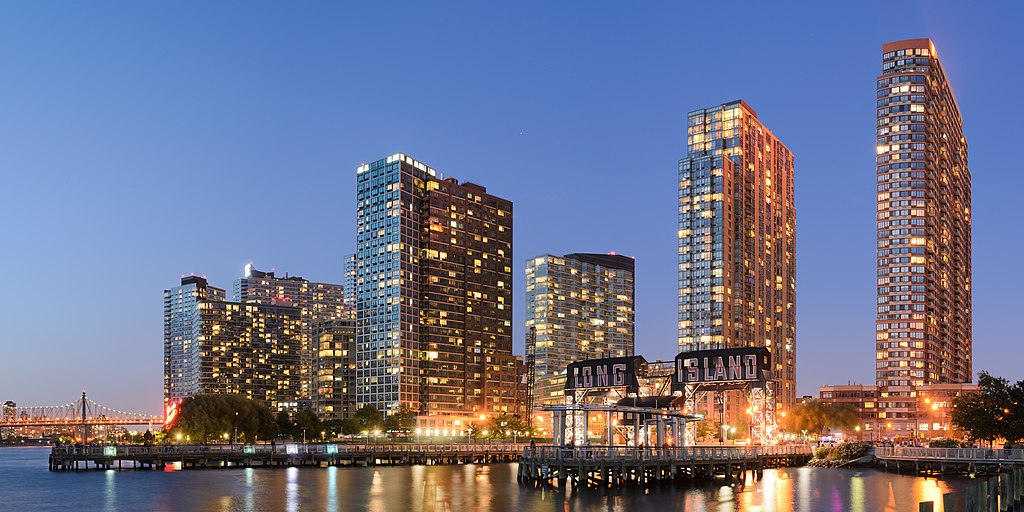
More and more tourists flock to Fifth Avenue for shopping or walking in Central Park. New York City records record numbers of visitors every year. But the city also boasts impressive architecture.
New York is definitely worth a visit, especially for architecture lovers. Rick Bell, head of the Center for Architecture of the American Association of Architects in New York, has compiled a list of ten significant buildings in the American metropolis. One of the most famous buildings in New York, the Empire State Building, is not included. Bell claims that every visitor to New York already knows what it looks like.
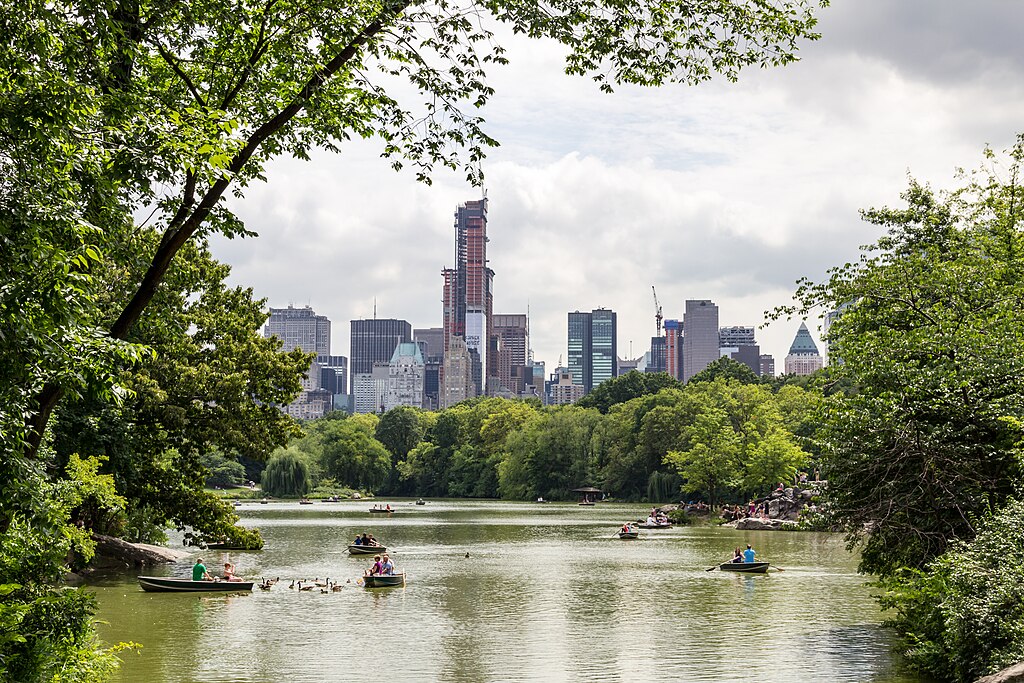
On the other hand, in Times Square you will find the Condé Nast building, which is considered the first ‘green’ skyscraper, and the Seagram building, the only work of the world-famous German architect Ludwig Mies van der Rohe in New York. Here are fascinating details about the architectural highlights on Bell’s list:
Condé Nast building
The 264-meter-high building, built by architects Fox & Fowle in Times Square in Manhattan, is what Bell calls ‘environmentally friendly.’ Finished in 1999, the building contains state-of-the-art air quality and energy saving systems.
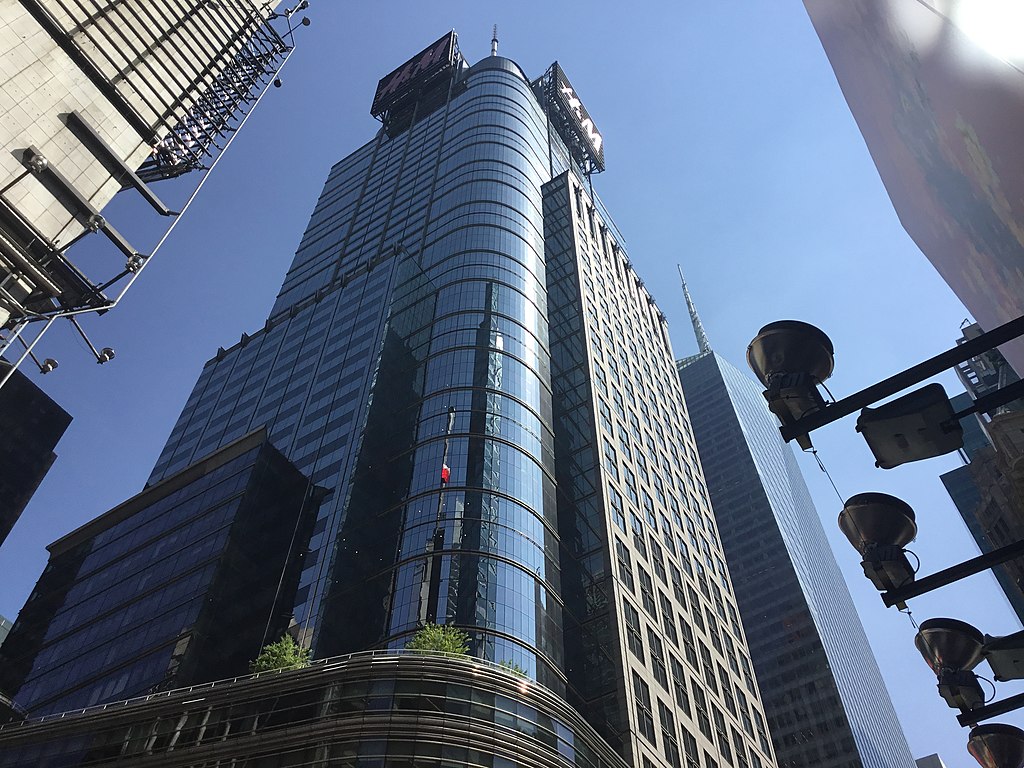
Museum in Brooklyn
In 2004, James Stewart Polshek added a modern circular structure made of glass and steel to the entrance area of a neo-baroque building from the 19th century.
Prada New York
The wavy structure made of tropical zebra wood, designed in 2001 by Rem Koolhaas, connects two floors of a Broadway store in Soho. ‘He exhibits a collection, not only selling it,’ says Bell.
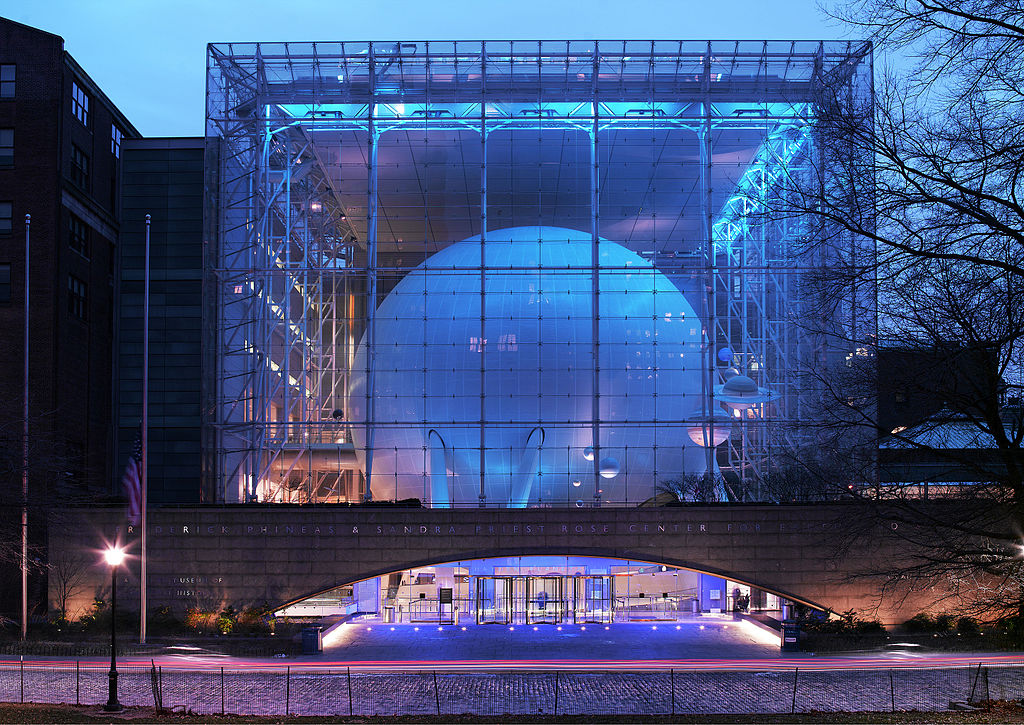
Rose Center for Earth and Space
It was designed by James Stewart Polshek, this hypermodern building, completed in 2000, is part of the American Museum of Natural History in Central Park West in Manhattan. The illuminated ball, 27 meters in diameter, seems to float inside a large glass cube. The Hayden Planetarium is located in this sphere.
Apple Store Soho
The design for the outside of the almost undefeated Prince Street store in Manhattan, which dates back to 2002, is the work of Ronnette Riley and Bohlin Cywinsk Jackson, but was significantly influenced by Apple’s creative team and CEO Steve himself Jobs. The facade of the post office from the 1920s, built of stone and brick, has been preserved almost unchanged, up to the inscription ‘Station A’ above the entrance. The interior has a minimalist, completely white space and an attractive glass staircase leading to a glass gallery.
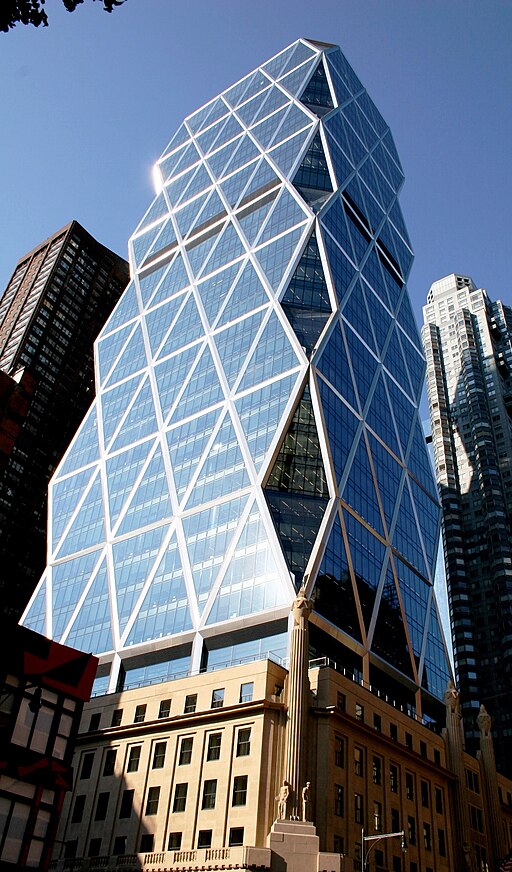
Hearst Tower
The 42-story tower, with slanted beams and large glass panels, was designed by Sir Norman Foster, and was completed in 2004. It was built on top of the original six-story Hearst media empire on Eighth Avenue in Manhattan.
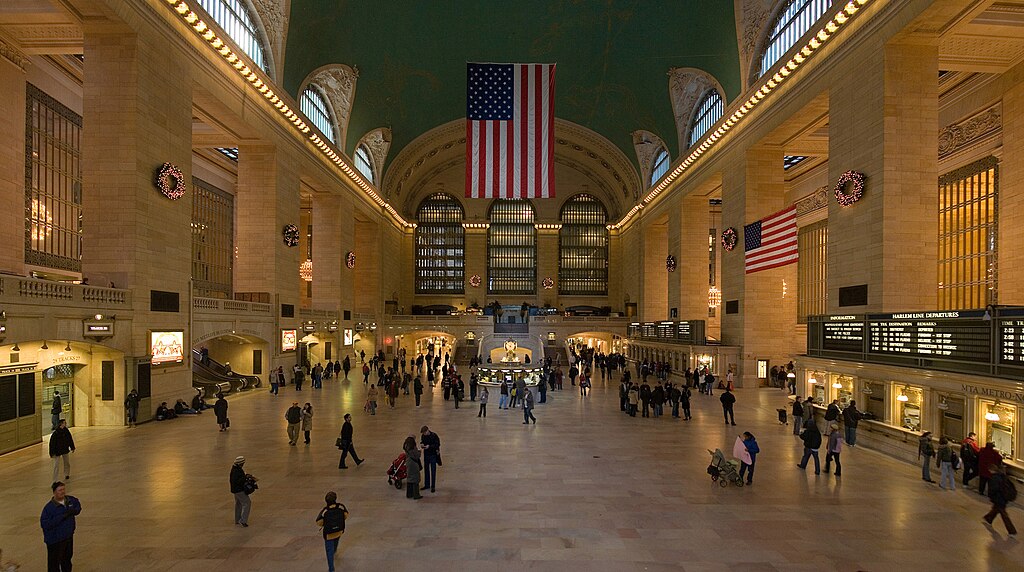
Grand Central Terminal
The main railway station in the heart of New York, built between 1903 and 1913 in neo-baroque style, was slated for demolition. The restoration, overseen by the architects Beyer, Blinder & Belle, was completed in 1998 and restored the majesty of the building, with stone arches, cathedral windows and a ceiling painted with constellations in the main hall.
Morgan Library
The extension of the 1906 Library building on Fifth Avenue in Manhattan, designed by Renzo Piano, was completed in 2006 and is considered one of his masterpieces. Glass walls connect old and new architecture.
chrysler building
The 319-meter-high building, designed in 1930 by William Van Alen, is, according to Bell, a phenomenal example of Art Deco architecture. He describes it as elegant, but also fun, from the crown of stainless steel arches to gargoyles shaped like fenders or hoods.
Seagram building
The skyscraper on Park Avenue, completed by Ludwig Mies van der Rohe and Philip Johnson in 1958, ‘changed our panorama,’ says Bell.
Cover photo: King of Hearts / Wikimedia Commons / CC-BY-SA-3.0, CC BY-SA 3.0, Via Wikimedia Commons