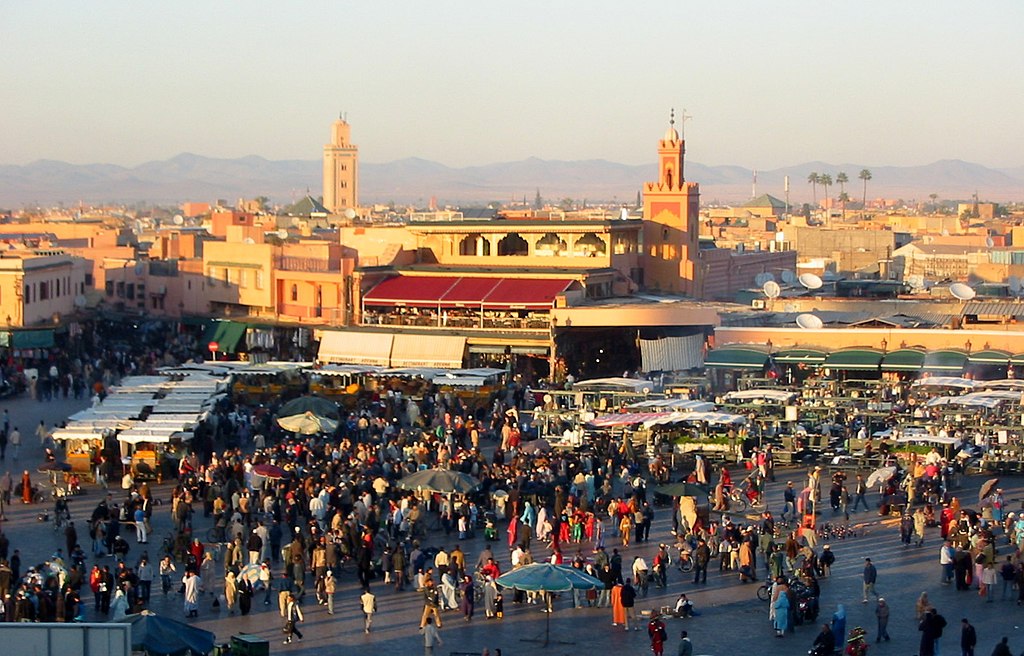
In Medina there is a ‘Juggler Square’, the heart of the city: where the heads of the executed were once exposed, now monkey trainers and snake tamers appear.
Marrakesh is not just one of the most exciting cities in Africa – for some it is also the most beautiful. It is a good 150 kilometers to the Atlantic Ocean, and less than 50 to the high atlas. For caravans that once came here from the Sahara, it was like a revelation after weeks of difficulties. Tourists who come to Marrakesh from the arid south of Morocco still feel something similar – the city of many faces.
Withered saplings stand on the edges of dry fields, farmers plowed the ground with donkeys. Many houses in the villages are unsightly mud blocks with flat roofs. Young Moroccans often don’t see a future in the countryside – and when you see these villages, it’s easy to understand why.
‘Pizza Hut’ on the street corner
More and more young people are attracted to cities like Casablanca, a flourishing of Morocco in a metropolitan area with six million inhabitants. Marrakesh, the second most important tourist destination in the country after Agadir, already has more than 900,000 inhabitants. The large cement factory is located on the outskirts of the city – there is no trace of a thousand and one nights here. The flat roofs of residential buildings are covered with an armada of satellite antennas. McDonald is on one street cornerS, on the next Pizza Hut.
Marrakesh is the center of the south, and in the economic sense, which does not mean that there is no poverty: day laborers sit by the side of the road waiting for orders to transport goods that need to be brought into the city.
Stage, bazaar and tourist trap
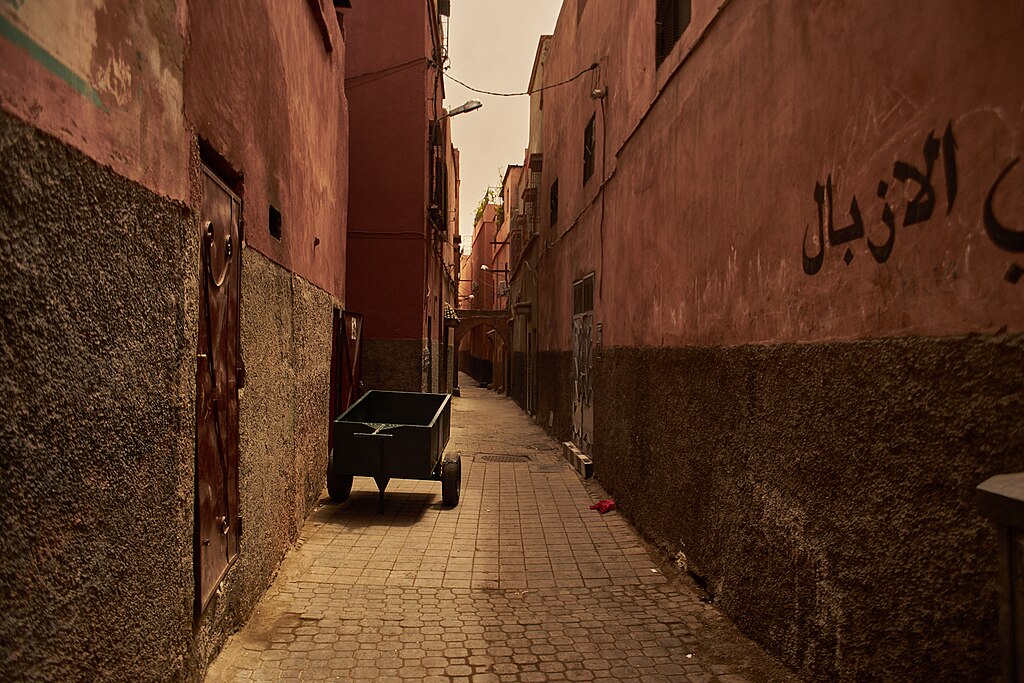
Marrakesh is first of all known for his old city, Medina, and for his sukos, the largest in all of Morocco. The passages of the market are almost always crowded and lively. The rooster rushes past one of the stalls selling mirrors, brass jugs and hanging lamps. Just a few steps away is the vegetable market: peas are pods lying next to the eggplant. Fruit is available in crates and spread out on the floor blankets. Another seller sells snails from crowded bowls.
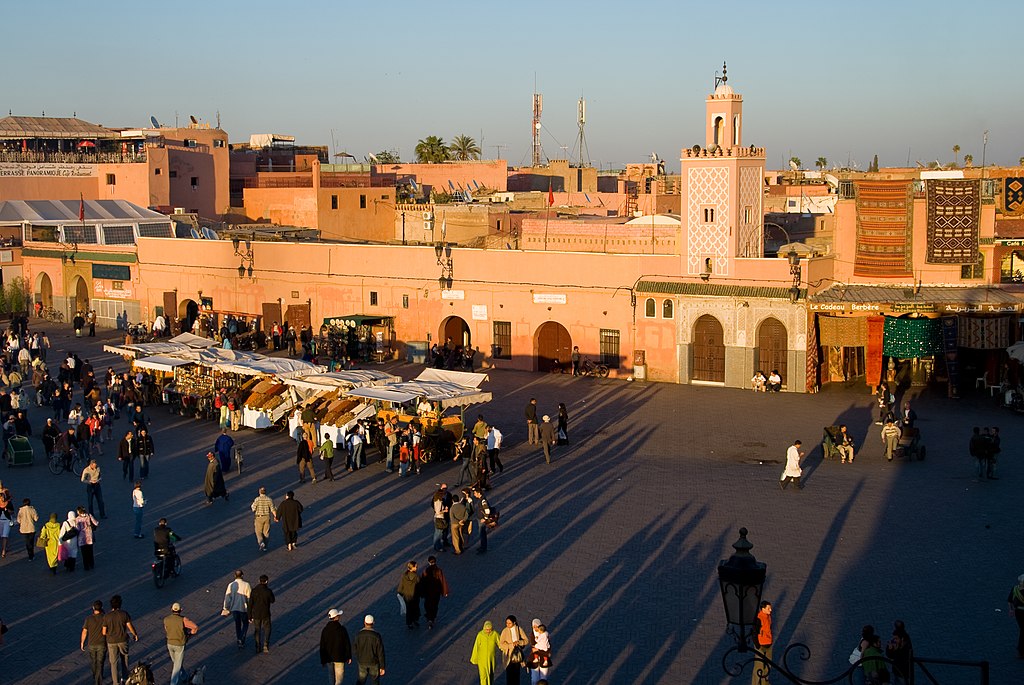
Anyone who wanders Sukom sooner or later will end up on Djemaa el Fni, the liveliest square in North Africa. In the past, the heads of the executed were exposed here on the stakes. Today, the square is a stage, a bazaar and a tourist trap. Every photo and every live performance has its price. Monkey trainers are just as eager to pay cash quickly as snake tamers and water carriers.
The largest and most beautiful madrasa
From the ‘Juggle Square’ you can already see the city’s landmark, the minaret of the Koutoubia mosque. However, even more famous is the Ben Youssef madrasa in the north of the Old Town, which, unlike the Koutoubia mosque, can also be visited by non-Muslims.
For centuries, it was the largest and most beautiful madrasa in the Maghreb, a combination of a place of worship and a higher school for Islamic law and theology. It looks unpretentious on the outside – and even more impressive on the inside: there is a pool of water in the center of the yard. The high walls that surround it are decorated with plaster and marble stucco and covered with calligraphy or floral and geometric patterns.
Majorelle Gardens
A completely different side of Marrakesh is revealed in the Majorelle Garden. Jacques Majorelle was a Frenchman passionate about Morocco and with a talent for garden design. He bought the property in the 1920s. His garden has been open to the public since 1947. Later, the green oasis belonged to fashion designer Yves Saint Laurent for some time.
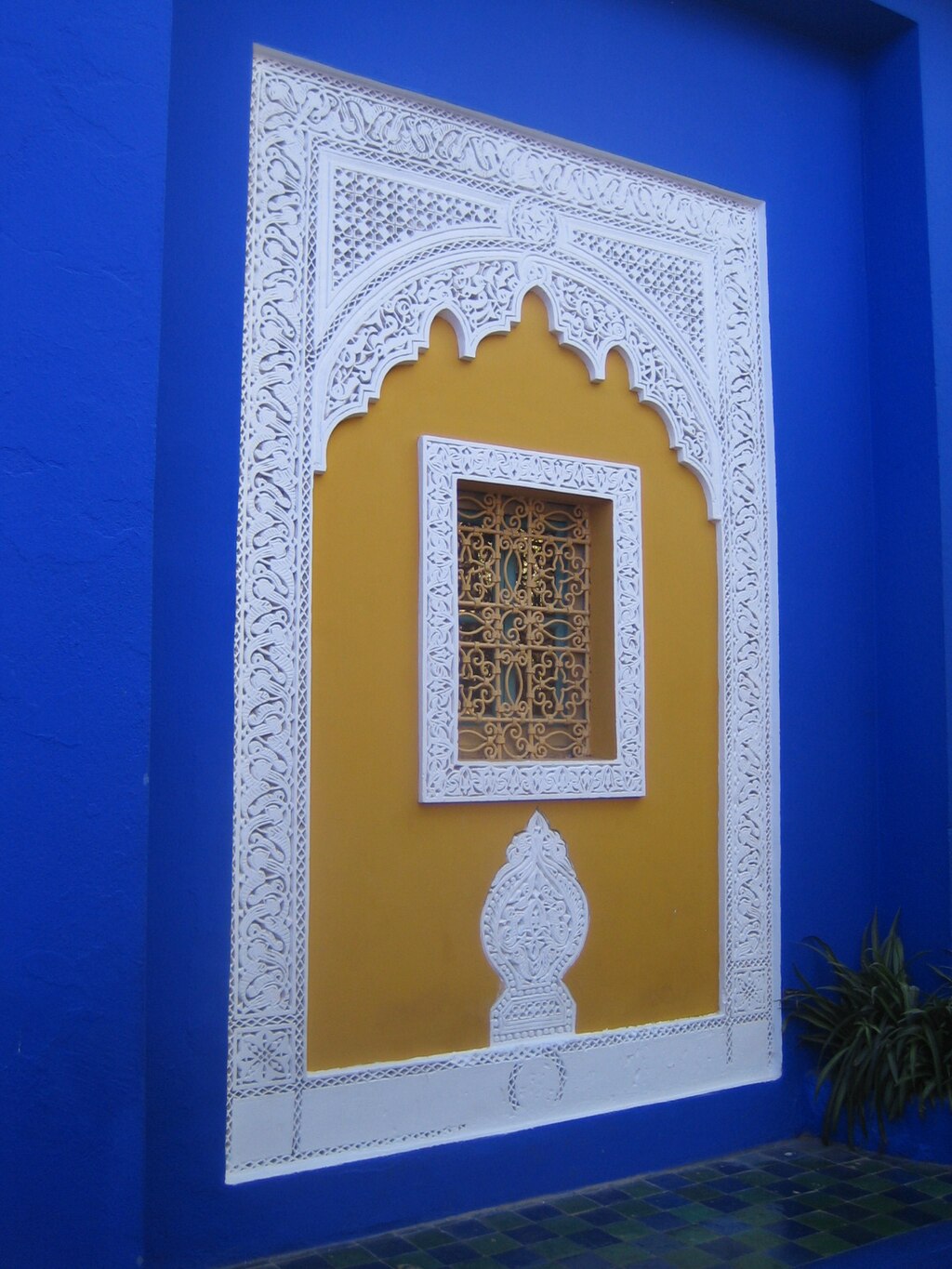
Green is clearly the dominant color, except for yellow and blue flower pots. In the courtyard there is a museum of Moroccan art and a cafe. Turtles can be observed on a pond with water lilies. ‘Jardin Majorelle’ is not exactly a fairy tale from the Thousand and One Nights – but it is quite close.
Cover photo: Donar Reiskoffer, CC BY-SA 3.0, Via Wikimedia Commons