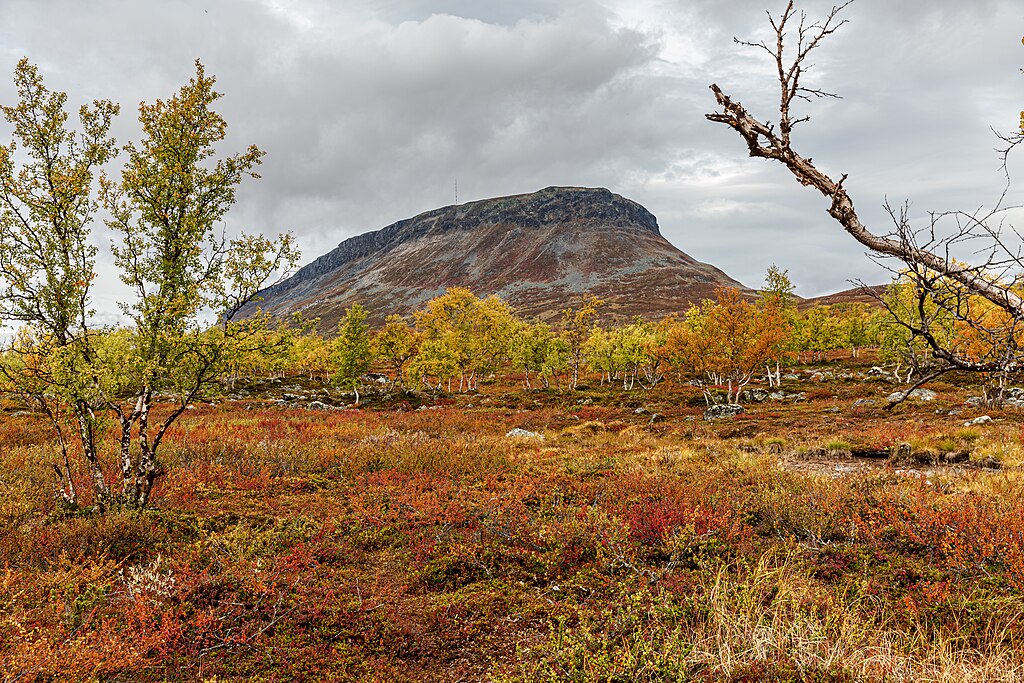
In the summer, northern Sweden beckons with its brightness of colors and pure wildness. For family trips, there are also several shorter hiking trails in the Abisko National Park. and the evening campfire completes the experience of Lapland.
The river gurgles through a deep blue-black stream towards the valley. The leaves of the birch shine bright green, the lichens on the granite rocks are crimson, and the sky is azure blue, where the evening sun is still high above the horizon. Lapland does not save color and light in the summer. The campfire crackles at the rest area, and the mountaineers, surrounded by smoke, are looking for potatoes.
This is the wildlife romance of Abisko National Park, 200 kilometers north of the Arctic Circle. The park was founded 100 years ago, in 1909 Sweden, which was the first country in Europe to establish national parks, now celebrates this anniversary with ‘the year of nature’.
The smoke at the rest area is good because it drives away mosquitoes. There are definitely a few million of them here. Culex vulgaris, a common mosquito, buzzes in huge swarms during the Nordic summer. Along with them, there are also obads, flies, black flies and other unpleasant insects nearby. But anyone who goes hiking in Lapland knows this and takes precautions: clothes that won’t let Rilko bite, repellent sprays and a wildlife hat with a net over his face.
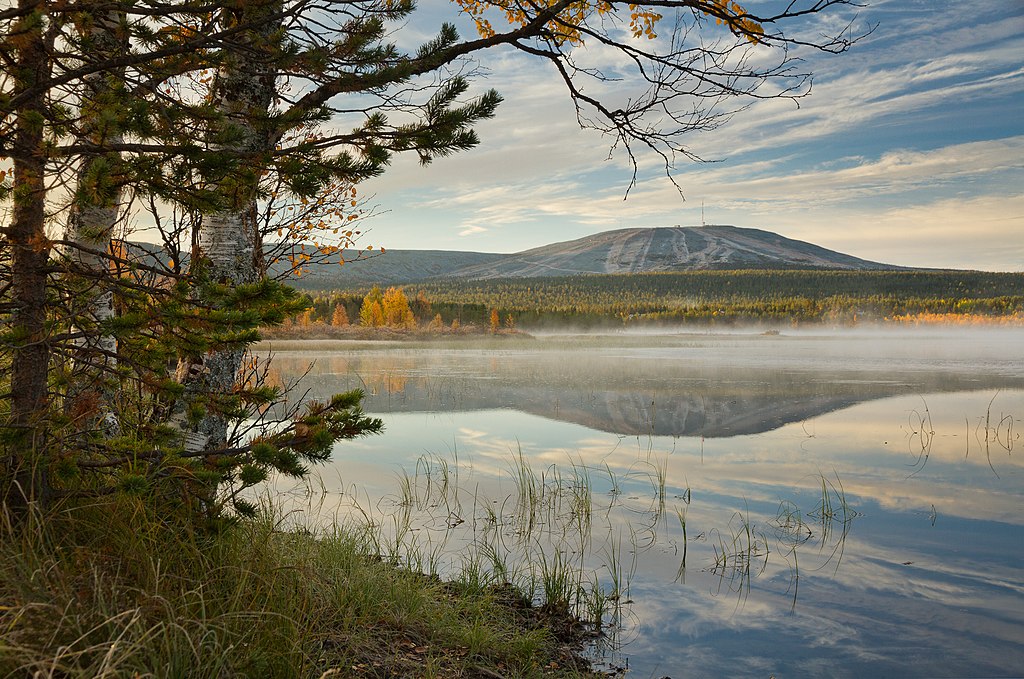
Far more exciting than insects are other wildlife in Abisk: you are very likely to spot elk and reindeer, and with a bit of luck, you could spot an arctic fox, grouse, lynx or eater. Bears and wolves roam the park as well. For visitors from Central Europe, a tour of Lapland is a sufficient adventure even without such an encounter with a predator: they trample through frozen rivers, carry 15 kg of luggage on their backs, drink from the spring and tread through the desolate wilderness in the downpour.
The most famous Swedish hiking trail, ‘Kungsleden’, winds through the lonely expanses of Lapland. The approximately 440 kilometer long ‘royal path’ begins in Abisk and crosses several national parks. Apart from a few reindeer shepherds, the hill area is almost deserted. However, the trail is well marked, with wooden trails that lead over otherwise impassable swamps and bridges over fast streams. There are also cabins with service, always one day’s walk away. There you will find dry sleeping areas, hot soup, cold beer and groceries to travel with.
Abisko is also a good starting point for shorter hiking tours. There is a supermarket, a gas station and several hostels. Smaller hiking trails and guided tours start in Abisko, and the cable car takes you to Mount Nuloja. There, above the forest border at an altitude of 900 meters, the Lapland mountains are revealed in all its vastness: below the mighty Lake Torneträsk stretches to the east, and between the peaks lie swamps, heaths, rivers, pine forests and birch groves.
Anyone who wants to learn more about the landscape before heading into the hills will find a ‘Naturum’ next to the tourist station in Abisko. There they can find maps and tips for tours, lectures and guided tours. A few steps behind the Abisko railway station, there is also a reconstructed settlement of Sami Narod. The museum village shows how indigenous peoples lived about 150 years ago. Today, many of them are still actively engaged in reindeer breeding. However, instead of skis and sleds, animals are now collected by helicopters and snowmobiles. And they have long since replaced their reindeer-skinned turtles with electric heating and flat-screen televisions.
Finally, for lovers of true wilderness, there is Vadvetjåkka, the northernmost national park in Sweden. Available from Abisk, it covers only 25 square kilometers and is located in the high mountains right on the border with Norway. There are no paths, bridges or cabins, and few visitors dare to come here. You have to take a boat across the Torneträsk River and walk six kilometers through an unmarked, swampy terrain from the north coast to get to the park.
Baked potatoes are now being baked on a campfire. Along with it, we have moose salami and a can of beer, cooled in the river. The mosquito net is down, the sun is still shining, and the sleeping bag is already unrolled. If the troll just came out of the woods right now, it wouldn’t be a big surprise. Maybe he would like to taste salami, sip a beer and talk about his life. But such thoughts probably appear here only in the summer in Lapland.