The city in Schleswig-Holstein has much to offer even in the colder months. Various museums introduce visitors to the history of the city and exhibit interesting exhibits, such as a whale’s penis.
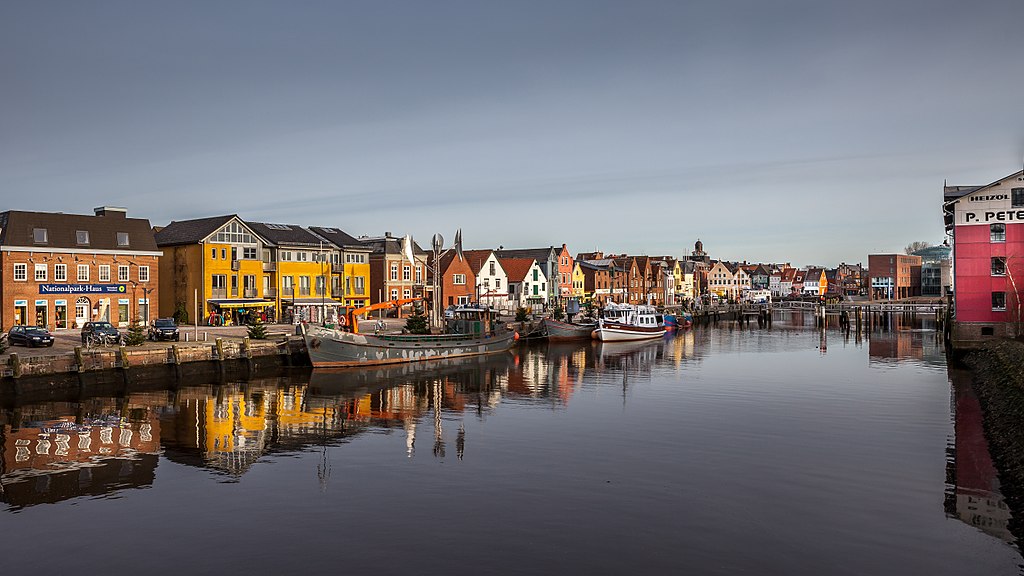
After a summer full of tourists, Husum’s harbor inland becomes noticeably calmer. Wild ducks sway on the water, seagulls sleep on wooden poles sticking out of the water. Husum is a little more pleasant in autumn than during the peak of the season. But there is still a lot to see in northern Frisia’s largest city. Whether it is a maritime museum, a storm house or a museum of the North Sea, visitors can relax and look around during this time of year.
Theodor Storm once named his hometown Husum ‘Gray town by the sea‘. But it is not that gray at all, even in autumn. In the interior of the harbor, several facades are even brightly colored – in a rich yellow or light blue color. At the end of the harbor basin stands a human-sized column, which tells us that the North Sea can also be very unpleasant. They are marked Water levels caused by storm surges on the Husum Pregrada In 1976, the water level reached 5.66 meters above sea level – without the protection of the embankment, the city would be flooded.

Northern Frisians are well aware of the threat posed by the rupture of the embankment. In 1362, a storm surge destroyed the swamp near Husuma, says Peter Cohrs, director of the Maritime Museum of North Frisia, just one step away from the harbor inland. It is said that more than 8,000 people died. Only thirty churches sank into the North Sea. But Husum profited from it. Rungholt, the most important trading town on the West Bank, also sank in floods. The second major flood disaster of 1634 also had its positive side for Husum looking back: ‘Since then, Husum has a harbor,’ says Cohrs.
Exposed cock whale
The maritime museum, among other things, exposes the tools used to build ships in earlier times – Eiderschniggen, for example, as slow cargo ships typical of northern Frisia were called. The most bizarre exhibit is probably the penis of the whale. Ship models are also exhibited: from the Hamburg-type barges to modern sea rescue cruisers. Peter Cohrs is particularly proud of the ‘Uelvesbüll wreck’: a freighter ship sank in Eiderstedt about 400 years ago. The ship was discovered in 1994 – which was a small sensation.
Apart from shipping, cattle trade has traditionally played an important role in Husum. ‘We had the largest livestock market in Northern Europe,’ explains city guide Anette Löffler. The ox heads at the market fountain still remind us of cattle from the past. High above them and in the center of the fountain stands the figure of a fishing woman in wooden clogs. He looks west: ‘Where her husband was at sea,’ explains Löffler. The figure is called ‘Tine’, the North German abbreviated form of Katharine.
Knight’s Theater and Concert Hall
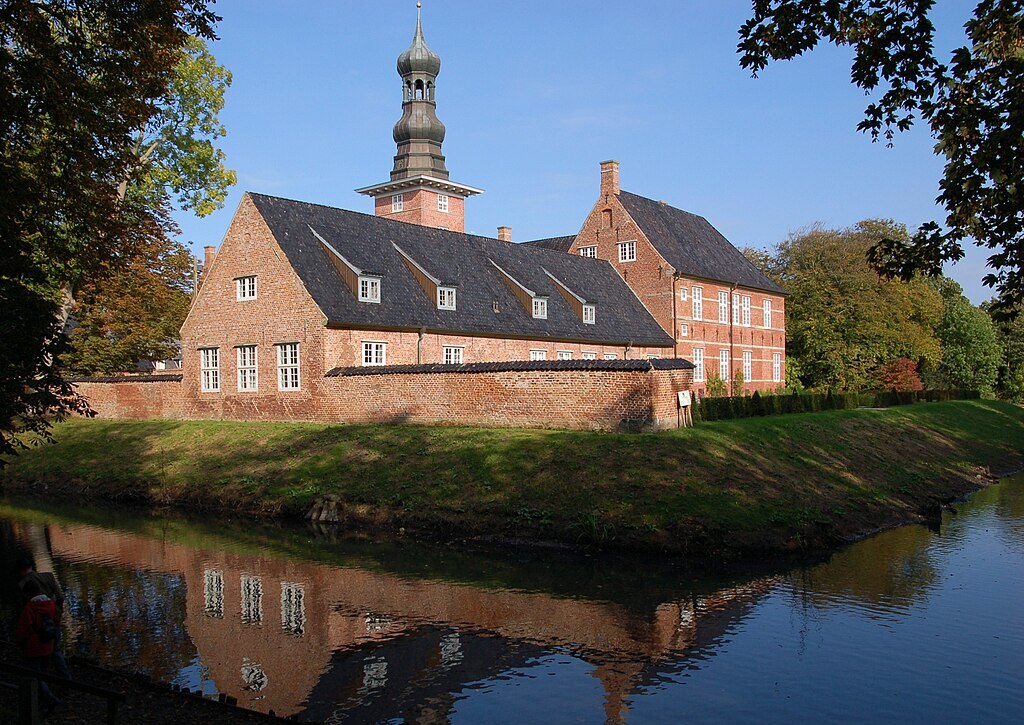
Behind the fountain, the tower of the main Husum church rises into the sky. The church does not work little. ‘But the previous building was much bigger,’ explains Löffler. ‘When the tower started swinging, it was demolished in 1807.’ ‘castle outside Husum‘, built in the middle of the 16th century, was never demolished, but was extensively remodeled. Today it is located in the center of the city, but then it stood ‘outside the city’. The garden of the castle covers five acres. The knight’s hall is now used for theater and concerts. And on Saturdays, couples line up to get married in the ‘monastery chapel’.
Visitors to Husum repeatedly come across the traces of Theodor Storm. The most important destination is the Theodor Storm Center on Wasserreihe. The writer moved there in 1866, shortly after his second marriage. ‘It is a town house from 1730, which makes it as old as Goethe’s house in Weimar,’ says the founder of the museum, prof. Karl Ernst Laage. The layout of the rooms has not changed since Storm’s time. At the initiative of the Storm Company, they were remodeled, and some were equipped with original items from Storm’s collection.
Cover photo: Herbert Weber, Hildesheim, CC BY-SA 4.0, Via Wikimedia Commons