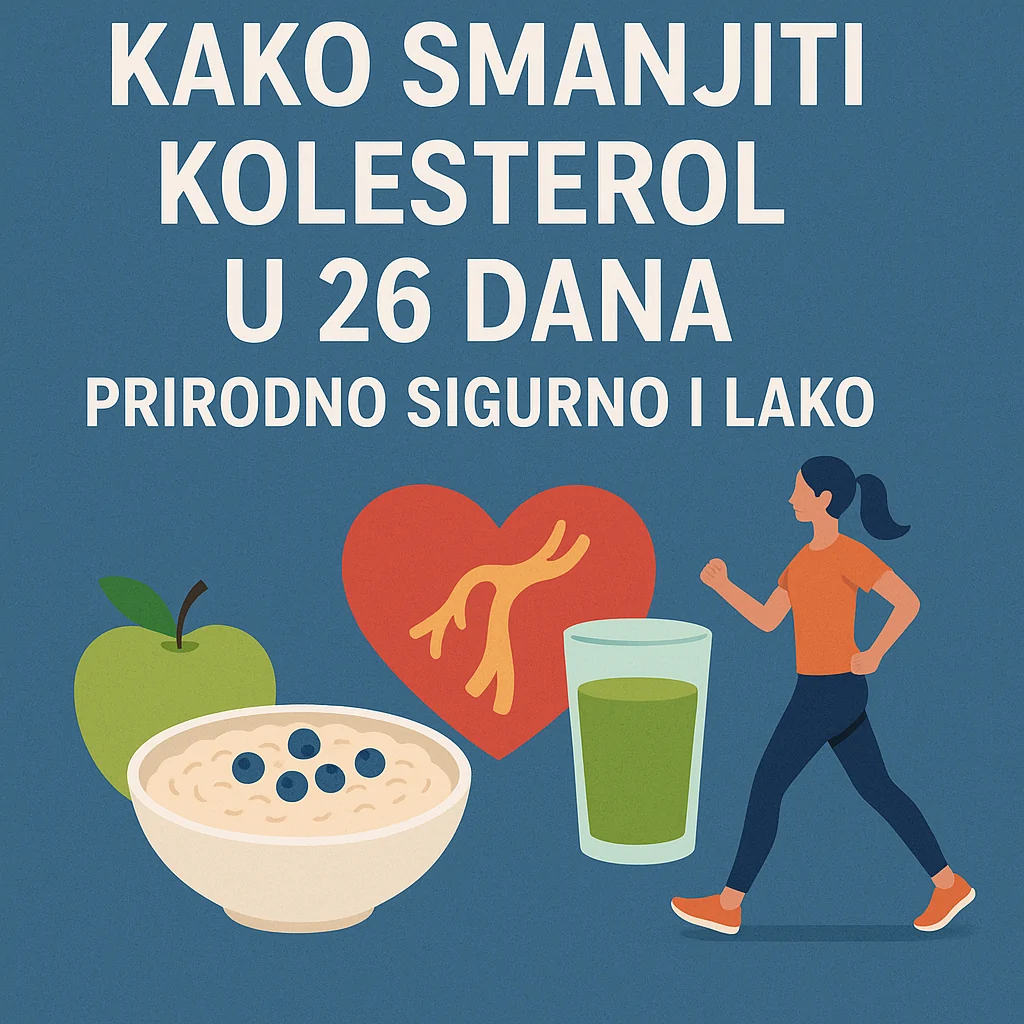
If you’re looking for a clear, safe, and natural way to lower your cholesterol in 26 days , this guide will walk you through science-backed steps you can start implementing right away. The goal isn’t to promise overnight miracles, but to provide a realistic, practical plan—diet, exercise, and small lifestyle changes—that often leads to measurable improvements in bad (LDL) cholesterol and overall cardiovascular risk in as little as four weeks.
What you need to know before you start
Before I describe in detail how to lower cholesterol in 26 days naturally, safely and easily , it is important to understand a few key facts:
- There are several types of cholesterol. LDL (“bad”) and HDL (“good”) have different roles; the goal is to reduce LDL and overall cardiovascular risk, not just the numbers.
- Lifestyle changes work quickly, but the effectiveness varies. Dietary changes (e.g., increasing your intake of soluble fiber or phytosterols) and exercise can lower LDL within weeks, but how quickly depends on your starting values and genetics.
- If you have very high levels or a family history of hypercholesterolemia , natural measures may not be enough and you may need to talk to your doctor about medication. Do not stop taking your prescribed medication without supervision.
A brief overview of the mechanisms of action (why this works)
To know how to lower cholesterol in 26 days naturally, safely and easily , it is important to know what specifically we are changing:
- Reducing your intake of saturated and trans fats reduces the amount of LDL particles in the blood.
- Increasing soluble fiber (oats, barley, fruits, legumes) binds bile acids and helps eliminate cholesterol from the body. Meta-analyses show that supplementing with soluble fiber leads to a modest reduction in LDL.
- Phytosterols (plant sterols/stanols) competitively reduce cholesterol absorption in the intestines – results: typically 5-15% reduction in LDL within a few weeks.
- Exercise and weight loss improve the lipid profile (LDL decreases, HDL increases), and the effect is cumulative with weeks of training.

Realistic expectations for 26 days
A large body of clinical evidence suggests that natural changes can produce a measurable reduction in LDL within a few weeks , but the effect depends on the intervention and the individual. For example: introducing phytosterols often produces a 5–15% reduction in LDL within a few weeks; increasing soluble fiber can produce a smaller but significant reduction; exercise gradually contributes to improvement. If you need a reduction of 50% or more, medications such as statins are usually needed.
26-day plan: what to do every day (review)
The plan is divided into areas: nutrition, exercise, supplements and lifestyle. Each of the points contains precise, measurable recommendations. The goal: safe, practical and sustainable risk reduction in 26 days.
Daily duties (briefly)
- Morning: oatmeal or smoothie with 1 tablespoon of ground flax, 2 pieces of fruit.
- During the day: 3 meals with an emphasis on vegetables, legumes and fish; avoid fried foods and fast food.
- Evening: 30–45 minutes of moderate cardio activity (brisk walking, cycling) or a combination 5x per week; at least 2 sessions per week of additional resistance (strength training).
- Every day: 1 serving of phytosterol-fortified foods (if available) and a total of 25–35 g of dietary fiber.
- Sleep: 7–8 hours a night; stress management 10–15 minutes a day (meditation/breathing).

Detailed nutrition plan (what to eat and why)
Basic principles of nutrition
- Reduce saturated fats (butter, fatty cheese, fatty meat) and completely avoid trans fats (industrially fried foods and margarine).
- Replace saturated fats with monounsaturated and polyunsaturated fats (olive oil, nuts, fatty fish).
- Increase your intake of soluble fiber (oats, barley, apples, pears, beans, lentils). Soluble fiber helps lower LDL.
Morning meal (examples)
- Oatmeal (1 serving; 40–50 g oats) with ground flax (1 tablespoon) and berries.
- Alternative: spinach smoothie, 1 banana, 2 tablespoons oatmeal, 1 tablespoon ground flaxseed and water/unsweetened almond milk.

Why: Oats contain beta-glucan, which is a soluble fiber that lowers LDL; flax provides omega-3 ALA and fiber.
Lunch and dinner (examples)
- Salad with salmon (or mackerel), lots of green vegetables, avocado and olive oil dressing.
- Stew with legumes (beans, lentils) with integral rice or quinoa.
- Occasionally white fish, nuts as a snack, lots of vegetables.
Why: Fatty fish provide omega-3 (contributes to lowering triglycerides); legumes provide fiber and a substitute for red meat.
Additional nutritional support – phytosterols and fiber
- Phytosterols/stanols: If possible, include margarines/spreads or products enriched with stanols (1–2 g/day has a significant effect). Phytosterols often reduce LDL by 5–15% in a few weeks.
- Fiber: Aim for 25–35 g total fiber per day; increase soluble fiber (3 g of beta-glucan from oats provides a modest LDL reduction).
Exercise plan (how to exercise safely and effectively)
Weekly schedule (26 days = ~3.7 weeks)
- 5 days a week: 30–45 min of moderate aerobic activity (brisk walking, cycling, swimming).
- 2 times a week: strength training (exercises for large muscle groups – squats, push-ups, pull-ups or weight training).
- Daily: short bursts of walking and stretching; avoid prolonged sitting.
Regular aerobic activity can moderately lower LDL and have a more significant impact on HDL and triglycerides over a few weeks.
Other habits and supplements that help
Sleep and stress
- Good sleep and stress management help with hormonal balance, which indirectly affects weight and lipids. In the short term, reducing stress won’t instantly lower LDL, but it will help maintain the changes.
Smoking and alcohol
- Quitting smoking reduces the risk of cardiovascular disease and improves HDL.
- Alcohol in moderation can increase HDL, but excessive intake is harmful and increases triglycerides – it is best to limit it significantly.
Natural supplements (which have evidence)
- Ground flaxseed – can help with ALA and fiber.
- Phytosterols – clear evidence of LDL lowering (5–15%).
- Soluble fiber supplements (psyllium, guar gum) – meta-analyses show a moderate decrease in LDL with daily intake.
Note: Talk to your doctor before taking supplements, especially if you are already taking medication.
Example of a daily menu (one day from the plan)
- Breakfast: Oatmeal (50 g) with ground flax (1 tablespoon), berries, coffee/tea without sugar.
- Snack: Apple and a handful of almonds.
- Lunch: Lentil salad with vegetables, half an avocado, olive oil and lemon.
- Snack: Yogurt (vegetable or skim) with a spoonful of oatmeal.
- Dinner: Baked salmon, roasted vegetables, whole grain rice.
- Before bed: Warm water or tea; short meditation for 10 minutes.

How to track progress
- Baseline test: Before starting, do a lipid profile (total cholesterol, LDL, HDL, triglycerides).
- Retest: ideally after 4–12 weeks; but you may see the first improvements in 26 days, especially if you have made a thorough diet change and introduced phytosterols.
- Food and activity diary: record meals, movement and weight – small changes can quickly show direction.
- Safety precautions: If you experience dizziness, fainting, or other worrisome symptoms, seek medical attention immediately.
Safety and medical notes
- If you have familial hypertestosterolemia or very high levels, natural methods are often not enough and your doctor will suggest medication. Do not change or stop your medication without professional supervision.
- The introduction of changes should be gradual if you have chronic diseases; adapt the exercise to your abilities and age.
Summary: key steps to lower cholesterol in 26 days naturally, safely and easily
- Reduce saturated and trans fats , replace them with olive oil and nuts.
- Introduce soluble fiber and phytosterols (oats, legumes, fortified products). Expect a modest drop in LDL within weeks.
- Exercise regularly (5x a week aerobic + 2x strength). Lipid values gradually improve.
- Lose excess weight if you have any – even a small amount of weight loss helps.
- Sleep, reduce stress, quit smoking – support for long-term maintenance.
If you want a specific menu and training plan tailored to your values and health status, I can put together a personalized 26-day plan for you right away.
Frequently Asked Questions (FAQ)
Is it possible to significantly reduce LDL in just 26 days?
Yes – it is possible to see a measurable reduction in LDL in 26 days if you completely change your diet (especially introducing phytosterols and increasing soluble fiber) and exercise regularly; however, the extent of the reduction varies and depends on starting levels and genetic factors. If large reductions (>50%) are needed, medication is usually required.
What are phytosterols and how much do I need daily?
Phytosterols are plant sterols/stanols that reduce the absorption of cholesterol in the intestines. Clinical effects are usually seen at intakes of about 1–2 grams per day, and LDL reductions are often 5–15% within a few weeks.
How much fiber should I consume to effectively lower cholesterol?
Aim for a total of 25–35 g of fiber per day, with a focus on soluble fiber (oats/beta-glucan, legumes, fruit). Any additional intake of soluble fiber contributes to a modest reduction in LDL.
Can I replace medications with natural methods?
If your doctor has prescribed medication (such as statins) for you because of your high risk or familial hypercholesterolemia, do not stop taking your medication without your doctor’s advice. Natural methods are great for reducing your risk and may reduce the need for medication in mild cases, but the decision is up to your doctor.
When should I have a lipid profile check?
It is recommended to do a baseline before starting and retest after 4-12 weeks to assess response to changes. In 26 days you can expect the first movements, but consistency and a longer period give more reliable data.
Conclusion
Plans for how to lower cholesterol in 26 days naturally, safely and easily are based on evidence: reducing saturated fat, increasing soluble fiber, introducing phytosterols, regular exercise and sustainable weight loss. Such changes often result in a measurable drop in LDL within 26 days and significantly improve cardiovascular risk, but individual results vary and it is important to monitor values with the advice of a doctor.