
Resistance of ancient oaks It starts with a single leaf. Dr. Ed Pyne, a conservation scientist from the Woodland Trust organization, carefully cut off the leaf from Druid’s oak – trees almost 800 years old that have been watching over the forest in Buckinghamshire for centuries. That tree survived droughts, storms, heat waves and the rest as a silent witness to history. Due to its longevity, Druid’s oak provides important insights about forest resistance.
‘We know that this tree has survived centuries,’ says Dr. Pyne. ‘But the question is: was there just luck or is there something special in his genes?’
In conjunction with ArboriCultural Association, under the direction of Dr. Emma Gilmartin, scientists want to discover genetic secrets that allow oaks to live for more than a thousand years, resist diseases and climatic extremes.
Content
This Druid’s Oak not only represents natural beauty, but also key genetic information that could help preserve other tree species.
Why is Resistance of ancient oaks important for the future?
Ancient oaks are not only cultural and historical monuments – they are also biological gems. One oak can live more than 2,300 species – Birds, mammals, insects, fungi and lichen. No other domestic tree in the UK supports so much biodiversity.
If we want the forests of the future, it is not enough to plant any oak. It is necessary to plant those with genetic predispositions for resistance: the ability to endure drought, to defend against disease and to grow for hundreds of years.
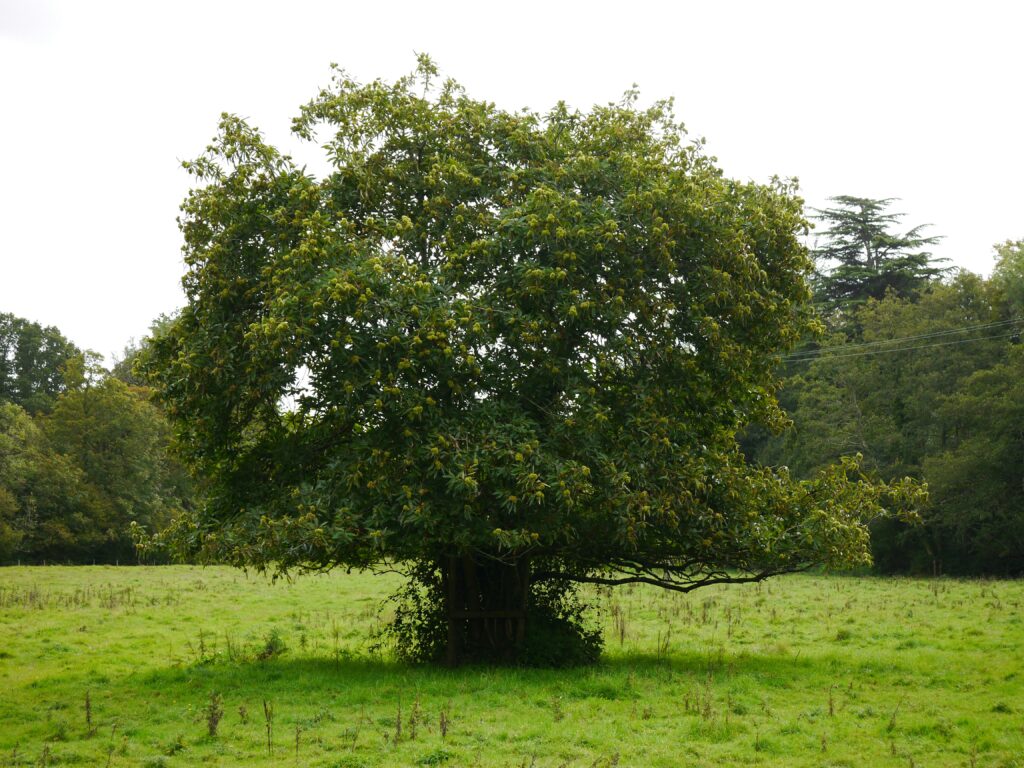
Examples like Moccas Park In Herefordshire, they show that returning oak acorns from ancient trees to historical habitats brings results. In just 16 years after the removal of unnatural coniferous plantations, biodiversity has been renewed – from rare insects to migratory birds (Woodland Trust) ).
The science behind the resistance of ancient oaks
1. Fast genetic adaptation
One of the studies that caught my eye came from the French INRAE Institute. Scientists compared the centuries-old oaks to their today’s descendants and discovered something interesting – genes that help trees withstand frost and drought have become more frequent. In practice, this means that oaks can adapt to climate change much faster than we would expect.
2. Genetic shield against disease
Oak is not only a strong tree from the outside – and its genetics hides powerful protection. They have a whole ‘arsenal’ of genes responsible for defense: from a thicker crust that makes attacks with pests difficult, to tannins and flavonoids that repel insects. This is followed by a large number of genes for resistance to diseases, so we can say that oak develops a multi-layered shield against everything that threatens it.
3. Diversity in life cycle
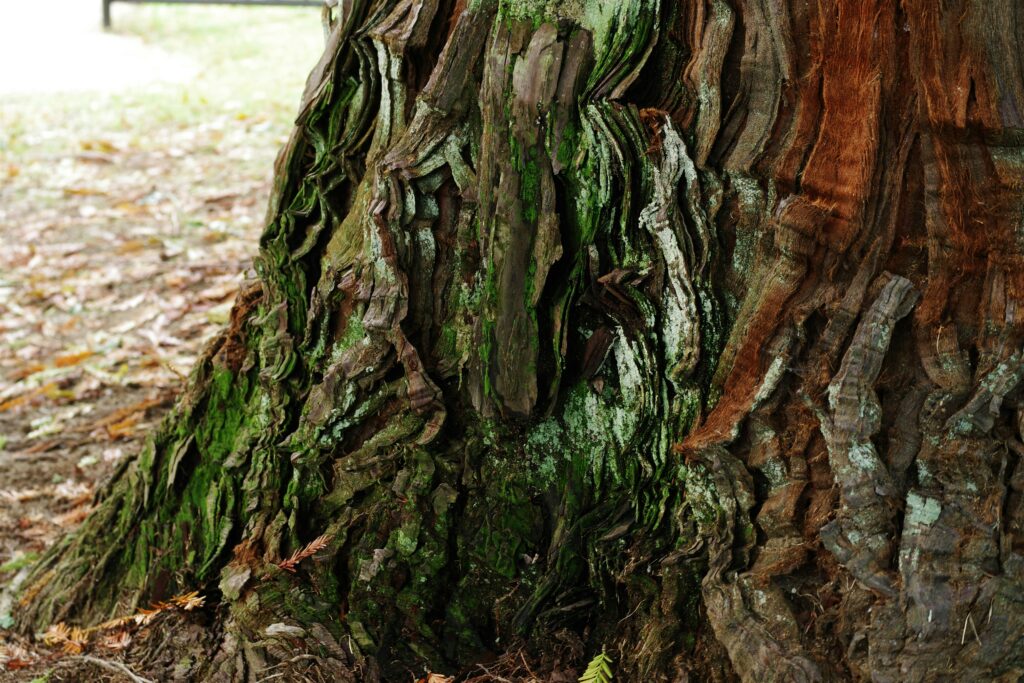
It is also interesting that not all oaks are the same when it comes to leafing and falling leaves. Some keep them longer in the fall, and it is these specimens that make better use of warm autumn days and grow faster. It has also been shown that their development largely depends on the amount of water available in previous seasons. So, even in these ‘little things’ you can see the genetic diversity that helps them survive.
PHOTO BY Naoki Suzuki he unsplash
4. Genetic exchange between species
European oaks (such as almonds and squishes) are not completely closed ‘worlds’. They exchange genes among themselves, which helps them adapt to different climates and altitudes in the long run. This exchange actually increases the chances of more resistant specimens appearing in a population.
5. LiDAR technology and tree architecture
In addition to genetics, scientists also study the physical structure of ancient trees. as part of the project scatter They use 3D laser scanning (LIDAR) to make digital models of old oaks. In this way, I can better understand why some trees last centuries and others perish much faster. Such models also help to predict which young oaks today have the potential to become future ‘giants’.
How does the knowledge of the resistance of ancient oaks help the forests of the future?
- Choosing more genetically resistant seedlings – Using DNA testing, young trees will be chosen with greater chances for a long life.
- Local adaptation – Seedlings can be chosen according to the climatic conditions of the region.
- Preservation of biodiversity – Solid trees also mean stable ecosystems.
- better carbon storage – Healthy trees bind CO₂ more efficiently.
- Protection of ancient trees – because their value cannot be ‘reimbursed’ by planting new ones.
Key insights: a guide for future forests
| Cognition | Meaning |
|---|---|
| Fast genetic adaptation | Oaks can adapt to climate change in just a few generations. |
| Defense genes | They give them resistance to diseases and pests. |
| Variability in phenology | It helps to survive different weather conditions. |
| Structural resistance | It enables carbon storage and longevity. |
| Protection of veterans | The oldest trees are an irreplaceable treasure trove of genetic knowledge. |
Conclusion: Resistance of ancient oaks As a guide to future generations
Druid’s oak is not only an ancient tree – it is a living library of natural resistance. Its genes can help scientists choose seedlings that will survive the upcoming challenges of climate change, disease and habitat loss.
Investing in Resistance of ancient oaks It means investing in the future – forests that will nourish life, bind carbon and provide beauty for centuries to come.