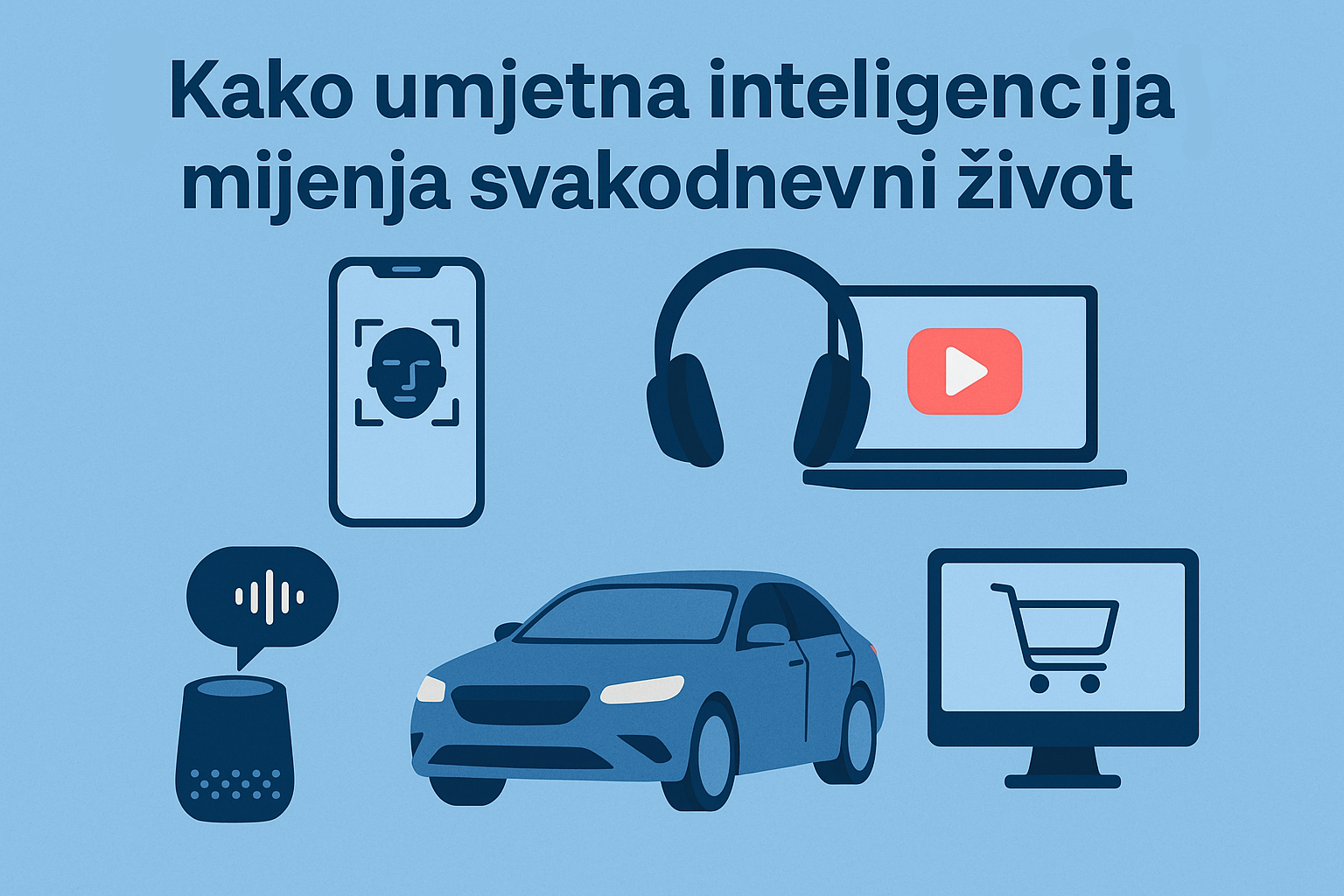
Artificial intelligence in everyday life has become a phrase that we encounter in the news and in conversations – but what does it really mean in practice? In its simplest form, artificial intelligence (AI) means the ability of computers or machines to perform tasks that traditionally require human intelligence: learning from data, recognition of patterns, decision-making and prediction. These fields include a wide range of technologies, from simple rules and statistical models to advanced neural networks and large language models.
Today, AI is behind many digital experiences that we take for granted: from suggestions of movies that someone ‘loads’ to us on the home page of the streaming service to voice commands that we send to a smartphone. The reason for such prevalence is the combination of a large amount of data (big data), cheaper computing capacity and improved algorithms – which means that AI systems can learn and adapt faster and more accurately than before.
Sadržaj
Artificial intelligence in everyday life – practical examples that we already use
1) Face recognition on a mobile phone
One of the most noticeable examples of AI in everyday life is the recognition of the face used by your mobile phone to unlock or authenticate. Face recognition systems combine computer vision and pattern recognition models to identify unique facial features. Such systems often work locally on the device to increase privacy, but there are still significant concerns about abuse, inaccuracy and surveillance. Activists and privacy protection organizations warn that the mass application of this technology without clear legal frameworks poses a threat to civil liberties.
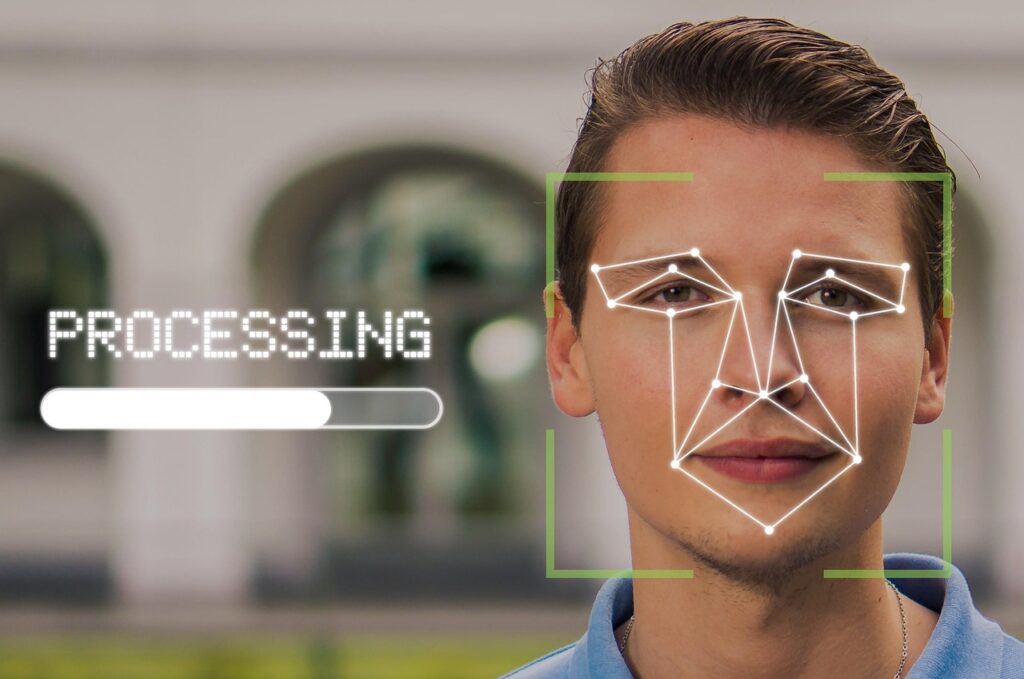
Practical: Face recognition saves time and is comfortable, but users should check how their device manufacturer processes and stores biometric data and what options they have to exclude or delete that data.
2) Recommendations on YouTube, Netflix and Spotify
When you open YouTube, Netflix or Spotify, the result you see on the home page is mostly the work of recommendation algorithms. These systems analyze your activity – what you’re looking at/listening to, how long, what you’re searching and what other similar users like – to suggest content that’s probably relevant to you. Major streaming services are continuously improving their models: Netflix, for example, uses a combination of models and personalized badges to customize recommendations, and YouTube openly explains that it combines signals such as viewing history, interactions and Trends.
Practical: Recommendations can make discovering new content easier and save time, but they will also often direct you to a ‘bubble’ of similar topics – so occasionally clear the viewing history or try categories that the algorithm does not show you.
3) Smart Assistants (Google Assistant, Alexa, Siri)
Smart assistants are a practical example of AI that communicates directly with us: comprehension of speech (ASR – automated speech recognition), understanding of natural language (NLU) and execution of commands. Assistants like Google Assistant move on to more advanced multimodal models (eg Gemini integration) that better understand context and combine text, images and voice for more complete answers. This means that today you can ask the assistant for more complex tasks: book a table, summarize a long email or manage smart devices in the house.

Practical: Smart assistants save time and make routine tasks easier, but they need to carefully set permissions (access to the microphone, location, calendar) and check safety settings regularly.
4) AI in cars – driving assistance (ADAS)
Modern cars have driver assistance systems (Advanced Driver Assistance Systems) that combine sensors, cameras and ambient recognition algorithms to maintain speed, keep the vehicle in a lane or report hazards. Euro NCAP and other regulatory/reci/independent testers monitor the performance of such systems and emphasize that they are there to assist, and the driver still has to remain engaged and responsible. More advanced systems are slowly introducing automated scenarios, but full autonomy still has clear technical and regulatory barriers.
Practical: ADAS significantly increases safety in certain situations (highways, heavy traffic), but excessive reliance without understanding the limitations of the system can lead to risk. Always follow the manufacturer’s instructions and tests from independent institutions.
5) Personalized advertisements and online shopping
Personalized advertising systems analyze web behavior, search history, and demographic signals to show ads that are more relevant to an individual user. This improves marketing efficiency and often shows the user offers that would really interest him, but at the same time raises privacy and data control issues. Industry associations (e.g. IAB) work on transparency and tools that allow users to have more control over ads, while legislation around the world is trying to strike a balance between personalization and privacy protection.
Practical: If you want fewer personalized ads, take advantage of available control settings on the browser and platforms, and browse the options for privacy and ad preferences.
Table (Overview) – AI Application: Where is it used and what is the benefit
| AI application | where it is used | Main benefit for the user |
| Face recognition | Cell phones, security cameras | Fast authentication, security |
| Content recommendations | Netflix, YouTube, Spotify | Better content discovery, time saving |
| smart assistants | Cell phones, smart speakers | Task automation, practicality |
| ADAS (Assistance) | Modern cars | Increased security, help When driving |
| Personalized ads | Web, applications | relevant offers, better user experience |
Positive aspects – convenience, time saving and safety
AI is full of advantages that are easily noticeable in everyday life. Media recommenders save us time when looking for a new movie or podcast; Smart assistants take on monotonous tasks such as setting reminders or managing smart lights; Driving assistance systems reduce highway stress and can help avoid accidents. In a business context, AI accelerates data processing, detects anomalies and enables better business decisions. All this directly raises quality of life and productivity.
In addition, AI has the potential to solve major social challenges: from early detection of health problems (analysis of medical images) to optimization of energy consumption in smart networks. However, the real benefit depends on responsible design, data quality and regulation.
Challenges and risks – privacy, bias and technology dependence
Despite the benefits, the application of AI carries a number of risks. Privacy is among the greatest: systems that monitor user behavior, location, or biometrics can be misused if data are not protected or if used without clear consent. Civil rights organizations and privacy experts have been warning for years about the dangers of unlimited application of technologies such as facial recognition.
Another big problem is bias (bias) in models: AI learns from historical data, and these data often reflect social inequalities. If this is not addressed, AI may reproduce or reinforce discriminatory patterns, e.g., in employment, health or justice. UNESCO and other international organizations work on ethical guidelines that emphasize transparency, accountability and human supervision.
There are also safety and regulatory challenges: automatic systems in traffic or finance must undergo strict tests, and responsibility in case of error must be clearly defined. After all, there is also a social risk of relying too much on technology – loss of skills, reduction of private initiative or dependence on recommendations instead of critical thinking.
How to protect yourself and use AI smartly in everyday life
- Privacy controls: Check privacy settings on your devices and services; Turn off options you don’t want to use and delete history when you want to reduce personalization.
- Understanding the limitations: Find out about what a certain system can and cannot do – especially in cars and health diagnostic tools.
- Source check and diversity of information: As the recommendations can be closed in the ‘bubble’, you are consciously looking for different sources of information and content beyond your own habits.
- Updates and security: Regularly update the software on the devices as manufacturers often correct security flaws and advance privacy.
Conclusion – AI is not the future, but the present
Artificial intelligence in everyday life is no longer an abstract concept – it shapes the way we work, learn, travel and have fun. Things previously reserved for tech teams are now part of a standard consumer offering: from movie recommendations to voice commands. However, the true value of AI comes when we use it consciously: by accepting benefits, but also by active privacy management, understanding limits, and requiring transparency and accountability from manufacturers and regulators.
Sources (out of text)
- Britannica – Artificial Intelligence (AI). https://www.britannica.com/technology/artificial-intelligence
- Netflix Tech Blog – Foundation Model for Personalized Recommendation. https://netflixtechblog.com/foundation-model-for-personalized-recommendation-1a0bd8e02d39
- YouTube Official Blog – He YouTubewith Recommendation System. https://blog.youtube/inside-youtube/on-youtubes-recommendation-system/
- Electronic Frontier Foundation (EFF) – Face Recognition / About Face. https://www.eff.org/aboutface
- Euro NCAP – Assisted Driving Gradings Explained / Assisted Driving Ratings. https://www.euroncap.com/en/car-safety/assisted-driving-gradings-explained/
- Google Blog – The Assistant Experience on Mobile is Upgrading to Gemini. https://blog.google/products/gemini/google-assistant-gemini-mobile/
- IAB – Why Personalized Advertising Works / Industry Guides. https://www.iab.com/
- UNESCO – Recommendation on the Ethics of Artificial Intelligence. https://www.unesco.org/en/articles/recommendation-ethics-artificial-intelligence