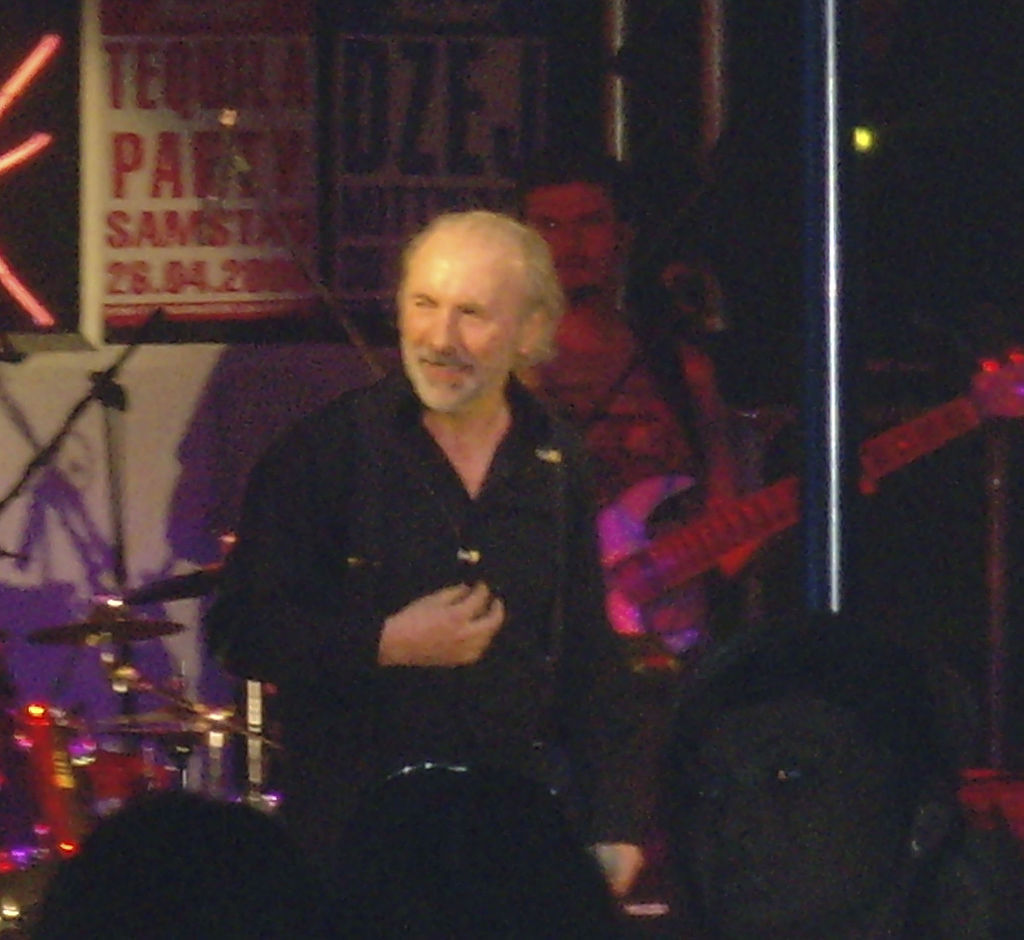
Haris Džinović (born September 26, 1951 in Sarajevo) is a Bosnian-Serbian singer of folk and pop-folk music, singer-songwriter and composer. He is one of the most famous performers of the Balkan scene. He achieved his first public success in the early 1980s as an ensemble leader sar e Roma, and has continued his independent career since 1989. It is recognizable for its hits such as ‘I tebe sam sit kafano’, ‘Laže mjes’, ‘Give wine, I want to break’, ‘Muštuluk’ and ‘Paris gate’. Over the years, he held numerous concerts throughout the former Yugoslavia and the world, gaining a loyal audience and the status of a folk music legend.
Early life and education
Haris Džinović was born in 1951 in Sarajevo in a family of engineers (father Muhamed) and economist (mother of Hatidža). Even in his childhood, he showed a preference for music and sports: his mother bought him an accordion while he was going to elementary school, and Džinović started learning to play self-taught. In addition to music, he was a passionate lover of football and actively played from a young age.
In high school, he also developed a talent for piano, but because of his performance, he neglected school – already at the age of 16 he earned his first fees, performing in Sarajevo bars and at Jahorina ski resorts. It was these experiences that determined his path towards his music career: although he had to go to an evening school several times due to absences, Džinović realized that music was his life’s calling.
Career with Sar e Roma
- Haris Džinović founded an ensemble sar e Roma, inspired by the love of Roma folk music (film Gypsies fly to the sky he strongly inspired him). The band released their first album a year later ‘… like gypsies’, with covers of traditional gypsy songs in modern arrangements. In the next two years, they also recorded albums ‘Kiko, Kiko’ (1983) and ‘Roma Songs’ (1985). Sar e Roma became very popular, not only in Yugoslavia but also abroad: the band held concerts in the Soviet Union, the United States of America, Canada and Western Europe.
Their unique sound attracted attention at international festivals – in 1986, they received a special jury award for their performance in Belgrade’s ‘Pionir’ hall. The concert at the Midem festival in Cannes was particularly notable, where famous world musicians such as David Bowie, Elton John and Miko Jagger listened to their music. After great success with Sar e Roma, Džinović started preparations for an independent career in the mid-1980s.
Solo career and greatest successes
Since the end of the 1980s, Haris Džinović has been developing a solo career. The first solo album ‘I will stay, I won’t know’ It was released in 1989. Soon after that, an album ‘Haris Džinović’ (1991) which featured the song ‘Give wine, I will break’ – one of his early hits. In the past decades, he has released a number of albums that further strengthened his popularity.
The album was particularly striking ‘Magic’ (2009), in whose production the famous composer Željko Joksimović participated, and from which the hits ‘Search, search’ and ‘Muštuluk’ originate. His numerous singles took high places on regional listenerships. He also participated in television projects – from 2014 to 2016, he was a member of the jury of the popular music show Pink stars.
Performances and tours: Haris Džinović is also known for sold-out concerts. In the early 2000s, his fame reached its peak: he held a large number of concerts throughout Europe, North America, Australia and the countries of the former Yugoslavia. For example, in 2002, Belgrade sold Sava Center In front of more than 30,000 visitors, and about 20,000 people attended his concert in the Sarajevo hall Zetra. Even today, he builds his career with performances in the region and abroad, often holding tours and performances for the diaspora.
Most famous songs and hits
Among the most recognizable songs of Haris are:
- ‘I’m full of you too’
- ‘Lies the moon’
- ‘Give me wine, I want a break’
- ‘mustluk’
- ‘Paris Gates’
- ‘Are the quinces blooming’
- ‘Ask, search’
These and other songs marked his albums and hundreds of radio platters all over the Balkans. Because of them, he acquired the epithet of a performer who successfully combines folk melos with modern arrangements, and his songs are regularly featured on compilations of greatest hits.
personal life and family
In his private life, Haris Džinović was in a relationship and marriage with fashion designer Melina Galić (Melina Džinović) for a long time. The couple got married in 2002 and had two children: daughter Đina and son Khan. After more than twenty years of relationship, Džinović and Melina divorced in April 2023. Haris Džinović currently lives in Belgrade. In conversations with the media, he describes himself as a family man who especially values a peaceful life, but also agrees to speak openly about the private obstacles he went through.
recognition and influence
His long career brought him numerous awards and recognitions. He has been declared the singer of the year at festivals and music awards several times, and has also won prestigious trophies such as festival awards I’m eating and Oscar of popularity. Music critics and audiences often point out that he contributed to the preservation and modernization of folk music with his style.
During the war years, he also got involved in humanitarian work – he held concerts in Austria and Germany to help Bosnia and Herzegovina. His performances, in addition to the musical part, often had a humanitarian character, which further confirms his popularity and reputation in the region.
Conclusion
Haris Džinović left an indelible mark on the Balkan music scene with his many years of work. his biography It testifies to a long and successful career – from a young accordionist from Sarajevo to a star who fills the halls today. The hits he created are still regularly listened to on radio and streaming platforms, and new concerts bring together thousands of fans. In conclusion, Džinović is an example of an artist who connected generations and boundaries with songs.
We invite you to listen to some of Haris Džinović’s most famous songs on music services and to follow the announcements of his concerts – his career still lasts at full speed.