There’s a wealth of historical sites here: Halifax is one of the oldest settlements on the American East Coast. But it’s also the perfect starting point for tours along Canada’s Atlantic coast.
The city has a laid-back attitude: Halifax, on Canada’s east coast, loves to keep it simple. Anyone who finds themselves here for a beer should expect to wait an hour or two for their friends to arrive. The locals’ notorious punctuality once drove a British commander crazy. In 1803, he gifted the city a large clock. But it had little effect: The ‘City Clock’ still ticks in a handsome, octagonal tower on Citadel Hill’s east side, but accuracy remains a relative term.
This laid-back attitude is actually one of the city’s most endearing features. Despite its skyscrapers, 280,000 residents, and the world’s longest waterfront promenade in the city center, Halifax has retained an almost village-like feel. It’s hard to believe that the G7 summit was held here in 1995. Nova Scotia’s capital was trying hard to project an image of a global city at the time. The reality is quite different: you’re more likely to encounter a moose than another driver on the province’s rural roads, and the main exports are Christmas trees, lobster, and blueberries.
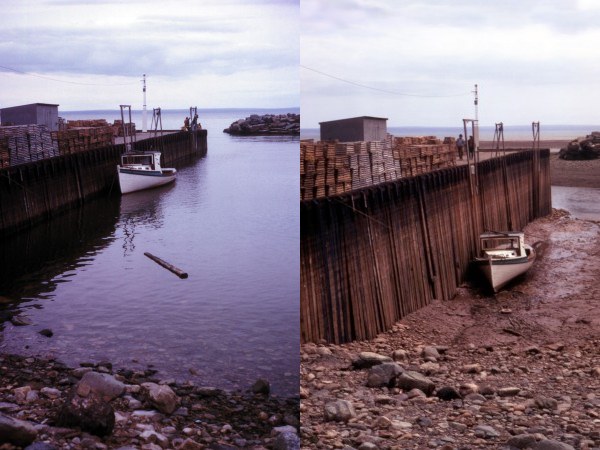
Bay of Fundy – the place with the highest tides in the world
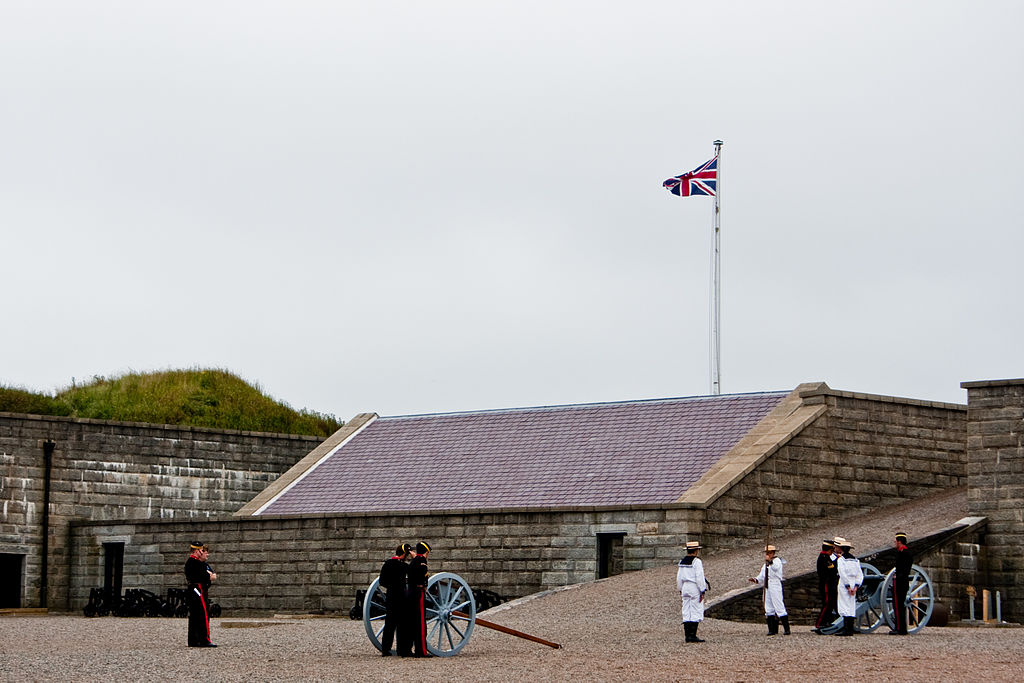
As a tourist destination, Halifax is even more attractive. Not only is it a great base for exploring Canada’s Atlantic coast and the Bay of Fundy, home to the world’s highest tides – a difference of 16 meters between high and low tide – but the city itself has much to offer. Founded in 1749 as a British military outpost, Halifax is one of the oldest settlements on the American East Coast. The Old Citadel, which towers over the city center, illustrates with its grandeur how important the port city was to the British. It served as a military base against the French, and also played a key role in the American War of Independence.
Among the historic landmarks is the neoclassical Government House, the official seat of the British Crown. Also worth a visit is Province House, built in 1819, where the 52-member Provincial Assembly meets. Art lovers will enjoy the Anna Leonowens Gallery on Granville Street. It is named after the legendary English tutor to the King of Siam – played by Jody Foster in the film ‘Anna and the King’. Although the real Anna Leonowens was not from Halifax, she lived there for a time and founded an art school.
Anyone interested in movie legends shouldn’t miss the Maritime Museum of the Atlantic. It’s located right on the harbor. Here, visitors not only learn about pirates and the rough life of Atlantic fishermen, but the centerpiece of the exhibit is the Titanic, which sank south of Newfoundland on April 14, 1912. Various pieces of furniture and other original artifacts from the ship are on display.
Halifax and the Titanic – a city that preserves the memory of the perished passengers
Halifax and the Titanic: Few people know that the sinking of the ocean liner is closely linked to the history of the city. Halifax was the closest major port to the disaster, which is why the first lifeboats set sail from here. They were supposed to pick up passengers and tow the damaged ship back. But as is well known, help arrived too late; the Titanic had long since sunk four kilometers to the bottom of the Atlantic by the time the boats from Halifax reached their destination. Almost 1,500 of the 2,200 people on board died in the icy water; instead of the survivors, their bodies were returned to shore. 150 victims of the maritime disaster were buried in Halifax. A section of Fairview Lawn Cemetery is dedicated to them, and their tombstones are arranged in the shape of a ship’s hull.

Among them is the grave of Joseph ‘Jack’ Dawson, played by Leonardo DiCaprio in the movie ‘Titanic.’ In reality, Dawson was not a womanizer who won over a wealthy young woman with his blue eyes, but a worker in the steamship’s engine room. He probably never met a single passenger, let alone a first-class passenger, during the entire voyage. Director James Cameron simply borrowed Dawson’s name for his love story. But since the film’s release in 1997, that hasn’t stopped young women from around the world from making pilgrimages to Dawson’s simple gravestone and laying a rose there. The citizens of Halifax are taking the attention – as always – with ease..
Cover photo: Tony Webster from Minneapolis, Minnesota, CC BY-SA 2.0, via Wikimedia Commons