
No company relies on exclusively On the results of the intelligence test, but for many employers it is part of the application process. However, experts say that candidates should not panic.
They give a headache to many candidates, but some companies swear by them: almost no other employment tool is as controversial as intelligence tests. From the employer’s perspective, they have useful advantages, but also disadvantages. Candidates, however, do not have to fear tests: preparation is possible, and panic is not necessary.
Essentially, intelligence tests are designed to show the maximum potential of the candidate. This includes the ability to abstract, apply knowledge, and solve problems. ‘You can pretend to be stupid, but you can’t make yourself more intelligent,’ says Munich-based management consultant Tobias C. Haupt. Unlike personality tests and personal interviews, the candidate can hardly fake anything.
Christian Montel from Eligo, a Berlin company that designs psychological HR software, sees similarly: ‘The results of the tests are clear and objective, but they only provide information about what the test measures.’ If used correctly, tests can make the selection process fairer. If mental ability is key to work, it is a good idea to use the appropriate test to measure it, says Montel. Weaknesses are easier to deal with at job interviews.
Almost no company runs intelligence tests only
Haupt says that intelligence tests are used several hundred thousand times a year in Germany alone. This is due to the fact that HR departments increasingly have to justify their decisions. ‘It also serves to legitimize the selection process.’ However, employers also know that intelligence tests are not infallible. ‘I know of few, if any, companies that only conduct intelligence tests,’ says Montel.
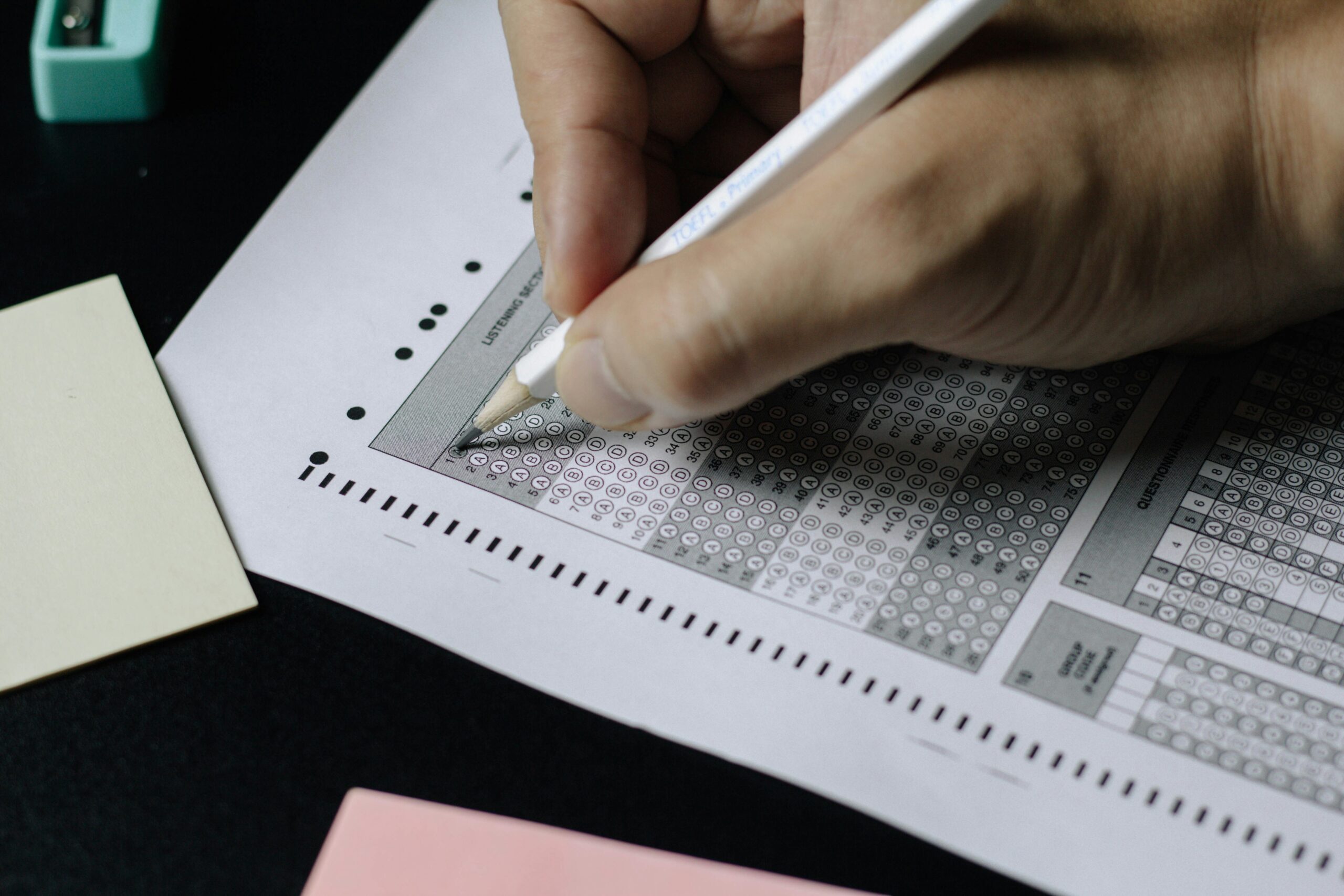
More and more often, the most suitable candidates are selected from application documents. They take an online test that evaluates not only intelligence but also motivation and personality. ‘Based on these results, an interview is conducted – also by phone for the purpose of previous selection. Then the results of the test and the interview are combined.’
According to Tobias C. Haupto, qualitative intelligence tests are useful in combination with other instruments – if they are good. ‘And that’s very rare.’ 98 percent is ‘complete nonsense’. That, he says, is because the development of high-quality tests is expensive.
‘Let it happen’
At its core, intelligence tests always work the same way. They evaluate memory, processing capacity, speed of work and creativity using text, mathematical and imaging tasks, explains Haupt. The average score for four factors makes the total score. No one should be intimidated by such tests, recommends Christian Montel: ‘You should try to be as impartial as possible, get a good night’s sleep before that and just wait and see what happens.’ After all, nothing bad will happen.
The manufacturer of Ferrero confectionery in Frankfurt am Main also relies on a combination of intelligence tests and other methods. ‘A good leader is much more than pure intelligence,’ says human resources director Alexander Lauer. Personality, teamwork skills and other soft skills are also of great importance. Therefore, a multiphase interview process is also used.
Cover photo: Photo by Vitaly Gariev he unsplash