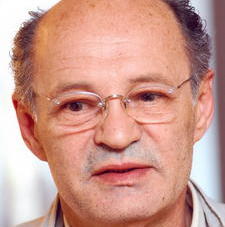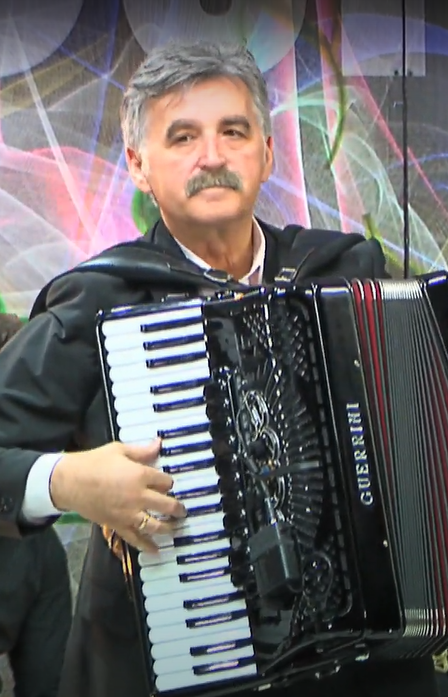
Dragan Stojković – better known as Bosnian – He is one of the most prominent Balkan accordionists, composers and arrangers. Born in Sarajevo in 1953, he spent his childhood in Konjic in Herzegovina, where he graduated from high school, music school and studying economics. He started playing music as a boy – his father gave him his first accordion when he was ten years old, and soon he learned his first songs himself. He started his career in the early 1980s in Belgrade, first played with KUDs, and then formed his own ensemble. Already in the 1980s, Dragan collaborated with folk music stars such as Hanka Paldum, Lepa Lukić, Snežana Đurišić, Halid Bešlić, Ana Bekuta and many others. He was nicknamed ‘Bosanac’ because, although he is a Serb by origin (father from Leskovac, mother from Šapac), he was born and raised in the territory of Bosnia and Herzegovina and still speaks the Ijekavian dialect today.
Quick overview
- Birth and education: Dragan Stojković Bosanac was born on December 2, 1953 in Sarajevo, spent his childhood in Konjic, and graduated from high school, elementary music school and the Faculty of Economics.
- Nickname: Because of his speech and origin, he was nicknamed Bosnian.
- Career: Accordionist, composer and arranger active since the early 1980s – he signs arrangements for over 160 albums (about 1,600–1,800 songs) of folk hits.
- known collaborations: He collaborated with the legends of the folk scene (Halid Bešlić, Šaban Šaulić, Ana Bekuta, Snežana Đurišić, Lepa Lukić, Nada Obrić, Biljana Jevtić and others).
- Media engagement: He is a member of the show’s jury Grand stars From the first seasons (2005–2025), and after 12 years he moved to the jury of the new singing competition ‘Pink Stars’.
- Family: He has been married to his wife Dunja since his student days (more than 45 years). He has a son, Alexander, and a daughter, Aleksandra (Dzija) – the daughter is engaged in singing and competed in ‘Grand Stars’.
Early life and education
Dragan showed exceptional musical talent already in elementary school. His father bought him the first accordion in the fifth grade of elementary school. Given that he grew up in a folklore environment, he mastered folk melodies early on – the first song he learned was ‘meadow around Jasenje’ that he heard on the radio. After high school, he moved to Belgrade for his girlfriend Dunja (with whom he went to the same high school) and entered the Faculty of Law, and then the Faculty of Economics, who also graduated as his wife. The initial meeting with music took place in Konjic, where he founded a local ensemble and performed for the first time in front of an audience.
Music career and collaborations
The Bosnian won the voice of enthusiasm with the accordion and compositions in the early 1980s when his ensemble grew up. Already in 1982, he started musical collaborations with singers like Ćazim Čolaković, Amela Zuković and Ferid Avdić. In the mid-1980s, his career gained momentum – his orchestra soon collaborated with big names in the folk scene, for example Boro Drljač, Ljubo Lukić, Halid Bešlić and Miloš Bojanić. At the end of the 1980s, he also started working with Ana Bekut, Milan Babić, Marinko Rokvić and others.
The Bosnian became one of the most sought-after arrangers in the region – his contribution is significant in hits such as Halid’s ‘Neću, ni ni ni ne diamante’ and ‘Enteraned by that beauty’, i.e. Šaban’s ‘Don’t cry, honey’ and ‘I can’t say no to you’. To date, he has arranged hundreds of songs and over 160 albums by folk artists. At the same time, he also dealt with radio editorial – he works as a music editor at Radio Belgrade, where he creates programs based on traditional music. He was also the editor and host of the show It’s going Mile at RTS, which combines young talents with traditional motifs.
known collaborations and successes
- Halid Bešlić: Arrangements for the hits ‘Neću, će ni ne diamante’ and ‘Zanesen with that beauty’.
- Šaban Šaulić: Arrangements ‘Don’t cry, honey’ and ‘I can’t say no to you’.
- Other performers: He collaborated with Ana Bekut, Snežana Đurišić, Lepa Lukić, Neda Obrić and others.
- Discography: He recorded over 160 audio carriers as the main arranger and instrumentalist.
Grand stars and television career
The Bosnian became recognizable to the general public precisely as a member of the expert jury of the popular show Grand stars. From the first seasons of that regional music competition, he followed the performances of young competitors and shaped many careers with his advice. He was known as a demanding but just mentor who emphasizes the quality of vocals and interpretation. In the 2018/2019 season. He even becomes a mentor in the meetings of the participants he chose in the opening rounds.
After 12 years on the jury Grand Star, Dragan announced in 2025 that he was leaving the show. The owner of Pink television, Željko Mitrović, confirmed that the Bosnian is moving to the jury of a new competition Pink stars. He will join the new team with a vision of ensuring the recording of songs and videos to finalists, with more significant prizes for the winners. In this way, he confirmed the status of a key person who brings expertise and credibility to contemporary music competitions.
private life
Dragan Stojković is known as a dedicated family man. He has been married to his love from high school, his wife Dunja, has been married for more than 45 years. They live together in Belgrade, and have two children. son Aleksandar completed his studies and is engaged in agricultural engineering, while daughter Aleksandar (Dzija) continues her father’s musical journey – she graduated from music school and competed in Grand stars. The Bosnian often points out that family is the most important thing in his life – as he says, ‘his life’s work is that he can still play, socialize with people and that he is not interested in the opinion of the audience; his family is the most important’. In his free time, he likes to rest in nature (e.g. fishing in his native Konjic) and participate in traditional celebrations and gatherings with his family and friends.
Conclusion
Dragan Stojković Bosanac remains a permanent icon of folk music in these areas – proof of his success are decades of continuous career, hundreds of songs and influence on young musicians. His dedication to tradition and simultaneous openness to new forms (like television competitions) make him unique. If you are interested in more about his music, advice from Grand Star or with new performances, visit his official profiles on social networks or follow the shows in which he participates. Dragan Bosanac is an example that quality music and the sincerity of career building still fare well with the audience – listen to his arrangements and explore folk hits that he left an indelible mark on.
Sources: The history of life and career is described on the basis of available sources: Croatian Wikipedia, interview and biographies from regional media. All data has been updated according to 2025 announcements.
Cover photo: Sehara television channel and Amil Biščanin, CC BY 3.0, Via Wikimedia Commons