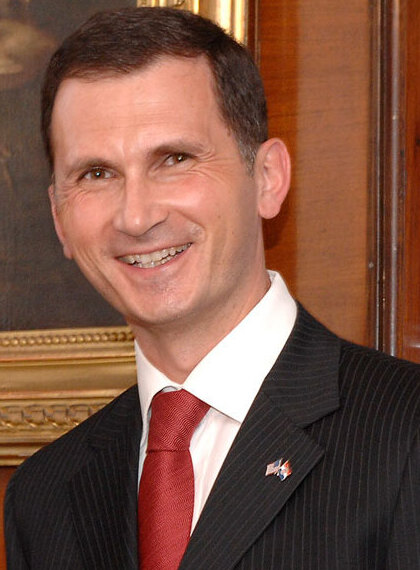
Dragan Primorac is a Croatian doctor, scientist and politician who during his career left a strong mark in the field of forensic science, genetics and education. He was born on June 7, 1965 in Banja Luka, and became known to the public not only for his scientific work, but also for his involvement in Croatian politics, especially as the Minister of Science, Education and Sports of the Republic of Croatia from 2003 to 2009. In this biography, we present a comprehensive overview of Dragan Primorc’s life and career, including his contribution to science, academic education and society as a whole.
Early life and education of Dragan Primorac
Dragan Primorac He was born on June 7, 1965 in Banja Luka, Bosnia and Herzegovina. He spent his childhood in Split, where he completed primary and secondary education. Already at an early age, he showed an interest in natural sciences, which prompted him to enroll in the Faculty of Medicine of the University of Zagreb, where he graduated in 1991.
After completing his studies, Dragan Primorac continued his professional training abroad. He focused specifically on the field of forensic genetics and molecular medicine, and trained professionally at prestigious institutions such as New Haven University and Mayo Clinic in the United States. During his academic development, he achieved an enviable level of scientific expertise, which greatly influenced his later career and international recognition.
scientific contribution and international recognition
Dragan Primorac is one of the pioneers of forensic DNA analysis in Southeast Europe. His scientific work focuses primarily on the fields of forensic genetics, molecular medicine and pediatrics. He is among the first experts who applied DNA analysis for the purpose of identifying victims of the Homeland War, especially through work in identifying missing persons using genetic methods.
He is the author and co-author of more than 200 scientific papers, and his research has been published in some of the world’s most prestigious scientific journals. He has participated in numerous international research projects and is a member of several important scientific and professional organizations, including the American Academy of Forensic Sciences (AAFS) and the American Academy of Pediatrics (AAP).
In addition, Dragan Primorac holds professorships at universities in Croatia and the United States of America, including the University of Split and Penn State University. His scientific contribution is recognized all over the world, especially in areas where medicine, genetics and forensics come together.
Ministerial career and reform moves in education
Dragan Primorac was appointed Minister of Science, Education and Sports of the Republic of Croatia on December 23, 2003 in the Government of Prime Minister Ivo Sanader. He remained in that position until July 2009. His mandate was marked by numerous reform initiatives with the aim of modernizing the Croatian education system and harmonizing it with the standards of the European Union.
One of his most important projects was the implementation of the state graduation as a standardized way of evaluating the knowledge of high school students, which represented a key step towards a more transparent and fairer enrollment process at higher education institutions. He also introduced computerization of schools through the “e-schools” project, improved teaching programs and opened the door to greater participation of Croatian scientists in international research.
Primorac also encouraged the construction and renovation of school facilities throughout Croatia, as well as improving the status of teachers and professors. His work focused on creating an education system that encourages excellence, innovation and equal access to education for all students.
In July 2009, he resigned from ministerial office to devote himself to scientific work and other professional engagements. For more information on work and current affairs, have his official website.
Participation in international institutions and projects
Dragan Primorac achieved a notable career outside of Croatia, through active participation in the work of numerous international scientific and professional institutions. He was a member of multiple boards and advisory bodies related to forensic science, molecular medicine and educational policy. Among the more prominent roles is his membership in the American Academy of Forensic Sciences (AAFS), where he earned international recognition for his contribution to the development of forensic genetics.
He was particularly involved in the projects of identifying victims of mass graves in wars in the territory of the former Yugoslavia, where he cooperated with the United Nations and other international organizations. His expertise in DNA analysis was crucial in the process of finding and identifying missing persons.
Primorac also participated in European scientific consortia, and was also one of the initiators of international cooperation of Croatian scientists with leading world research institutions. He regularly teaches at prestigious universities in the US and Europe, and is also actively involved in projects related to translational medicine, personalized therapy and advanced diagnostic methods.
Thanks to his international engagements, Dragan Primorac became one of the most recognizable Croatian scientists in the world, and his network of cooperation significantly contributed to the global reputation of the Croatian scientific community.
Private life, recognition and current activities
Dragan Primorac is a family man, married and father of four children. Although he is known for his public and professional involvement, he tries to keep his private life away from media attention. In addition to family obligations, he remained active in scientific and medical circles, both in Croatia and abroad.
During his career, he received a number of domestic and international awards for his scientific and humanitarian work. Among the more significant awards are the Medal of Honor of the Republic of Italy, the Order of Danica Hrvatska with the image of Ruđer Bošković, and recognitions from American and European scientific institutions. His activities in the field of humanitarian forensics, where he helped in solving cases of missing persons and victims of war, is particularly noteworthy.
He is currently the president of the Administrative Council of the Special Hospital of St. Katarina, one of the leading medical facilities in the region. He actively participates in the promotion of advanced medical technologies, personalized medicine and international scientific cooperation. Also, he often performs at professional conferences and forums around the world, promoting science, education and healthcare.
Dragan Primorac remains one of the most influential Croatian scientists and public workers, whose work has a long-term influence on the development of the profession and society as a whole.
Cover photo: Primorac – Elias Zerhouni (cropped) (cropped).jpg From the author: MZOS, CC BY-SA 3.0, from the page: Wikimedia Commons.