Anyone planning a vacation in Bosnia and Herzegovina often wonders: ‘Are you crazy? Is it safe there at all?’ There are several answers to that.
Of course, it is not crazy to visit a country rich in history and beautiful landscape. Regarding the issue of security in Bosnia and Herzegovina, the travel tips of the German Federal Foreign Ministry clearly state: ‘Traveling to Bosnia and Herzegovina is generally possible (provided travel advice is followed).’
Safety instructions advise ‘Do not leave paved roads due to constant mine risk‘. Nothing more. It’s no secret that the war raged in Bosnia for years during which terrible crimes were committed. But the war ended in 1995. In fact, the country is now divided into the Serbian ‘Republika Srpska’ and the Federation of Bosnian Croats. At least both parts Countries use the same currency: a convertible brand, which is worth the same as the old German brand and has the same exchange rate against the euro.
Traces of war and damaged Habsburg buildings in Bosnia and Herzegovina
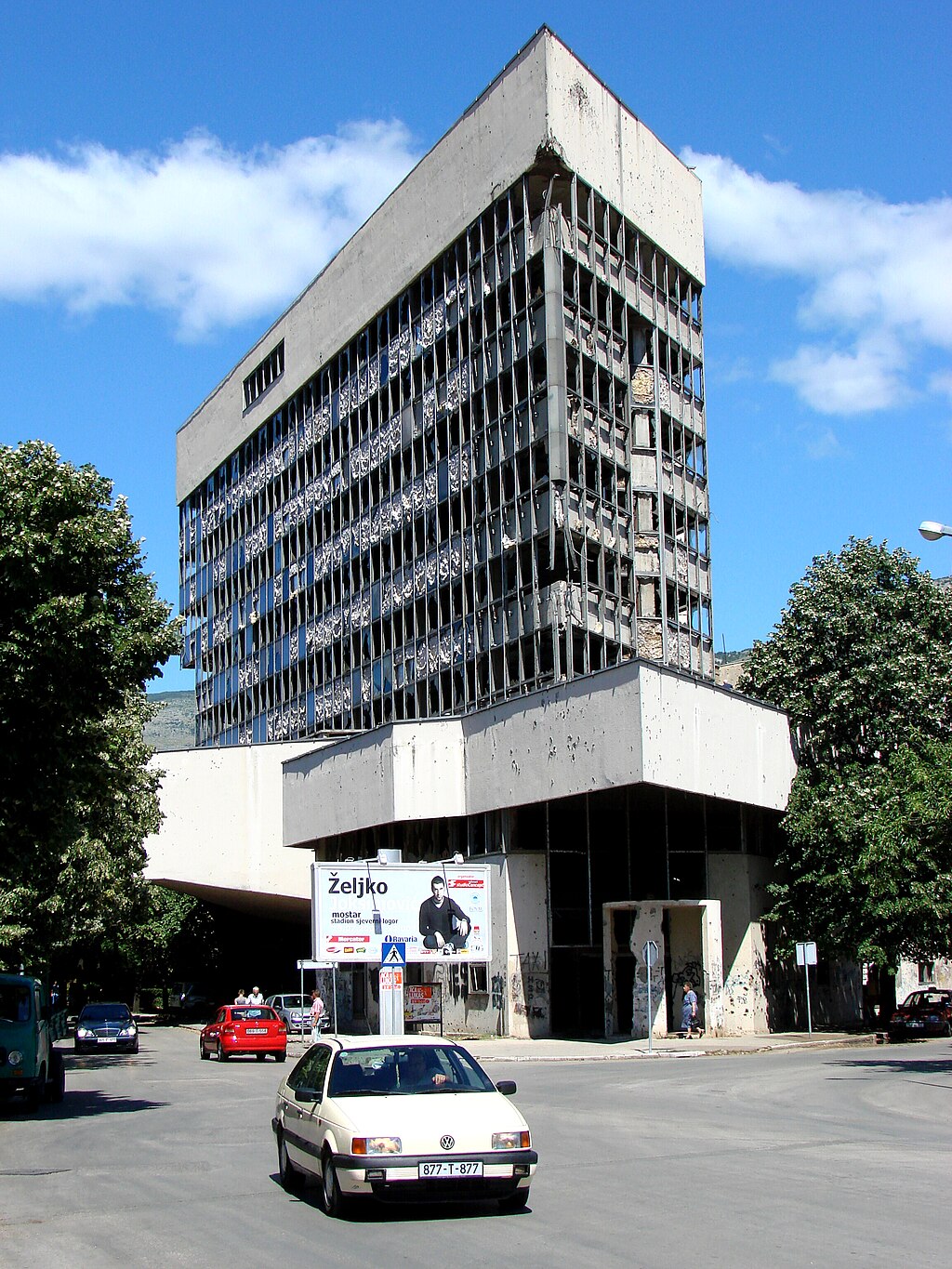
Traces of war include many cemeteries. In the villages in the interior, numerous brand new mosques are striking. However, in Banja Luka, the second largest city in the country and the center of Republika Srpska, all 16 mosques were destroyed between 1992 and 1995. War ruins are also a common sight in Mostar. Many residential blocks from the socialist era, as well as numerous older buildings from the Habsburg period, are still scarred by shelling and standing empty.
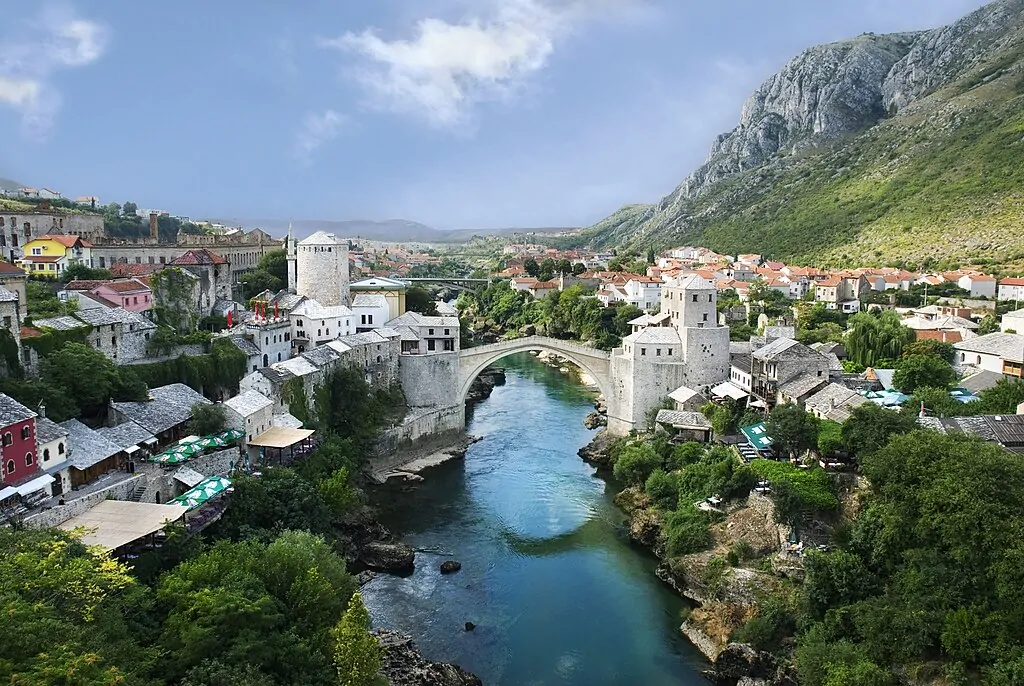
The Ottomans occupied Mostar in 1468 and developed into a Turkish stronghold in the Balkans. The most important landmark of the city, the Old Bridge (built in 1566), dates from that period. Croatian forces shelled and destroyed it in 1993, but it was reopened in 2004 after a faithful renovation. Since then, the bridge reconnects mainly Croatian areas west of Rijeka with the Muslim eastern part of the city. The renovated monument is on the UNESCO World Heritage List since 2005.
Oriental charm and unusual souvenirs from the war period
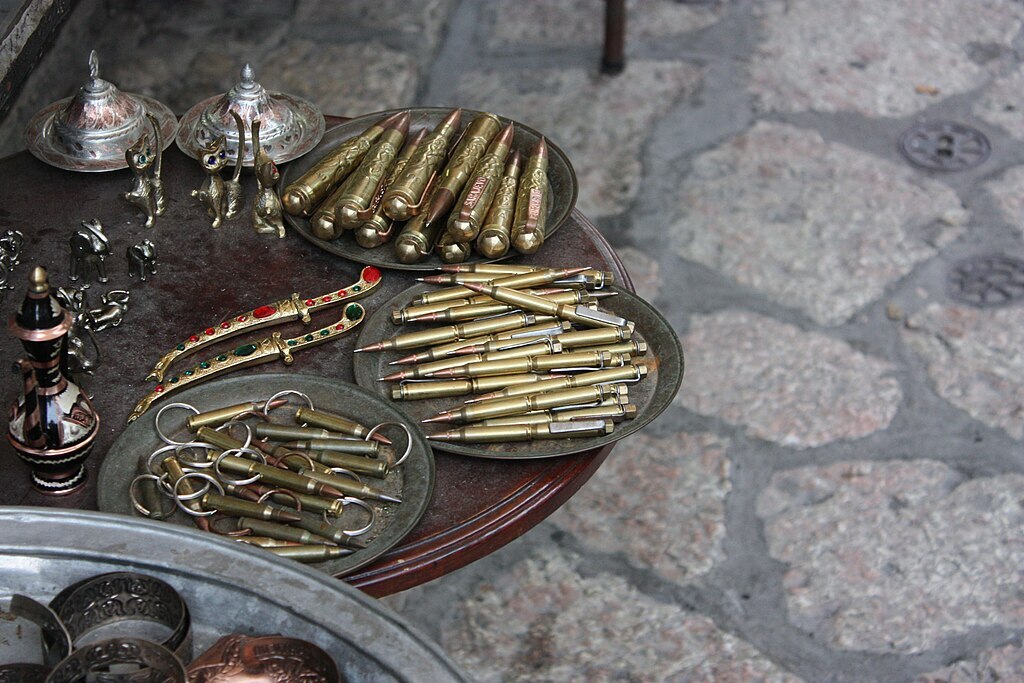
The old town from the Turkish period was also rebuilt. However, there are no longer craftsmen who make copper boilers or weave carpets – souvenir shops, galleries and restaurants have long since taken over the neighborhood. In addition to oriental kitsch imported from Turkey, macabre souvenirs are also offered, such as coffee mills made of grenades.
You can also find them in the Sarajevo bazaar, which, with its narrow streets and mosques, resembles a perfect part of the Orient. And since the lamb kebabs are baked on every corner, the air is filled with their scent. A few blocks away, Sarajevo discovers the other side, with large boulevards dating from the Austrian era and a memorial plaque opposite the Latin Bridge that marks the assassination that went down in world history: here is June 28, 1914. Austrian Crown Prince Franz Ferdinand shot; Four weeks later, the First World War broke out.
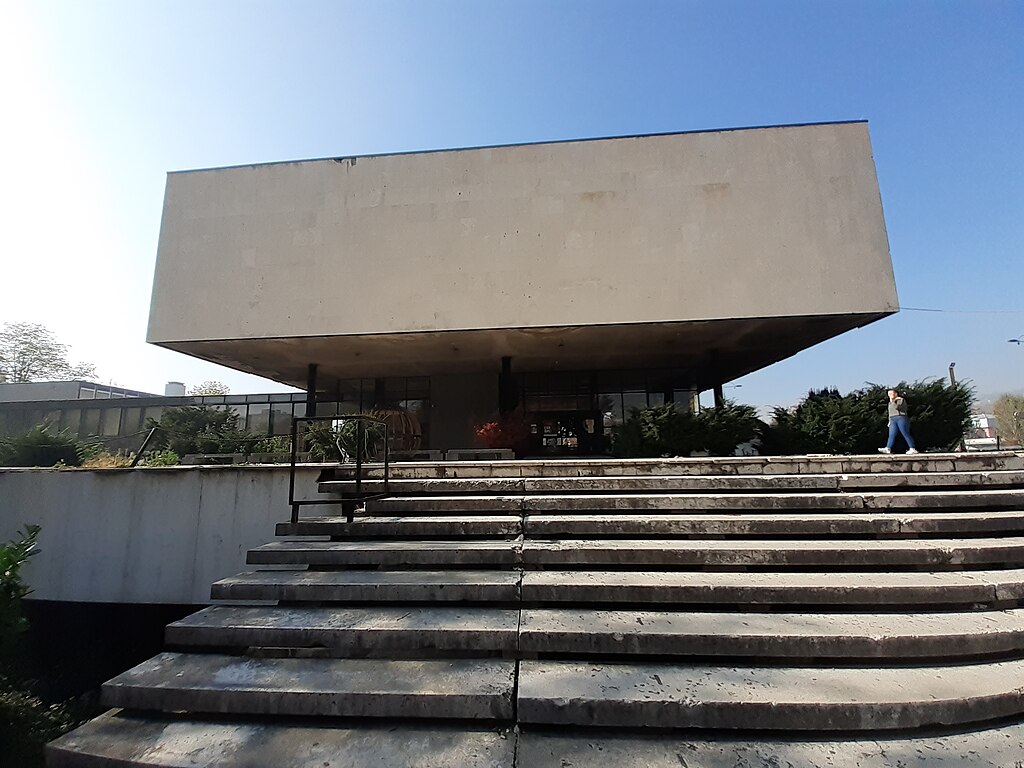
War past at Sarajevo History Museum
The most impressive sight in Sarajevo, however, is the History Museum, which documents the siege of the city by Serbs from 1992 to 1995 – with photos of victims, newspaper reports on war crimes, war cigarettes and children’s drawings showing a lot of blood and smoke.