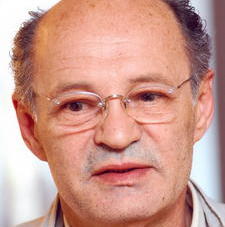
Boris Jokić is a Croatian psychologist and expert in educational sciences, and the current director of the Institute for Social Research in Zagreb (IDIZ). At the end of 2024, it was unanimously confirmed for a new mandate at the head of IDIZ until 2028. He became known to the general public as the main leader of the Expert Working Group for the implementation of an ambitious Complete curricular reforms Croatian education. In this biography, we present an overview of his life, education and key achievements – from academic beginnings to the challenges of education reform and today’s role in the scientific community.
Early life and education
Boris Jokić was born in 1976 in Zagreb. He attended elementary school in his hometown, and after that he entered the Classical High School in Zagreb. He attended the fourth grade of high school in the United States of America, in the federal state of West Virginia, where he also graduated. After returning to Croatia, he enrolled in psychology at the Faculty of Philosophy of the University of Zagreb. He also began studying economics in parallel, attending two higher education programs at the same time. He successfully completed his studies in psychology and Master’s degree at the Faculty of Philosophy, while at the Faculty of Economics he reached his final year of studies.
Academic development continues abroad – Boris Jokić goes to postgraduate studies at the famous Cambridge University in the United Kingdom. He received his master’s degree there, and in 2005 acquires and Doctor of Science from the field of educational sciences. The topic of his doctorate was related to religious education in Croatian schools, and in 2009 he further expanded this research in his dissertation defended at Cambridge. Thus, already in his early thirties, Boris Jokić acquired a top education and scientific title, which paved the way for his further career in the field of education.
Scientific career and projects
After returning to his homeland, Boris Jokić began his work in 2002 on Institute for Social Research in Zagreb (IDIZ) as a researcher. The focus of his research has been the improvement of the Croatian educational system from the beginning. He participated in a number of national and international projects that dealt with the evaluation of teaching, curriculum development and analysis of student achievements. During his career he worked on Over 20 scientific research projects, and is also the author or co-author of about twenty professional books and numerous scientific articles on the topic of education. Such a rich oeuvre ranks him among the most prolific researchers in the field of pedagogy and education in Croatia.
Jokić stood out as One of the most famous Croatian pedagogues and sociologists more recently. In addition to his daily research work, he also actively contributed to the development of strategic documents of educational policies. He was so member of the drafting team Strategies of science, education and technology of the Republic of Croatia – the national plan that set guidelines for reform interventions in education and science. All these achievements in the profession brought him the reputation of a reliable and innovative educator, whose opinion is respected in academic circles.
Complete Curriculum Reform (2015–2016)
The culmination of Jokić’s career in the public takes place 2015 When appointed as head of the Expert Working Group for implementation Complete curricular reforms (CKR). It was a comprehensive reform of the Croatian primary and secondary curriculum, with the aim of modernizing the curriculum at the national level. Under Jokić’s leadership, the expert team created drafts of new curricula that included early and preschool education and primary and secondary education, with an emphasis on the development of critical thinking, modern teaching methods and cross-curricular competencies.
However, after political changes in early 2016, the reform came under pressure. Prime Minister Tihomir Orešković’s new government tried to make certain changes to the already prepared curricular reform, to which Jokić openly opposed. He thought that professionalism He must take precedence over politics in shaping educational measures, which is why he did not agree to political ultimatums. In June 2016, Jokić and members of the Expert Working Group resigned from their positions, warning that they would not participate in compromising expert solutions to political interventions. This outcome caused a real storm in the public: the reform was called into question, and the then Minister of Education Predrag Šustar refused at the start Jokić’s resignation and the continuation of the reform under original conditions. In the end, Jokić was relieved of his duties as the manager, which became the trigger for mass protests support from across the country.
In the campaign under the slogan “Croatia can do better”, tens of thousands of citizens took to the streets to support Jokić and the continuation of the reforms. Only in Zagreb’s central Ban Jelačić Square has gathered around 40 thousand people June 1, 2016, in support of the vision of the curricular reform that Jokić represented. These protests were an unprecedented indicator of public support for an educational project and its leader. Despite this, the new government did not return Jokić to the head of the reform – the project was stopped in the proposed form, and Jokić returned to his previous workplace at the Institute for Social Research. Nevertheless, through this episode, he gained enormous sympathy from the public and grew into a symbol of resistance to the politicization of education. Many have since seen him as The face of fighting for better education, and his position that the profession must be ahead of politics resonated among teachers, parents and students throughout Croatia.
Continuation of career and director Idiz
Public presentation on education and artificial intelligence (2023). After leaving the head of the curricular reform, Boris Jokić continued to work as a scientist in IDIZ and profiled himself as a prominent commentator on educational policies and youth problems. In the years after 2016, he often pointed out the state of education and the needs of young people in Croatia with his analyses and public appearances. For example, he investigated the impact of technology and social networks on students’ mental health – in 2023 he presented data on how sudden digitization follows and rise in sadness and anxiety among young people. Through media appearances and professional meetings, Jokić maintained his presence in the public sphere as voice of reason which supports evidence-based education and well-being of children.
at the end of in 2020 Boris Jokić experienced a new professional step forward: by unanimous decision of the Administrative Council, he was elected as Director of the Institute for Social Research in Zagreb. He assumed the position of director at the beginning of 2021, with a four-year term until 2024. At the head of IDIZ, Jokić continued to encourage innovation in educational research and practice. Under his leadership, the Institute, among other things, initiated the introduction of a new optional school program of civic education “School and Community (Shiz)”. It is an extracurricular activity for second and third grade high school students, in which students identify the problem in their local community and design a solution during the year. At the end of the school year, they present their proposals to local authorities, which makes young people actively involved in solving social problems. This program, launched in 2022, has been successfully implemented in Zagreb and several counties (Primorsko-Goranska, Krapina-Zagorska, and since 2024 in Istria), and represents an example of how Jokić’s team practically promotes civic education and social responsibility among young people.
In December 2024, after the end of the first mandate, Boris Jokić again received unanimous support from the Scientific Council and the Governing Council of IDIZ for a new four-year term. This confirmed trust in his work and vision of the development of the Institute. Jokić will do the same in the period 2025-2028. Continue to lead IDIZ, direct research in social and educational sciences, and advocate better, inclusive education based on research results. His continuity at the head of a reputable scientific institution confirms that he remained one of the key figures of the Croatian educational scene even after a stormy episode with curricular reform.
Private life and personality
Boris Jokić is privately dedicated to his family and simple life values. While studying in Cambridge, he met his wife Claire Sangster Jokić, a Canadian psychologist. They have two children together – one daughter and one son. Despite being a prominent expert and reformer, Jokić enrolled his children in state school and kindergarten, believing in the value of public education for all. With his own example, he shows consistency between his attitudes and life practice.
Colleagues and acquaintances describe him as exceptionally optimistic, enthusiastic and creative a person who radiates tolerance and energy. He is known for his modesty and principledness – he often goes to work by bicycle, and in his everyday life he tries to implement the values he represents in school reform. Jokić openly points out that he will always choose Morality, professionalism and the word of the profession ahead of short-term political interests or populism. It was this ethics and consistency that won the public trust, which sees him as an authentic fighter for the betterment of children and society.
Conclusion
The biography of Boris Jokić depicts the path of a generation of experts who strives to improve society through education. From a gifted student and doctor of science from Cambridge, through the leader of the national educational reform, to the director of the Scientific Institute – Jokić’s professional path is marked by dedication and courage to persevere on the principles of the profession. His work left a deep mark in Croatian education and showed that One dedicated educator can start a whole nation in the direction of positive changes.
As the director of IDIZ, he continues to focus on improving education based on research and facts. Jokić’s example inspires other teachers, scientists and citizens to get involved in Struggle for better education. For everyone who is interested in the future of education in Croatia, the message is clear: we appreciate expertise and together support initiatives that will ensure modern knowledge and skills for our students. With his work, Boris Jokić shows that changes are possible for the better – with enough knowledge, persistence and joint support, Croatian education can really become better for new generations.
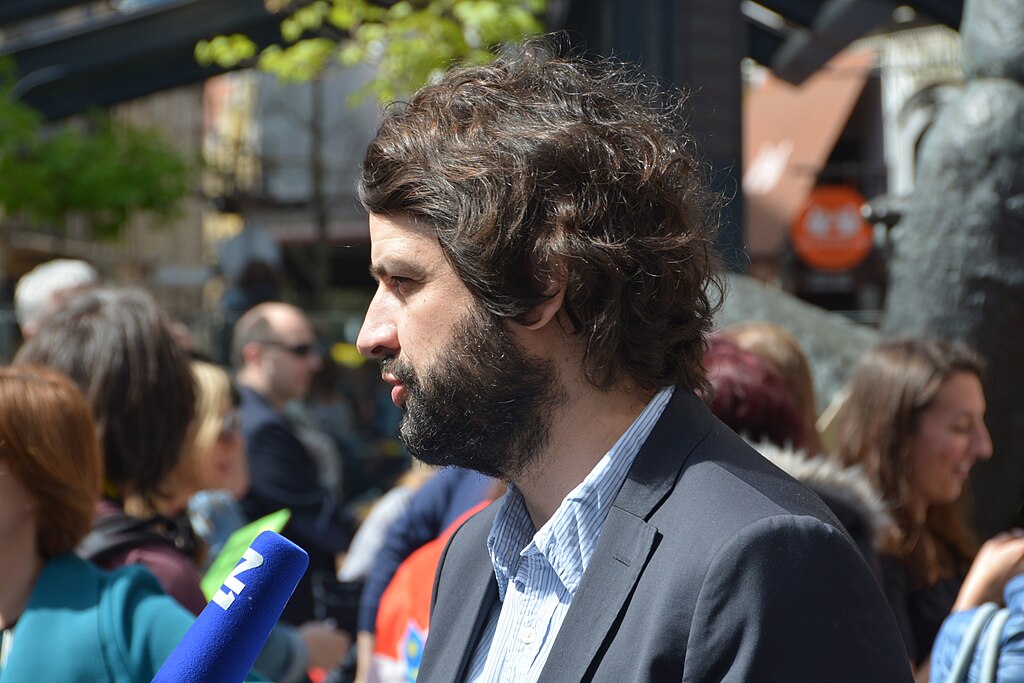
Cover photo: Branko Radovanović, CC BY-SA 4.0, Via Wikimedia Commons