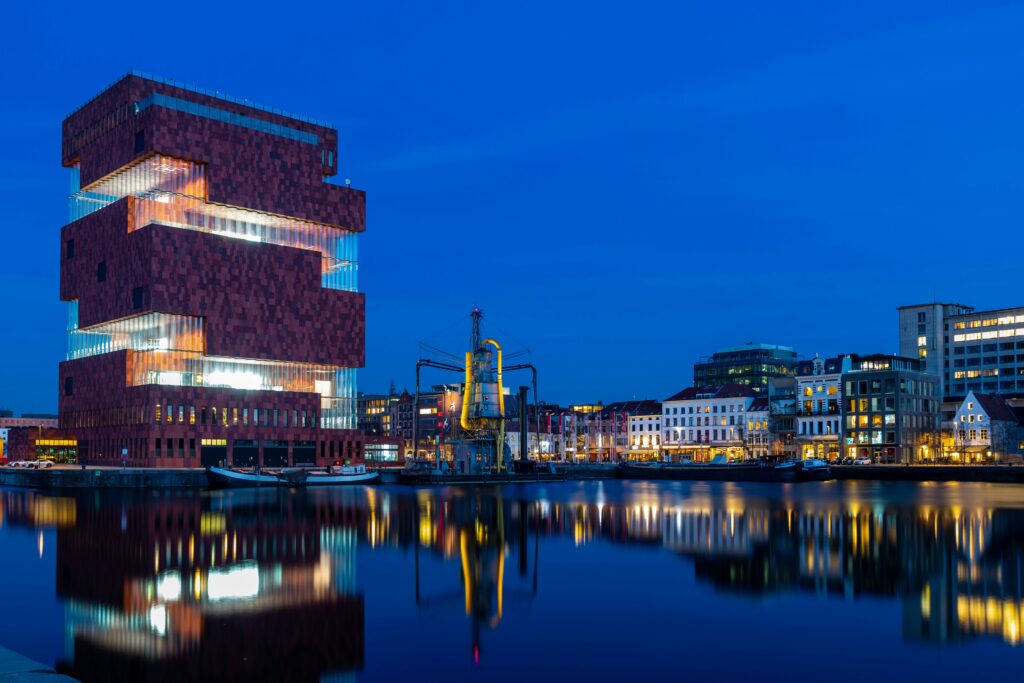
Whether it’s excellent designer dresses, enchanting architecture or chocolates covered with pure gold: the once most important European trading city is currently experiencing a renaissance and offers visitors numerous attractions.
The setting sun bathed the diamond district of Antwerp with a ruby-red light. In front of the stock market, Hasidic Jews dressed in black, wearing high, partly fur hats, under which curls curl, stand and talk about work in Yiddish.
Antwerp is only an hour and a half away from Aachen, but exotics are sometimes closer than you think. ‘Jerusalem on Sheld’ is just one of the many names for this kaleidoscopic city, which reveals a new face in every neighborhood. In the past, Cologne and Frankfurt on the Main had closer connections with Antwerp than with Hamburg, Berlin or Munich. In the 16th century, only London, Paris and Naples were larger than the Flemish metropolis with more than 100,000 inhabitants, and the German trading houses of the Wels and Fugger families managed their operations from Shelda.
In 1520, the painter Albrecht Dürer of Nürnberg came to the city as a tourist, sketched a harbor with her barges, galleys and caravels, climbed the 123-meter-high tower of the cathedral from His ‘pretty cheerful’ look and, above all, shopping – all the beautiful things that were not available at home. ‘There is no saving in Antwerp,’ Dürer noted in his travel diary, ‘there is a lot of money’.
Mediterranean atmosphere between ancient wealth
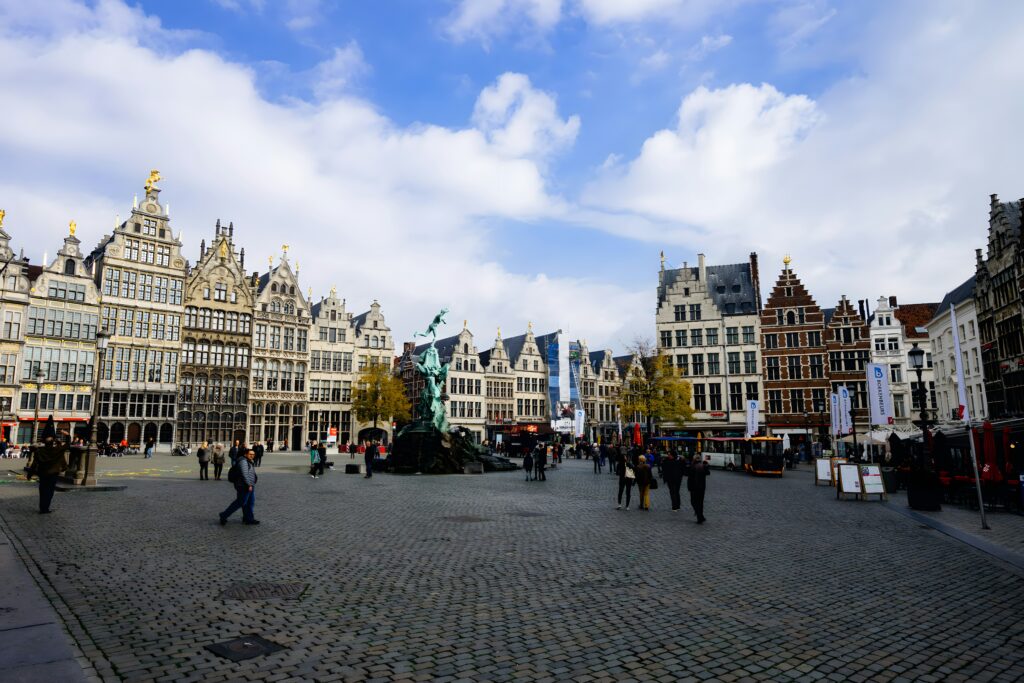
At that time, Antwerp was called the ‘Image of the World’ because the Spaniards and the Portuguese collected the treasures of the Old and New World in this, the most important European trading city. The wealth of ‘Sinjoren’, Antwerp’s patricians, is still visible in the town hall and guild houses, with its stepped gables and gold sculptures, which surround the market. From there you can easily start and wander aimlessly through the streets of the old town.
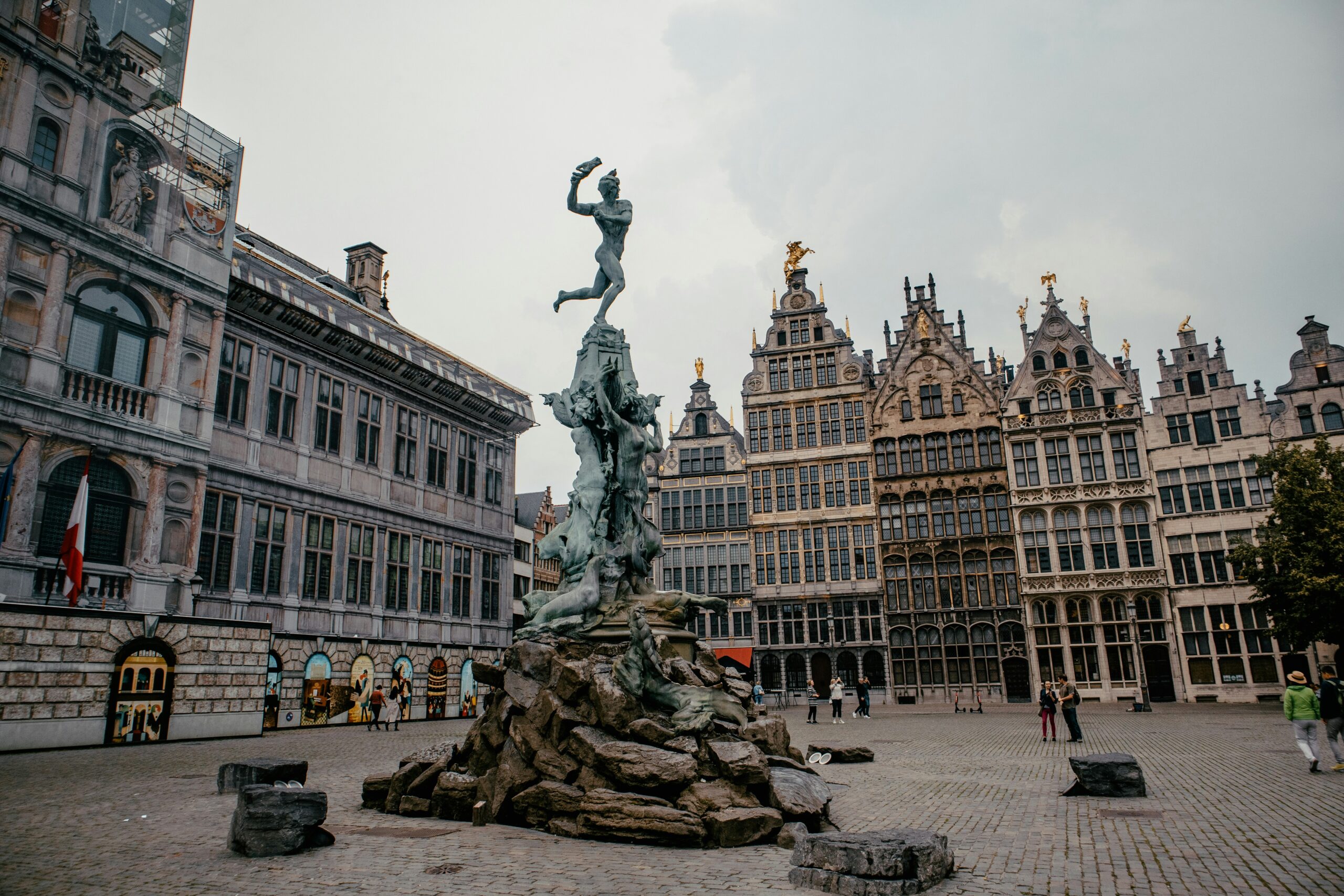
You will discover many hidden gems, squares with an almost Mediterranean atmosphere, like Hendrik Conscienceplein, with a baroque church decorated by Peter Paul Rubens; old stock markets on Hofstraat 15, with its enchanted arcades, where traders traded in Luther’s time; Or the winding Vlaeykensgang, a medieval staircase, through which today only the bells of the Cathedral of Our Lady pass.
Visit to Rubens’ charming ‘hut’
In Antwerp, you can still indulge your thoughts in such places, because the city is not flooded with tourists outside the peak of the summer season. The Plantin-Moretus Museum, the world’s first large printing house with a completely preserved interior, is a Renaissance gem and is on the UNESCO World Heritage List. Another time capsule is the Rubens house, where the most successful painter of his time lived like a prince. Born in Siegen and raised in Cologne, the son of Flemish war refugees also worked as a peace diplomat, mediating the Thirty Years War and between the Kings of England and France.
But if you want only history, only churches, only houses with gable roofs, it is better to visit the beauties of Flanders, Genta and Bruges. Unlike them, Antwerp is a large city that, although it has a rich cultural heritage, is primarily popular among Belgians and Dutch as a destination for shopping, trendy and fashion. The British guide ‘Time Out’ is already talking about
‘The Second Golden Age of Antwerp’. Nowhere in the Benelux countries, not even in Amsterdam or Brussels, are trade rents as high as in Antwerp’s Meira, a sophisticated trading mile with Belle Epoque department stores.
Sometimes ivory, now handbags
Around 1900, for the French-speaking senior class, the capital of Brussels was simply ‘La Capitale’, while for the upper class Antwerp was ‘La Métropole’. At that time, ivory and tire from the Congo were unloaded in the port, one of the largest in Europe. Today, the elite searches Meir and neighboring streets in search of cocktail dresses and handbags. ‘The Dutch royal family prefers to come to Antwerp,’ says tour guide Rick Philips, not without pride.
Eki fly only to visit a certain shoe store. There are boutiques with their own champagne bars here, so ‘my wife’ doesn’t have to stand around while ‘Madamkeken’ wears new clothes. Antwerp has been an indispensable part of the fashion world since the ‘Antwerp six’ – six avant-garde designers – shook fashion shows in London and Paris in the 1980s. The minimalist Dries Van Noten particularly attracts the crowd. But all the famous chains are also represented with extra large stores.
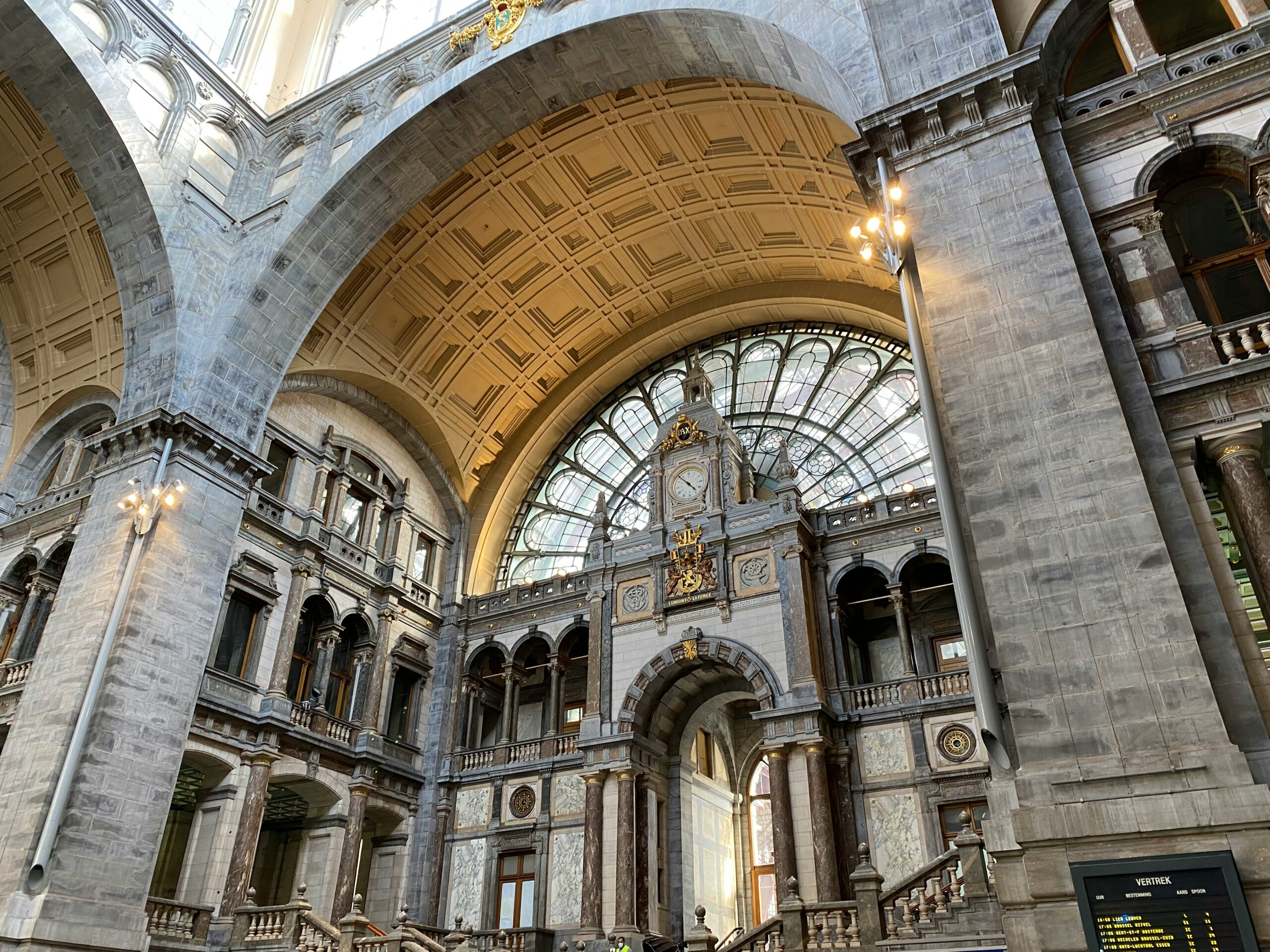
It is worth visiting Stadsfeestzaal, a former event hall right next to Meir, which reopened in 2007 and turned into a modern trading arcade. Leopoldstraat, with its antique shops, still exudes the spirit of the fin de siècle – as well as the zoo with its imaginative 19th-century animal enclosures. The main station, located right next to the massive domed building from 1905, is considered one of the most beautiful cathedrals of the industrial age.’
Gold is edible – and easily digestible’
In between, ugly concrete blocks are always noticeable, but German tourists should not complain too loudly about them: these blocks replaced buildings destroyed by more than 1000 German V2 missiles in the post-war period. At the end of 1944 and the beginning of 1945, when the strategically important port city was already freed from the Allies, it was bombed to the very end by Hitler’s order.
Between bars and delicatessen shops, Armani, Versace and Cartier stores, mom chocolatiers, as well as everywhere in Belgium. The latest trend: chocolates covered in real gold – because, as the saleswoman assures you, ‘gold is edible and easily digestible’. The Burie Chocolatier (Korte Gasthuisstraat 3) in the Wilde Zee boardwalk enjoys a special reputation. A few doors away (Korte Gasthuisstraat 31), long queues are created in front of the traditional Goossens bakery on Fridays and Saturdays. The tea, meanwhile, is served in style in the lobby of the lavishly decorated Bourla Theater (KomediePlaats 19).
City of untreated diamonds
Belgium generally has good cuisine, but Antwerp also benefits from its ethnic diversity. Although the city has less than half a million inhabitants, 170 nationalities are represented there, which is only slightly less than in New York or London. The most significant group is 20,000 mostly orthodox Jews in the Diamond Quarter, with 1,500 specialized companies and four stock exchanges. Antwerp is still by far the most important diamond city in the world. 85 per cent of all raw diamonds and half of all polished diamonds are traded on the Scheldt River. This industry accounts for eight percent of Belgian exports.
The business used to be entirely in the dominance of Jews, but now there is fierce competition, especially by Indians. As a result, about a quarter of Antwerp Jews live in poverty today. The neighborhood itself has a sharp, almost frightening impression; Many residential buildings, with their narrow window slits, resemble fortresses. But don’t let that discourage you.
Kosher dough is delivered from Israel
The Hasidis, the strictest of the strict ones, are guided by the commandments of the Bible, even by holding the head – which should not express either pride or subordination. ‘For us, being an Orthodox means that we still adhere to the laws that were discovered 3000 years ago on Mount Sinai,’ explains Simone Wenger in the Shmore Hadas synagogue, where the 58-year-old once married. Of course, she hadn’t even shaken hands with her fiancé yet.
Men and women live strictly separately, attend separate schools and clubs: ‘We pray separately, we dance separately, we catch fish separately,’ says Wenger. Some bakeries bring the dough by plane from Israel. In the most famous kosher restaurant, “HoffyS’ (Lange Kievitstraat 52), men with long black beards serve. On Saturday, every physical effort is prohibited, so pious Jews heat food using a pre-programmed timer.
The dazzling hotel tower recently rose on the edge of the Jewish quarter. As if from a newly descended spaceship, guests from heights during Sunday breakfast look at a world reminiscent of the 19th century. The rest of the city is still asleep, but Hasidic fathers take their sons to school through the alleys. It had to be like that once in many European cities. But only in Antwerp, the ‘image of the world’, this can still be experienced today.