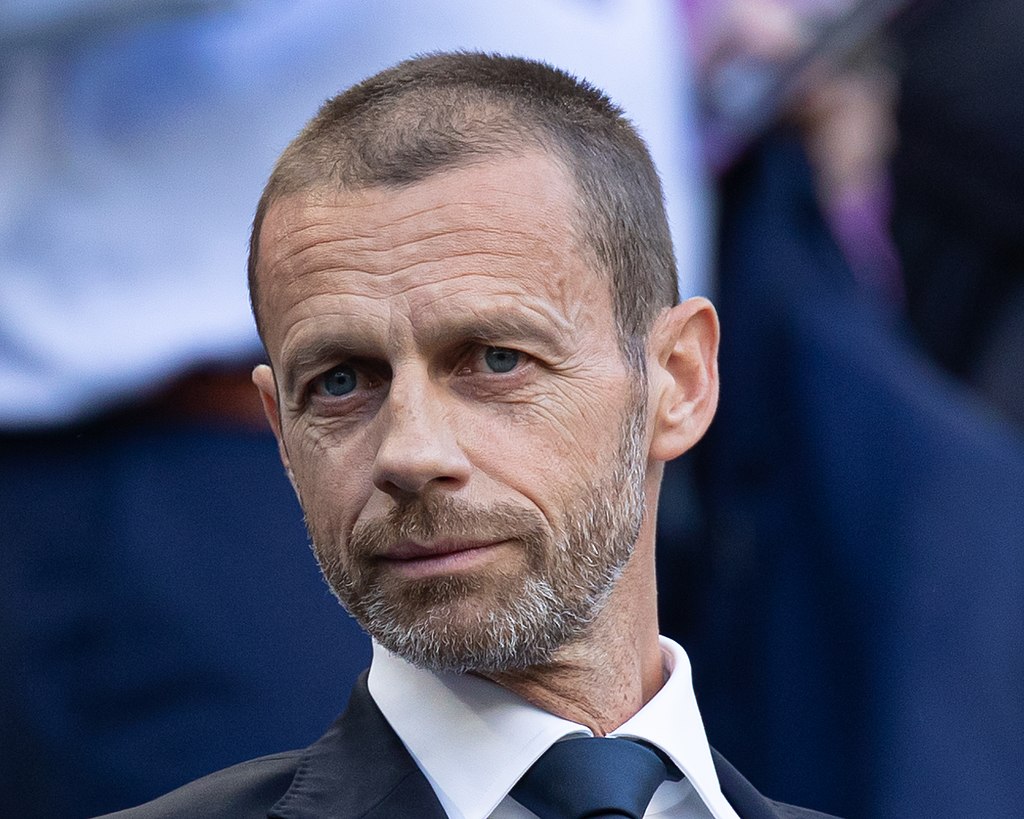
Aleksander Čeferin (born October 13, 1967 in Ljubljana) is a Slovenian lawyer and sports official, since 2016 the president of the European Football Federation (UEFA). After receiving his master’s degree in law at the Faculty of Law in Ljubljana, Čeferin continued his family legal profession, especially representing professional athletes and clubs. Under his leadership, UEFA defined the philosophy of ‘football above all’ – it tries to promote the unity of the football community and zero tolerance towards racism, sexism or any form of discrimination. As president of UEFA, Čeferin has already become a famous advocate of social responsibility in football, for example in the fight against stopping the free sports model in Europe.
Early life and education
Čeferin grew up in a family of lawyers – his father Peter Čeferin is also a distinguished lawyer and professor of law. From this environment comes his interest in the legal profession. He graduated from the Faculty of Law of the University of Ljubljana, after which he worked in his father’s law firm and trained in representing athletes. Even as a young man, he showed sportsmanship: he was a fan of Hajduk Split, and his favorite player was Zlatko Vujović. In addition to football, Čeferin is also an athlete – he wears a black belt in karate and a lover of adventures (he crossed the Sahara several times). He is also known as a humanitarian: for example, he provided assistance to earthquake victims in Croatia, thus showing social engagement outside the football framework.
Football career and path to UEFA
Čeferin’s football career began in the mid-2000s in Slovenian football. In 2005, he joined the management of local clubs – he became a member of the board of directors of the FUTSAL club KMN Svea Lesna Litija and the amateur team ‘FK Slovenian lawyers’. From 2006 to 2011, he was a member of the board of the Slovenian first league team NK Olimpija Ljubljana. In fact, he gained technical and professional experience mainly in behind-the-scenes roles and at lower levels of organized football.
In 2011, Čeferin was elected president of the Football Association of Slovenia (NZS), which was his first big step in football management. In that period, he also held the position of vice-president of the UEFA Legal Commission (2011–2016). In the new role of the president of the Slovenian Football Federation, Čeferin initiated projects such as the construction of the State Football Center and the improvement of the Alliance’s infrastructure.
Key moments in career
- 2011. – He became the president of the Football Association of Slovenia (NZS).
- 2016 – At the extraordinary UEFA congress in Athens, he was elected seventh president of UEFA, succeeding Michel Platini. Thus, he automatically became the vice-president of FIFA.
- 2019 – At the 43rd UEFA Congress (RIM), he was unanimously re-elected as president for the mandate of 2019-2023. year.
- 2023. – At the 47th Congress in Lisbon, he was elected once again, now for the mandate 2023-2027, thus confirming the strong support of UEFA members.
During his tenure, Čeferin introduced important reforms and strategic initiatives. For example, in 2017, it supported the UEFA Statute to change its mandate limit for the President, and the greater involvement of club representatives in decisions. He also emphasized the need to improve the competitiveness of football – he slightly adjusted the financial fair play and introduced incentives to reduce the gap between the largest and other clubs. Under his leadership, UEFA’s new strategy ‘United for Success 2024-2030’ was launched, which has seven main priorities (which aims to further promote inclusion, the development of women’s football and the sustainability of the competition).
Priorities and achievements as UEFA President
Čeferin summarized his mission with the slogan formulation ‘Football above all’. This is reflected in several key achievements and projects:
- Preservation of the European sports model: In 2021, he led the unique resistance of the 12 largest clubs in an effort to establish an elite ‘superliga’. Čeferin established cooperation between alliances, leagues, clubs and fans in order to preserve the open competition system (qualification by merit). The European Parliament and the EU Council later supported the values of this model, reinforcing the importance of transparent competition without closed leagues.
- Mass investment in football development: Under Cheferin’s leadership, UEFA increased financial support for federal federations. As much as 97.5% of UEFA’s net income is reinvested in football at all levels – from infrastructure to grassroots projects. The ‘Hattrick’ program allocates record funds for the period 2024-2028, almost one billion euros, which finances stadiums, training, development of women’s and youth leagues, and education of coaches and referees.
- Promoting inclusion and equality: Čeferin strongly emphasized the fight against discrimination and encouragement of diversity. Under his leadership, UEFA implements strategies for inclusiveness (resignation of priorities ‘being at the center of society’) and invests in the development of women’s football – the growth of professional women’s leagues, more competition and financial incentives for girls and women.
- Response to crisis: During the COVID-19 pandemic, Čeferin coordinated decisive measures: EURO 2020 was postponed, and a special ‘final-eight’ format for the final matches of the club competition was introduced for the end of the seasons of the domestic leagues. At the same time, UEFA provided financial assistance to federal federations to mitigate losses and temporarily adjusted the rules of financial fair play to clubs.
Personal life and interests
In his private life, Aleksander Čeferin is married and is the father of three daughters. And while he is at the head of UEFA busy with strategic plans and reforms, friends emphasize his modesty and openness. He often points out that it is a great honor (but also his responsibility) to lead UEFA, and Slovenians are particularly proud of him.
Čeferin personally cultivates a passion for sports and adventures: he regularly plays tennis and cycling, and the black belt in karate testifies to his determination. He is known for his adventurous spirit – he crossed the Sahara in a motorbike and car, and he also deals with humanitarian projects. As a football fan, he mostly appreciates fair play and socializing – even today he occasionally plays amateur matches with his lawyer friends.
Conclusion
Aleksander Čeferin has left a visible mark in European football so far – from his legal career he moved to a position from which he strongly shapes the future of UEFA. His biography shows how he raised one of the most powerful sports alliances in the world with his modest beginnings and diplomatic approach. Under his leadership, football institutions invest in the development of all levels of football, emphasize togetherness and transparency, and resist various threats to the open competition model.
To stay informed about Čeferin’s activities and news from the world of football, follow the official announcements of UEFA and relevant sports media. Share this article with your friends if you were interested in this biography, and feel free to leave a comment – we would love to hear which facts about Aleksandar Čeferin surprise you the most!
Sources: Details on the education and football career of Aleksandar Čeferin are available on UEFA, while reactions and reforms during his mandate are described on the official UEFA website. The Croatian media also recorded Čeferin’s achievements and interesting things from his life.
Cover photo: Steffen Prößdorf, CC BY-SA 4.0, Via Wikimedia Commons